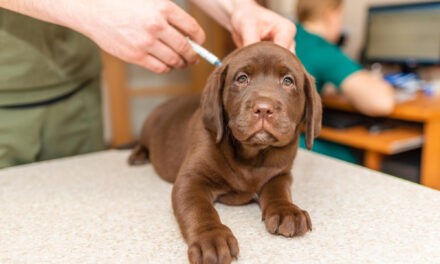

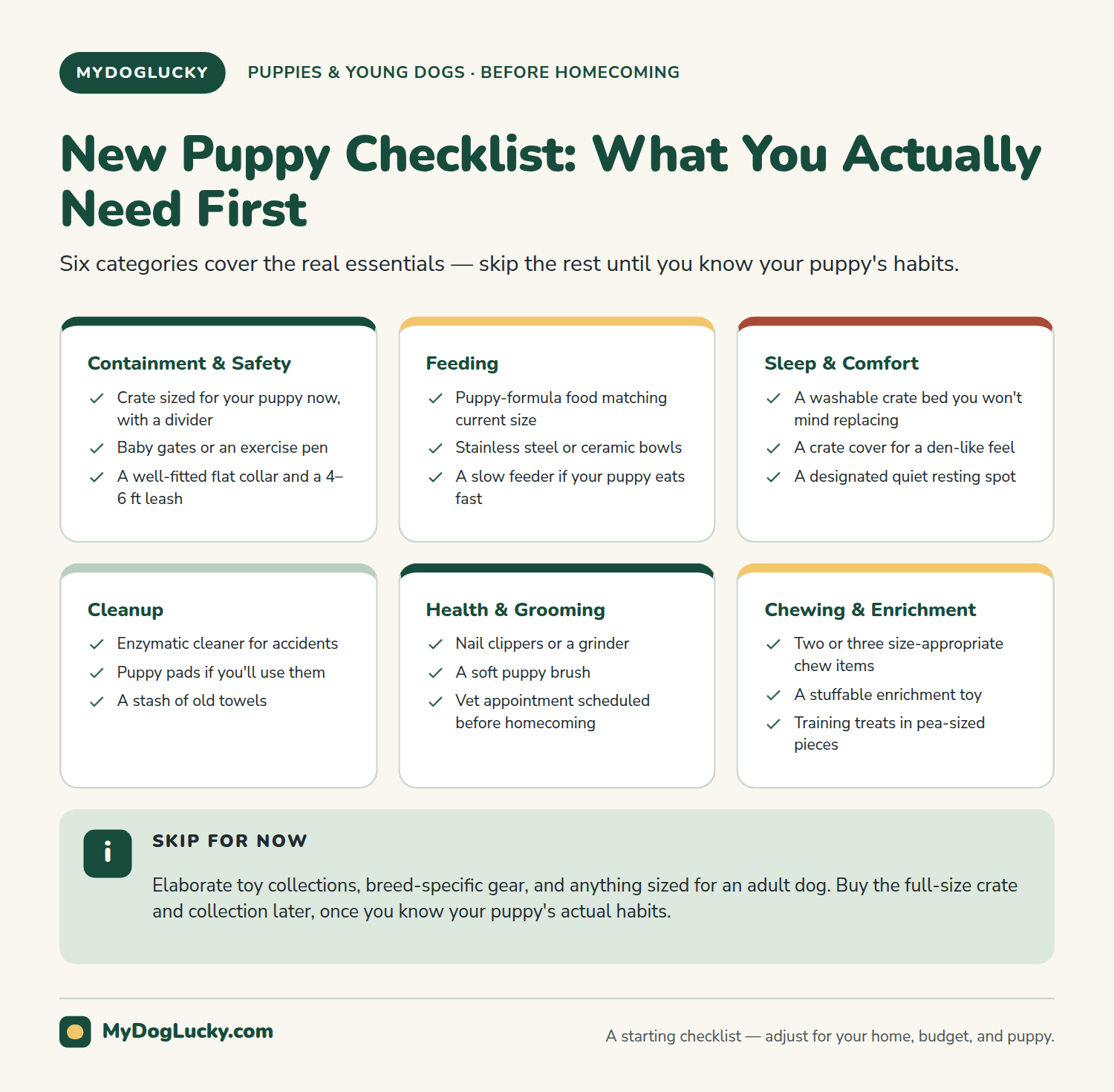
A solid new puppy checklist comes down to about ten genuine needs, food and water bowls, a properly fitted collar or harness and leash, an ID tag, a crate, bedding, a few safe chew toys, poop bags, a baby gate or exercise pen, basic grooming tools, and food that matches whatever the breeder or shelter was already feeding. Almost everything else on the glossy pet-store checklists is optional, at least for week one. You can add training tools, fancier enrichment toys, and a bigger wardrobe of gear once you actually know your puppy’s size, personality, and habits.
What changes the specifics is your household: your budget, your housing setup, whether you work from home or leave for ten-hour shifts, and how many hands are around to help. This guide walks through what to buy, what to skip for now, how much it’s reasonable to spend, and how to split the work so one person doesn’t end up doing all of it at 2 a.m.
What’s in this guide
- New puppy checklist: the quick answer
- What your puppy genuinely needs before arrival
- Questions to ask the breeder, shelter, or rescue before pickup day
- What can wait: optional purchases vs. genuine needs
- A realistic first-supplies budget range
- Quick puppy-proofing basics before arrival
- Choosing a veterinarian and booking the first visit
- Dividing the work: household roles for puppy care
- A safe pickup and travel-day plan
- Your first-week priority list
- First-week troubleshooting
- Common first-timer mistakes
- Your new puppy checklist at a glance
- Common questions about preparing for a new puppy
- Sources
New puppy checklist: the quick answer
A new puppy checklist really only needs ten items to cover the genuine basics: bowls, a collar or harness with a leash, an ID tag, a crate, bedding, a few chew toys, poop bags, a gate or pen, grooming basics, and starter food. Everything past that list is either something you can add once your puppy is home, or something that depends entirely on your specific dog, house, and routine.
What throws first-time owners off isn’t usually the shopping. It’s the assumption that more gear equals more preparedness. A puppy doesn’t actually care whether the bed is orthopedic or the bowl is ceramic. He cares whether someone shows him where to potty, feeds him on a predictable schedule, and doesn’t disappear the moment things get hard. The supplies matter, but they’re the smaller half of getting ready.
The bigger half is logistics: who’s home when, who’s taking him out at 3 a.m. for the first week or two, and who’s driving to the vet if something comes up. We’ll cover both halves here, starting with the actual shopping list and moving into the household planning that a checklist alone can’t capture.
What your puppy genuinely needs before arrival
This is the real list. Not the forty-item version some sites publish, padded out with things you’ll figure out you want (or don’t) after living with the dog for a week. Buy these before pickup day, and treat everything else as something to add later once you know your puppy better.
Food and water bowls
Two bowls, one for food and one for water, is genuinely all you need to start. Stainless steel is a safe, easy default: it doesn’t harbor bacteria the way some plastic can, and it survives a teething puppy’s curiosity better than most materials. Skip anything elaborate for now. A slow-feeder bowl can be useful later if your puppy eats too fast, but that’s a problem you solve after you’ve actually watched him eat, not before.
An appropriate collar or harness, plus a well-fitted leash
Puppies grow fast, so buy an adjustable collar or harness rather than a fixed-size one, and expect to size up more than once in the first several months. A harness distributes pressure across the chest instead of the neck, which many trainers and vets recommend for puppies still learning not to pull. Whichever you choose, check the fit regularly: you should be able to slide two fingers comfortably underneath it. A four-to-six-foot leash works better for everyday walks and training than a retractable one, which gives you far less control in an emergency.
An ID tag, and a plan for microchip registration
An ID tag with your phone number is cheap, fast, and the single most effective thing you can do to get a lost puppy back quickly, before anyone even needs to scan a microchip. If your puppy already has a microchip from the breeder or shelter, register it in your name as soon as you get home, since an unregistered chip is nearly useless if he ever goes missing. Both matter. Neither substitutes for the other.
A crate sized for growth, or a properly sized starter crate
You have two reasonable paths here, and neither is objectively better. One is to buy a crate sized for your puppy’s expected adult size and use a removable divider panel to shrink the usable space while he’s small, then open it up as he grows. The other is to buy a smaller starter crate and upgrade once or twice as he gets bigger, which can be the more practical option if you genuinely don’t know how large he’ll end up.
Either way, the crate should be big enough for him to stand up, turn around, and lie down comfortably, but not so oversized that he can sleep in one corner and potty in another. That extra room is exactly what undermines housetraining in the first few months, so a crate that’s too generous can actually work against you.
Placement matters almost as much as size. A crate tucked into a busy kitchen thoroughfare, or isolated alone in a garage, both tend to work worse than a spot that’s quiet but still within earshot of the family, a corner of a bedroom or a calm living room nook, for instance. You’ll likely move it once or twice before you land on the spot that actually works for your layout, and that’s completely normal.
Bedding
A washable crate pad or blanket is enough to start. Skip the expensive orthopedic bed until you’re past the teething and accident-prone stage, since there’s a real chance an early bed gets chewed, soaked, or both. A cheap, machine-washable option you don’t mind replacing is the more realistic choice for the first few months.
A handful of safe chew toys
Puppies need to chew, both because it feels good on sore teething gums and because it’s a normal way they explore the world. Pick two or three toys in different textures, something a bit rubbery, something firmer, maybe a soft plush for cuddling rather than chewing, and skip anything with small parts that could break off and become a choking hazard. You don’t need a toy box overflowing on day one. You need a few safe options and a plan to supervise how he uses them.
Watch how he handles each toy during the first few sessions before leaving him alone with it. A toy that seems sturdy in the store can come apart faster than expected under a determined set of new teeth, and it’s much easier to notice that with you in the room than to discover it later from a chewed-off piece that’s gone missing.
Poop bags
Not glamorous, but genuinely necessary from the very first walk. Buy more than you think you’ll need. A roll runs out faster than expected once your puppy is going outside multiple times a day, and there is nothing worse than patting empty pockets on a chilly morning with a very expectant look aimed up at you.
A baby gate or exercise pen
An exercise pen, sometimes called an x-pen, is a portable fenced play yard you can set up indoors or out to give your puppy a safe, contained space when you can’t watch him directly. A baby gate does something similar for doorways and stairs, keeping him out of rooms that aren’t puppy-proofed yet. You likely need at least one of these, since a completely unsupervised, unconfined puppy is how good shoes and bad afternoons happen.
Basic grooming tools
A soft slicker brush or grooming mitt, a pair of dog-specific nail clippers or a grinder, and a gentle puppy shampoo cover the basics. You don’t need a full grooming kit before your puppy even walks through the door. Start with brushing sessions to get him comfortable with being handled, and build up to nail trims and baths once he’s settled in.
A basic cleanup and first-aid kit
Accidents happen, sometimes on the carpet, sometimes on you. An enzymatic cleaner made for pet messes breaks down the odor-causing compounds that plain soap and water leave behind, which matters because a puppy who can still smell a previous accident is more likely to use that same spot again. Add a roll of paper towels, a stain-safe carpet cleaner, and a small pet-specific first-aid kit, gauze, a pet-safe antiseptic, tweezers for splinters, and your vet’s phone number taped inside the lid.
None of this needs to be elaborate. A small plastic bin under the sink with these basics covers the vast majority of the minor messes and minor scrapes a new puppy generates in his first few months.
Starting food: match what the breeder, shelter, or rescue was already feeding
This is the one item on the list that’s easy to get wrong in a way that actually matters. Ask the breeder, shelter, or rescue exactly what brand and formula your puppy has been eating, and buy a bag of the same thing before pickup day if you can. According to the American Kennel Club, switching a dog’s food abruptly can cause vomiting, diarrhea, or a drop in appetite, and a brand-new home is already a lot of change for a young puppy to process at once.
If you do want to switch to a different food eventually, plan to do it gradually over roughly five to seven days, mixing in a little more of the new food and a little less of the old one each day, according to AKC guidance. If your puppy has a sensitive stomach, stretch that transition out even longer and check in with your vet if the upset stomach doesn’t settle down.
A shortcut worth using
If you can’t get the exact brand before pickup day, ask the breeder or shelter for a small bag or sample to bring home. Even a few days’ worth buys you time to source the same food, or start a slow transition, without an abrupt switch on top of everything else that’s new.
Questions to ask the breeder, shelter, or rescue before pickup day
A new puppy checklist isn’t only about what you buy. Some of the most useful prep is information you gather directly from wherever your puppy is coming from, ideally before pickup day rather than in a rushed conversation at the handoff.
- What food, and how much, is he currently eating? This is the detail that most directly affects your shopping list, since matching it avoids an abrupt diet change during an already disorienting week.
- What vaccines or deworming has he already had, and when? Bring any paperwork to your first vet visit so your veterinarian can build the rest of the schedule around what’s already done rather than guessing or restarting from scratch.
- Has he had any health issues, even minor ones? A cough, loose stool, or a slow eater in the days before pickup is worth knowing about, not as a dealbreaker, but as something to mention to your vet at the first visit.
- What’s he used to for a sleeping setup? Some puppies come from a home with crate experience already; others have never seen one. Knowing which lets you calibrate your expectations for how the first few nights might go.
- Is there a return, surrender, or support policy? Reputable breeders, shelters, and rescues are almost always willing to answer questions after pickup day too. Knowing that support exists, and how to reach it, is worth confirming up front rather than assuming.
Write the answers down
It’s easy to remember the food brand and forget the deworming date a week later, especially during an exhausting first stretch. A quick note in your phone, or a photo of any paperwork you’re handed, saves you from trying to recall these details from memory at your first vet appointment.
What can wait: optional purchases vs. genuine needs
Pet stores are set up to make everything look essential. Most of it isn’t, at least not on day one. Here’s what’s genuinely fine to skip for the first few weeks, and add once you actually know your puppy’s personality, size, and habits.
Most training tools
Clickers, long training leads, treat pouches, and puzzle-based training kits are useful once you’re actively working on specific skills, but none of them are required to survive the first week. A regular collar or harness, a leash, and some small soft treats cover the basics of early training just fine. Add specialized tools once you know what you’re actually working on.
Elaborate enrichment toys
Interactive puzzle feeders, snuffle mats, and treat-dispensing toys are genuinely great for a bored adolescent dog. A brand-new eight-week-old puppy, though, is usually plenty occupied by exploring a new house, meeting a new family, and figuring out where the water bowl lives. Buy one simple enrichment toy if you’d like, and add more once you see what actually holds his interest.
A big wardrobe of gear
Sweaters, raincoats, seasonal boots, and matching leash-and-collar sets are fun, but they’re not preparation, they’re accessorizing. If you live somewhere genuinely cold or your puppy is a short-coated breed who struggles with low temperatures, one practical coat is reasonable. A closet full of outfits can wait until you know your puppy well enough to know what he’ll actually tolerate wearing, which, for plenty of puppies, turns out to be nothing at all.
A gentle confession
Plenty of first-time owners buy the full aisle, the matching set, the seasonal wardrobe, the toy box, all before the puppy ever sets a paw in the house. Most of it sits unused while the puppy becomes obsessed with an empty water bottle instead. Buy less than you think you need. You can always add more once you actually know your dog.
A realistic first-supplies budget range
There’s no single honest number here, because costs swing widely by region, brand, and how much you already own. A secondhand crate from a neighbor and a basic leash from a discount store add up to a very different total than premium gear bought new. With that caveat firmly in place, most first-time owners find their initial supplies, bowls, a crate, a leash and harness, bedding, a few toys, poop bags, and a starter bag of food, land somewhere in a modest-to-moderate range, with plenty of room to spend less by buying secondhand or basic-tier items, or more if you go premium on everything.
A few things push the number up or down more than anything else. Crate size and quality is usually the single biggest line item, since a crate built for a large-breed adult costs noticeably more than a small starter crate. Buying secondhand for the big-ticket items, a crate, a gate or pen, is one of the most effective ways to bring the total down without sacrificing anything your puppy actually needs. Food quality varies a lot too, though matching what the breeder or shelter was feeding usually keeps that first bag’s cost predictable, at least until you decide whether to switch later.
This is just the starting-supplies slice of the picture, not the full cost of owning a dog. Ongoing expenses, food, routine vet care, vaccines, parasite prevention, and eventually training or daycare, add up over the following months in ways a one-time shopping trip doesn’t capture. MyDogLucky’s guide to the real cost of dog ownership breaks down that fuller, ongoing budget picture in more detail if you want the full financial view before committing.
If money is genuinely tight right now, a few strategies bring the initial number down without cutting corners on anything your puppy actually needs. Local rescue groups, community pet-supply pantries, and even neighborhood buy-nothing groups often have gently used crates, gates, and carriers available for free or low cost. Some veterinary clinics and shelters also run new-owner starter-kit programs, so it’s worth asking directly rather than assuming none exist near you. None of that is a lesser way to prepare. It’s simply a practical one.
Where it’s genuinely fine to spend less
- A basic stainless bowl works exactly as well as a designer one.
- A secondhand crate in good condition is functionally identical to a new one.
- A plain leash and adjustable collar do the job without a matching set.
- Store-brand poop bags work exactly as well as the branded ones, every time.
Where it’s worth spending a bit more if you can
- Food that matches what the breeder or shelter was already feeding, even if it costs a little more than a store-brand swap, avoids a rough first week.
- A leash and harness that actually fit well and hold up to a strong pull matter more than their price tag suggests.
- A well-fitted, secure crate for the car ride home is not the place to improvise with something flimsy.
Quick puppy-proofing basics before arrival
You don’t need to childproof the entire house before pickup day, but a few passes through the rooms your puppy will actually use make the first days noticeably calmer. Get down to his eye level and look for anything dangling, chewable, or small enough to swallow: phone chargers, trailing blind cords, shoes, socks, small toys, and anything within reach on a low shelf or coffee table.
Secure household chemicals, medications, and anything toxic to dogs behind closed cabinet doors, and double-check common houseplants against a pet-toxicity list, since several popular varieties are more dangerous to dogs than most owners realize. Tuck trash cans behind a closed door or cabinet if your puppy can reach them, and block off any stairs he shouldn’t be navigating alone yet with a gate.
This is only a starting pass, not the deep dive. MyDogLucky’s home dog-proofing guide walks room by room through the fuller list, outlets, cords, furniture, and everything else, if you want to go beyond the basics before pickup day.
Choosing a veterinarian and booking the first visit
Line up a veterinarian before your puppy comes home, not after. The American Veterinary Medical Association specifically recommends starting your search before you actually need one, rather than scrambling to find a vet during your puppy’s first health concern.
What to look for in a veterinary practice
Ask dog-owning friends and neighbors who they use and trust, since personal referrals tend to be more reliable than online reviews alone, according to AVMA guidance. Consider office hours, how easy it is to get an appointment, whether the practice offers after-hours emergency coverage or a clear referral to one, and whether the fee structure and accepted payment methods work for your situation. A clean, well-run office and a staff that seems genuinely comfortable handling puppies are both good signs during a first visit.
Independent practice, corporate chain, or nonprofit clinic
All three can be a genuinely good fit, and the right choice depends more on your specific priorities than on the ownership model itself. An independent practice often offers more continuity with the same vet over time. A larger corporate-owned chain may have more flexible scheduling, multiple locations, or extended hours. A nonprofit or low-cost clinic can be the more realistic option if budget is a significant concern, though appointment availability and the range of services offered sometimes run narrower. Weigh what actually matters most for your household, cost, convenience, or continuity, rather than assuming one type is automatically better.
Booking the first visit before pickup day
Call and schedule your puppy’s first appointment as soon as you know your pickup date, ideally within the first few days of bringing him home. This first visit typically covers a wellness exam, a review of any vaccines already given by the breeder or shelter, and a plan for the rest of the puppy vaccination series. According to AAHA’s canine vaccination guidelines, core vaccines are given as an initial series in puppyhood, and your veterinarian will tailor the exact schedule to your puppy’s age, health history, and lifestyle.
Questions worth asking at the first appointment
Bring any paperwork the breeder or shelter gave you, and ask which vaccines and parasite prevention your puppy has already had, what’s still due, and roughly when. Ask about microchip registration if it wasn’t already handled, and about spay or neuter timing if that’s part of your plan. MyDogLucky’s guide to your puppy’s first vet visit and our puppy vaccination schedule guide go deeper into what to expect at this appointment and the months that follow, if you’d like more detail before you go.
Dividing the work: household roles for puppy care
A checklist tells you what to buy. It doesn’t tell you who’s getting up at 3 a.m., who’s driving to the vet on a Tuesday, or who’s covering potty breaks during a workday. Sorting that out before pickup day prevents a lot of the resentment and burnout that quietly builds when one person ends up doing everything by default.
Solo owners
If you’re bringing a puppy home on your own, be realistic about what a workday actually looks like before pickup day, not after. A young puppy can’t hold his bladder for a full eight- or nine-hour shift, so you’ll likely need a midday break, whether that’s coming home yourself, a trusted neighbor or friend, or a professional dog walker. Line that up in advance rather than figuring it out during your puppy’s first anxious week home.
Households with kids
Kids can absolutely help with age-appropriate tasks, filling water bowls, helping with brushing, reading a picture book near the crate for calm company, but the core responsibilities, feeding schedules, overnight potty breaks, and any handling that requires real judgment, should sit with an adult. Set expectations with kids ahead of time about gentle handling and giving the puppy space to rest, since a constantly interrupted puppy gets overtired and cranky just like a toddler does.
Multiple adults splitting shifts
If there are two or more adults in the house, write down who’s covering what before pickup day, rather than assuming it’ll sort itself out naturally. A simple shared note or calendar covering mornings, workday breaks, evenings, and overnight coverage for the first couple of weeks heads off a lot of the “I thought you had it” arguments that crop up during a genuinely exhausting stretch.
Overnight and vet-run coverage
The first several nights are often the hardest part, with a puppy waking to potty, whining from a new environment, or both. Decide in advance whether one person is taking overnight duty for a stretch, whether you’re trading off, or whether the crate is going in a bedroom so whoever’s closest handles it. Do the same for who’s available for a same-day vet run if something comes up unexpectedly, since scrambling to figure that out in the moment adds stress to an already stressful situation.
Multi-pet households
If you already have a dog, cat, or other pet at home, factor their routine into the plan too, not just the new puppy’s. Someone still needs to walk the resident dog on his usual schedule, and someone needs to manage introductions calmly rather than leaving them to chance. It’s easy for an existing pet’s needs to quietly slide during a hectic first week, so name who’s responsible for keeping his routine steady while everyone adjusts to the new arrival.
A safe pickup and travel-day plan
Pickup day itself deserves its own plan, separate from the supply list. A young puppy’s first car ride and first walk into a brand-new home are both genuinely overwhelming experiences, even when everything goes smoothly.
The car ride: crate or secured carrier
Bring a secured crate or carrier for the ride home rather than letting your puppy ride loose on a lap or the seat. A loose puppy is a real safety risk in the car, for him and for the driver, and a crate gives him a smaller, more contained space that’s often calmer than an open seat with new sights and sounds everywhere. Line it with a towel in case of car-sickness accidents, which are common on a first ride.
A familiar-smelling item from the breeder or shelter
Ask if you can bring home a blanket, toy, or piece of bedding that smells like his mother or littermates. That familiar scent can genuinely take the edge off a stressful transition, giving him something recognizable in an otherwise completely unfamiliar environment.
Papers and items to bring home
Before you leave with your puppy, collect any paperwork the breeder, shelter, or rescue can provide: vaccine and deworming records, a health certificate if one was issued, microchip information, and adoption or purchase paperwork. Ask for a small sample of his current food if you weren’t able to buy a matching bag ahead of time, and, if it’s available, that familiar-smelling blanket or toy mentioned above. Keep it all together in one folder or envelope so it’s easy to hand to your veterinarian at the first appointment instead of hunting for scattered papers later.
A calm first arrival at home
Keep the welcome low-key rather than throwing a houseful of excited visitors at him the moment he walks in. Let him sniff around a contained, puppy-proofed area first, offer a bathroom break right away, and give him a quiet space to settle before introducing him to the whole family, other pets, or any excited neighbors who want to meet him immediately. The excitement can absolutely happen. It just doesn’t all need to happen in the first ten minutes.
Your first-week priority list
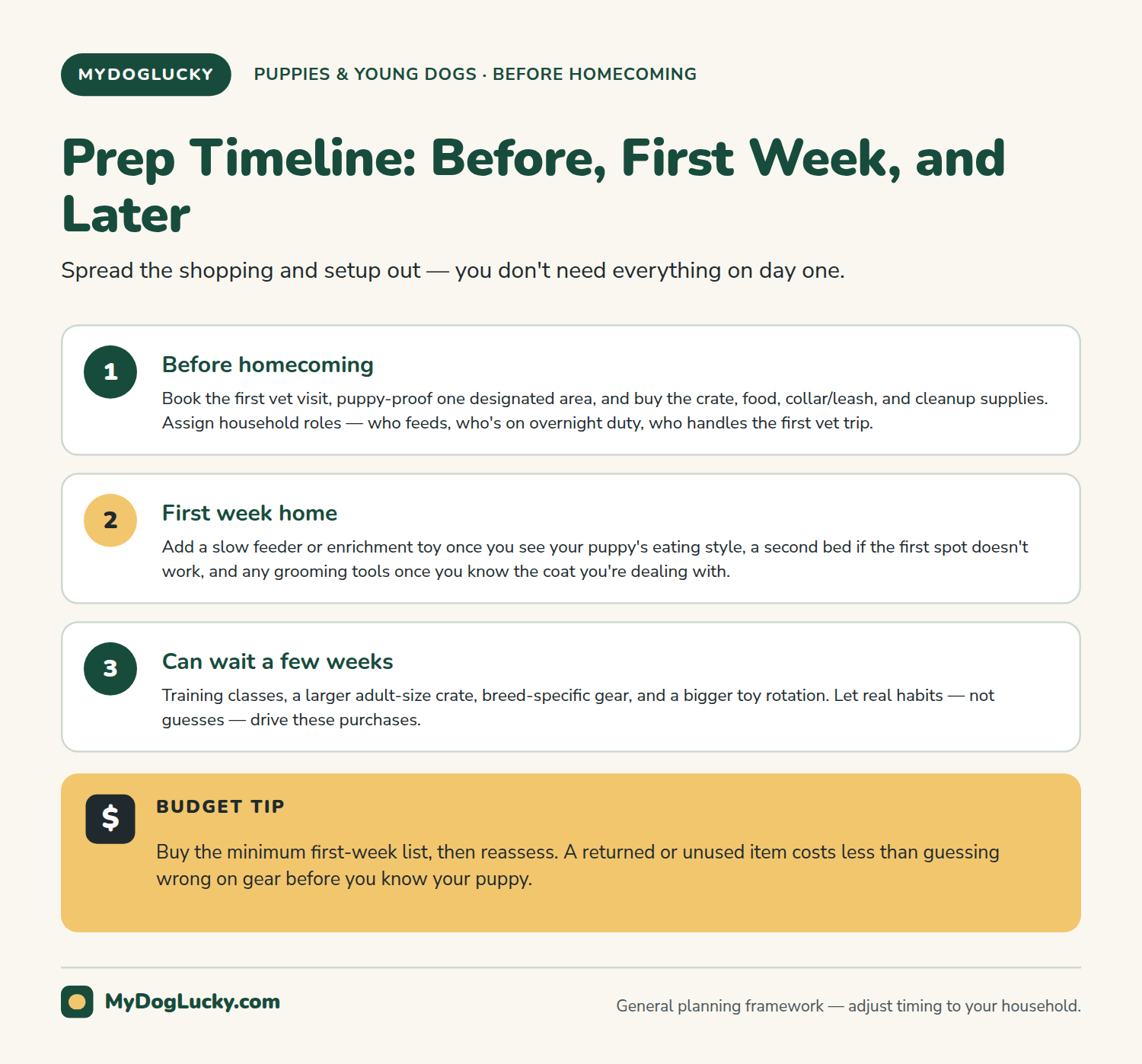
Not everything on a new puppy checklist has to happen in week one. Some of it genuinely does. Here’s a rough split of what deserves priority in the first seven days versus what’s reasonable to let wait a little longer.
| Has to happen in week one | Can reasonably wait a few weeks |
|---|---|
| Vet appointment scheduled or completed | Spay or neuter timing conversation with your vet |
| A consistent feeding and potty schedule | A full training-tool collection |
| A safe, confined space set up (crate, gate, or pen) | A wardrobe of seasonal gear |
| ID tag on, microchip registration started | Advanced socialization outings to crowded places |
| A plan for overnight coverage | Elaborate enrichment toy rotation |
| Household roles roughly assigned | Formal training classes (fine to start once vaccines allow) |
Notice what’s missing from the “has to happen” column: perfection. A puppy doesn’t need flawless housetraining, a spotless routine, or a completely puppy-proofed house by day seven. He needs the essentials covered and a household that’s roughly on the same page. The rest gets built over the following weeks, not all at once.
A rough sample schedule can make the abstract “consistent routine” advice more concrete. This isn’t a rule, just an example of how one household might structure a weekday during the first week, adjustable to your own work hours and household roles.
| Time | Task |
|---|---|
| Early morning | Bathroom break immediately out of the crate, then breakfast |
| Mid-morning | Short supervised play or a brief walk, then rest in the pen or crate |
| Midday | Bathroom break, second small meal if your vet recommends multiple meals, brief play |
| Afternoon | Nap time, ideally in the crate to build positive crate associations |
| Early evening | Bathroom break, dinner, calm family time |
| Before bed | Final bathroom break, wind-down period, settle into the crate for the night |
Give yourself the same grace you’d give the puppy
The first week is genuinely disorienting for the humans too, not just the dog. Lower your expectations for how much you’ll get done outside of puppy care during those first several days, and treat “everyone survived and the puppy feels safe” as a completely legitimate week-one win.
First-week troubleshooting
Even a well-prepared household runs into a few rough patches during the first week. None of the following means you did anything wrong. It usually just means you have a puppy.
He cries at night and won’t settle in the crate
Some crying the first few nights is normal for a puppy who’s just left his mother and littermates. Keep the crate close to where you sleep for the first stretch so your voice and presence are nearby, take him out for a bathroom break if the crying sounds urgent rather than just unsettled, and avoid making a habit of pulling him out the moment he fusses, since that can accidentally teach him that crying gets him what he wants. If the crying doesn’t ease up at all after a week or two, or seems to be genuine distress rather than settling-in fussing, a certified trainer can help troubleshoot the specific pattern.
He’s having accidents despite the crate and the schedule
Young puppies have limited bladder control, and accidents in the first week are extremely common even with a good routine in place. Take him out more often than feels necessary, first thing in the morning, after meals, after naps, and after play, and praise him immediately when he goes in the right spot. If accidents continue heavily past the first couple of weeks despite a consistent schedule, mention it to your vet, since it’s occasionally a sign of something medical rather than purely a training gap.
He’s not eating well the first day or two
A drop in appetite for the first day or so is common and usually just stress from all the change. Offer his regular food on schedule, don’t switch brands to try to tempt him, and avoid free-feeding all day, which makes it harder to track how much he’s actually eating. If he refuses food entirely for more than a day, seems lethargic, or shows any other concerning signs, call your vet rather than waiting it out.
He’s overtired and seems to “lose his mind” in the evenings
Many puppies get genuinely wild, almost frantic, when they’re overtired rather than winding down the way an exhausted adult might. If evenings turn into a whirlwind of zoomies and nipping, it’s often less about excess energy and more about needing an earlier, calmer bedtime routine. A consistent wind-down period, dim lights, quiet activity, then the crate, tends to help more than trying to physically tire him out further.
A resident dog or cat isn’t thrilled about the new arrival
Some tension during introductions is normal and doesn’t necessarily mean the pets won’t get along. Keep early interactions short, supervised, and on-leash if needed, give your resident pet plenty of individual attention so the new puppy doesn’t feel like a total takeover, and separate them with a gate when you can’t actively supervise. Give it real time, days to weeks, not minutes, before expecting them to be comfortable together.
Common first-timer mistakes
Over-buying supplies while under-preparing the household plan
A cart full of toys doesn’t answer who’s home at 1 p.m. on a Wednesday. Spend at least as much planning energy on schedules and roles as you spend on shopping.
Switching food too fast
Grabbing a different brand at the store because it was on sale, then switching cold turkey, is one of the most common causes of an upset-stomach first week. Match the breeder or shelter’s food first, and switch gradually later if you want to.
Skipping the vet-before-pickup step
Waiting until something feels wrong to find a veterinarian means researching options, calling around, and hoping for an opening, all while you’re already worried. Line up a vet and book the first appointment before pickup day, not after.
No plan for the first night
The first night is often rough, with whining, waking to potty, or both. Owners who haven’t decided in advance who’s handling overnight duty tend to end up exhausted, frustrated with each other, or both by morning.
Buying a crate that’s the wrong size
Too small is uncomfortable. Too large undermines housetraining by giving him room to potty in one corner and sleep in another. Measure or estimate carefully, and use a divider if you’ve gone with a crate sized for his adult size.
Assuming one shopping trip covers everything, forever
A new puppy checklist is a starting point, not a finished project. Expect to add, swap, and upgrade gear over the following months as you learn what your specific dog actually needs.
Forgetting to confirm household roles before pickup day
Assuming a partner, roommate, or family member is “obviously” handling a particular task, without ever actually saying so out loud, is a reliable way to end up with two people who each think the other has it covered, and a puppy whose 2 p.m. bathroom break got missed. Say the plan out loud, or write it down, before pickup day arrives.
Your new puppy checklist at a glance
If you’re short on time and just need the essentials before pickup day, here’s the condensed version of the new puppy checklist covered above.
- Food and water bowls
- A properly fitted collar or harness, plus a four-to-six-foot leash
- An ID tag, with a plan to register any existing microchip
- A crate sized for growth, or a properly sized starter crate
- Washable bedding
- Two or three safe chew toys
- Poop bags, more than you think you’ll need
- A baby gate or exercise pen
- Basic grooming tools: a soft brush, nail clippers or a grinder, gentle shampoo
- Food matching what the breeder, shelter, or rescue was already feeding
- A veterinarian chosen and the first appointment booked
- Household roles roughly assigned for feeding, potty duty, overnight care, and vet runs
The honest truth about checklists
No list, including this one, perfectly predicts what your specific puppy will need. Treat this as a strong starting point, then adjust based on what you actually observe once he’s home. That’s not a failure of the checklist. That’s just what living with an individual dog looks like.
Common questions about preparing for a new puppy
Do I need a big crate or a puppy-sized one?
Either works. A crate sized for his adult size with a removable divider grows with him and saves you from buying multiple crates. A smaller starter crate is often easier to estimate correctly if you’re not sure how large he’ll get, and you upgrade once or twice as needed.
What if I can’t get the exact food the breeder or shelter used?
Ask for a small sample bag to bring home if a full bag isn’t available. That buys you a few days to source the same food or start a gradual, five-to-seven-day transition to a new one, rather than switching abruptly on day one.
How much should I budget before the puppy comes home?
It genuinely varies by region, brand, and whether you buy secondhand or new. Basic-tier supplies, a crate, bowls, a leash and harness, bedding, a few toys, and a starter bag of food, land in a modest-to-moderate range for most first-time owners, with room to spend less or considerably more depending on your choices.
Do I need pet insurance before pickup?
It’s worth researching before pickup day, since some insurers price policies more favorably for younger, healthier dogs and exclude conditions that show up after enrollment. It’s not a required part of a new puppy checklist, though, and plenty of owners decide against it or wait until after the first vet visit to make that call.
What’s the single most important thing to buy before pickup day?
If you had to pick one, it’s food that matches what the breeder or shelter was feeding. Everything else on the list has a workaround or a quick fix. An abrupt diet change on top of a brand-new home doesn’t.
Can I skip the crate entirely?
You can, but most trainers and vets recommend one, at least early on, since it supports housetraining and gives your puppy a safe space when you can’t supervise directly. If a crate genuinely isn’t workable for your household, a secure, puppy-proofed exercise pen is a reasonable alternative.
How soon should I book the first vet visit?
As soon as you have a pickup date. Aim for an appointment within the first few days of bringing him home, so any vaccines or health concerns get addressed early rather than after something’s already gone wrong.
Do I need a specific brand of collar or harness?
No. Fit and adjustability matter far more than brand. Look for something that adjusts easily as he grows, fits snugly without pinching, and check it regularly, since puppies size up faster than most owners expect.
What if I live in an apartment with no yard?
Everything on this checklist still applies. You’ll likely lean more on scheduled walks and a designated potty spot nearby, and a baby gate or exercise pen becomes especially useful for containing him indoors between outings.
How do I handle prep if I’m a solo owner with a full-time job?
Line up a midday break before pickup day, whether that’s a neighbor, a friend, or a professional dog walker, rather than hoping you’ll figure it out once he’s already home and you’re already exhausted.
Should kids be involved in puppy prep and care?
Age-appropriate tasks, yes: filling water bowls, helping brush, sitting calmly nearby. Core responsibilities like feeding schedules and overnight care should stay with an adult, with clear expectations set for kids about gentle handling and giving the puppy space.
What if the breeder or shelter can’t tell me what food they’ve been feeding?
Ask directly, more than once if needed, since it’s a genuinely important detail. If you truly can’t find out, pick a reputable puppy formula appropriate for his expected adult size, introduce it gradually rather than all at once, and watch closely for any stomach upset in the first few days.
Do I need to puppy-proof the entire house before day one?
Not the whole house at once. Focus on the rooms he’ll actually access first, and use gates or a pen to keep him out of anywhere that isn’t ready yet. You can puppy-proof room by room as you go.
What should I pack for the actual pickup and car ride?
A secured crate or carrier, a towel in case of car-sickness accidents, poop bags, water, and if possible, a familiar-smelling item from the breeder or shelter. Keep the ride itself calm and quiet rather than a big celebration on wheels.
Is it normal to feel overwhelmed by all of this?
Completely normal. A new puppy checklist can look intimidating laid out all at once, but most of it happens gradually over the first weeks, not all in a single day. Cover the genuine essentials first, and let the rest settle into place.
How much of this list applies to a rescue or shelter puppy versus one from a breeder?
Nearly all of it. The main differences are usually around history, a shelter may have less detailed feeding or health background than a breeder, so ask as many questions as you can at pickup, and be prepared to fill in some gaps with your vet’s help afterward.
What if I already have another dog at home?
Most of the checklist still applies, with a few additions: separate bowls and beds to start, a plan for supervised introductions, and extra patience for both dogs during the adjustment period. A resident dog’s routine matters too, so factor his needs into the household plan alongside the new puppy’s.
Do I need a dog walker or daycare lined up before the puppy arrives?
Only if your schedule genuinely requires it, such as a long workday with no one available for a midday break. If that’s your situation, line up care in advance rather than during an already stressful first week, since good providers can book up.
How many meals a day does a new puppy need, and does that affect my supply list?
Most young puppies eat three to four smaller meals a day rather than one or two large ones, though your vet or the breeder’s guidance is the best source for your specific puppy’s age and breed size. It doesn’t change your shopping list much, just how often you’re filling that food bowl during the day.
What if I’m renting and can’t make permanent changes for puppy-proofing?
Nearly everything on a first-pass puppy-proofing checklist is temporary and renter-friendly: gates, pens, cord covers, and cabinet latches typically install without drilling or permanent modification, and all of it comes down easily when you move.
Is it a problem if I can’t afford a vet visit the very first week?
Try to get the first visit scheduled as close to pickup day as your budget and local availability allow, since early vaccines and a wellness check genuinely matter. If cost is a real barrier, ask the practice about payment plans, or look into local low-cost veterinary clinics or wellness-focused nonprofit clinics in your area before delaying the visit indefinitely.
Do I need separate supplies for daytime versus nighttime?
Not separate supplies exactly, but many households do keep a second small water bowl or a puppy pad near the overnight sleeping area for households working on a longer housetraining timeline, in addition to the main setup used during the day.
Sources
- American Kennel Club. New Puppy Checklist: Gear You’ll Need for Your New Dog
- American Kennel Club. How to Switch Dog Foods: Transitioning Your Dog’s Diet
- American Kennel Club. Your First Day at Home With a New Puppy
- American Veterinary Medical Association. Finding a Veterinarian
- American Animal Hospital Association. 2022 AAHA Canine Vaccination Guidelines
- PetMD. How To Choose the Right Crate Size for Your Dog or Puppy
This article is general education for U.S. dog owners preparing for a new puppy. It is not individualized veterinary or behavioral advice. Ask your veterinarian about anything specific to your puppy, your household, or your budget.