Dog recall training comes down to one idea that’s easy to say and takes months to build: coming to you has to be the best thing that happens to your dog all day, every time, for a very long time. A reliable recall isn’t a trick your dog learns in a weekend. It’s a habit built from thousands of easy, well-paid repetitions before you ever ask for a hard one, and it survives only as long as the cue never predicts something your dog dislikes.
If your dog “can’t hear you” from thirty feet away in the park but hears a cheese wrapper through two closed doors, welcome. That’s not a broken dog, and he isn’t ignoring you on purpose. He’s a dog who has done the math on what pays, and dog recall training is the process of changing the math.
This guide covers the whole build: picking and charging a cue, the name game and “touch,” the collar-grab game, the reward economy, a progression ladder with a success criterion at every rung, long-line handling, distraction work, the emergency recall, a four-week plan, and what to do on the day your dog won’t come at all.
What’s in this guide
- Dog recall training: the short answer
- Safety first: a long line and a fence until the recall is proven
- Choosing and charging your recall cue
- The reward economy: value, variety, jackpots, and life rewards
- The dog recall training progression ladder
- Dog recall training with a long line: handling and safety
- Building a recall around distractions
- The emergency recall: a separate cue for a different job
- The restrained recall and other two-person games
- Dog recall training by age, history, and breed type
- A four-week dog recall training plan
- Troubleshooting: five common recall problems
- What to do when your dog won’t come right now
- When to get help from a professional
- Common mistakes that poison a recall
- Frequently asked questions about dog recall training
- Sources
Dog Recall Training: The Short Answer
Here’s the whole method in four sentences. Pick a cue and pair it with a great reward until the cue itself makes your dog’s ears go up. Practice it in easy places hundreds of times before you try it anywhere hard. Raise difficulty one notch at a time, and go back a notch when your dog fails. Never let the cue predict a bath, a nail trim, the end of the fun, or a scolding.
Everything else in this article is detail on those four sentences. The detail matters, because the gap between “he usually comes” and “he comes” is where dogs get hit by cars and lost in the woods. But the strategy never changes: make coming to you pay, make it easy before it’s hard, and protect the cue.
What a Reliable Recall Actually Looks Like
Describe the goal in observable terms before you train it. A finished recall means your dog hears the cue, turns toward you immediately, and runs to you fast enough that you could catch him if you had to. He arrives close enough for you to touch his collar, and he stays until you release him. He does this when there’s a squirrel, another dog, a dropped sandwich, or a stranger with a tennis ball.
That’s a high bar. Most pet dogs never fully reach it, and that’s fine. A dog who comes reliably in a fenced park and on a long line in the woods has a recall that keeps him safe. The bar you need depends on where you plan to use it.
Why “Thousands of Easy Reps” Isn’t an Exaggeration
A recall competes with everything your dog finds interesting in the moment. Dogs learn through reinforcement, so a behavior that has paid off hundreds of times in easy settings has a deep reinforcement history behind it. That history is what your cue draws on when a rabbit breaks cover. A cue with twelve reps behind it loses to the rabbit. A cue with two thousand reps and a lot of roast chicken behind it has a real chance.
Trainers at Karen Pryor Clicker Training describe the recall as a behavior you build in layers and never stop paying for. The AKC’s guidance says the same thing in plainer words: reward every recall, generously, for the life of the dog.
Safety First: A Long Line and a Fence Until the Recall Is Proven
Management comes before repetitions in any training plan. For recall, management means your dog is physically unable to run into a road or after a deer until the recall has been tested and passed at the level you’re asking for. A 15- to 30-foot (5- to 10-meter) long line clipped to a harness, or a securely fenced space, does that job while you build the behavior.
Why “He Usually Comes” Isn’t a Recall
“Usually” means there’s a category of situations in which your dog does not come. You may not know what’s in that category yet. Neither does he, until the moment arrives. A recall that works nine days out of ten in the park is a recall that fails on the tenth day, and the tenth day is the one with the coyote, the cyclist, or the open gate.
That’s not a reason to panic. It’s a reason to keep the long line on in unfenced places until you’ve done the work in the progression ladder below, and tested it, and written the results down. A long line costs a fraction of what an emergency vet visit does.
Leash Laws, Roads, and Wildlife
Most U.S. cities and counties have leash ordinances, and many parks, including most areas of the national park system where dogs are allowed at all, require a leash of six feet or shorter. Off-leash work belongs in fenced yards, designated off-leash areas, and private land where you have permission. Check your local rules before you unclip anything.
Traffic and wildlife are the two situations a recall is most often needed for and least likely to work in. A dog in full chase is running on instinct and adrenaline. Even a well-trained recall can fail there, which is why the emergency recall (below) gets its own cue, its own reward, and its own practice schedule.
Why Punishment and Shock Collars Poison the Cue
Some old advice says to correct a slow recall so your dog “learns it’s not optional.” Some newer marketing says a shock collar (sold as an “e-collar” or “remote trainer”) will give you an off-leash dog in weeks. The evidence points the other way on both.
The American Veterinary Society of Animal Behavior’s 2021 Position Statement on Humane Dog Training recommends reward-based methods for all dog training and states there’s no evidence that aversive methods are necessary. It links aversive tools, including shock collars, to increased fear, anxiety, and aggression, with stress responses that persist after the training session ends. The statement also cites research in which shock-collar recall training was no more effective than reward-based training, and the reward-trained dogs responded faster.
The mechanism matters as much as the ethics. A recall is a prediction. If “come” sometimes predicts a shock, a leash pop, or an angry voice, your dog learns that the cue is risky and starts weighing his options. If the cue only ever predicts good things, there’s nothing to weigh. That’s why calling your dog for a bath, a nail trim, or the end of the park visit erodes the cue in the same way punishment does, just more slowly.
Three things that quietly ruin a recall
- Calling, then punishing. Your dog arrives ninety seconds late and gets scolded. From his point of view, arriving got punished. Next time he’ll arrive later, or not at all.
- Calling for something unpleasant. Bath, nail trim, crate, ear drops, leaving the park. Go get him for those instead of calling, or call, pay, play for a minute, and then do the thing.
- Calling when you can’t make it happen. Every ignored cue teaches your dog that the word is optional. If you can’t back it up with a line, a fence, or an easy setup, don’t say it.
Choosing and Charging Your Recall Cue
The cue is the word or sound that means “run to me now.” Choosing it well and “charging” it, which means loading it with good associations before you ever use it for real, is the foundation everything else stands on.
Pick a Fresh Word or a Whistle If “Come” Is Already Poisoned
If you’ve been saying “come” for two years, and it currently means “wander over in a while, or don’t,” that word has a history. You can rebuild it, but it’s usually faster to start fresh. Many trainers recommend a new word your dog has never heard in a frustrating context: “here,” “close,” “hustle,” “front,” or anything short and easy to shout. Say it once, cheerfully, at the same pitch each time.
A whistle has real advantages. It carries farther than your voice, it sounds identical whether you’re calm or panicking, and nobody else in the park is using it. Two short blasts is a common pattern. Keep the whistle on a lanyard or clipped to your leash so it’s there when you need it, and treat it exactly like a word: charge it, practice it, pay it.
Whichever you choose, everyone in the household uses the same cue, the same way. A dog who hears “come,” “come here,” “COME ON,” and “get over here” from four different people has four different half-trained cues instead of one strong one.
Charging the Cue: Pairing It With a Reward
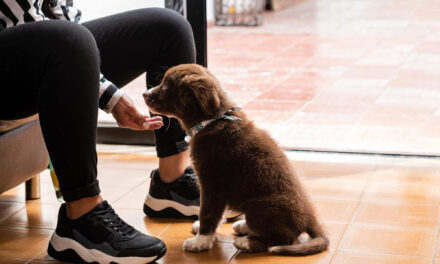
Charging is simple. Stand near your dog indoors. Say the cue once, in your happy voice, and immediately feed a small, excellent treat. You aren’t asking him to do anything yet. You’re teaching him that this sound predicts good things, the way the fridge door predicts good things. Do ten to twenty pairings per session, two or three sessions a day, for a few days.
You’ll know the cue is charged when your dog’s head whips around at the sound before you’ve moved. That’s the reflex you’re going to rely on later. Karen Pryor Clicker Training describes this as building a conditioned response first and adding distance second.
The Name Game
Your dog’s name is a cue too, and it’s the one you’ll use most. The name game teaches it to mean “look at me, something good is coming.” Say his name once. The instant he looks at you, mark it (a clicker or a crisp “yes”) and treat. Repeat in short bursts throughout the day, in every room, then in the yard.
Don’t repeat the name if he doesn’t look. Wait, make a small noise, or move, and try again in a second. A name said fifteen times in a row becomes background noise. A name said once and paid every time becomes something worth responding to.
Once the name reliably gets attention, chain it to the recall: name, tiny pause, recall cue, run backward a few steps, party when he arrives. Over hundreds of repetitions, the name becomes the “get ready” signal and the cue becomes the “go” signal.
“Touch” as a Recall
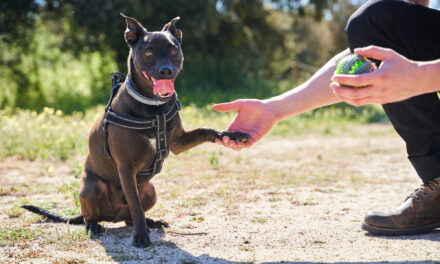
Hand targeting, usually cued as “touch,” is one of the most useful things you can teach a dog, and it doubles as a recall. Hold your open palm a few inches from his nose. When he bumps it, mark and treat. Move the hand to the side, lower, higher, then a step away, then across the room. Before long, your outstretched hand is a visual cue that means “run to this spot.”
“Touch” is handy because it gives your dog a precise finishing position (nose to palm, which puts his collar within reach), and because it’s easy to use when your dog is close but distracted. It also works for dogs whose verbal recall is shaky, because the hand is a picture, not a word that’s been shouted in anger.
The Collar-Grab Game
Many recalls fail in the last two feet. The dog comes in, sees the hand reaching for his collar, remembers that a collar grab means the fun is over, and veers off. The fix is to make the collar grab itself predict a reward, so the recall ends with a hand on the collar and a treat, not the end of play.
Start with your dog beside you. Touch his collar lightly, then feed. Repeat. Progress to a gentle hold, then to hooking a finger under the collar, then to clipping and unclipping a leash. Feed every time. Do this at home, in the yard, and at the park, so that “hand on collar” becomes a happy, predictable part of every recall rather than a trap.
The AKC’s recall guidance recommends building this into the recall itself: call, reward, touch the collar, reward again, release. Over time, your dog will come in and practically offer you the collar.
Marker and Reward Timing
A marker (a clicker or a single, consistent word like “yes”) tells your dog the exact moment he did the right thing. For recall, mark the moment he turns toward you, not the moment he arrives. That turn is the decision. Marking it early tells him the decision was the right one, and the reward on arrival confirms that finishing the trip pays.
Then feed within a second or two of arrival. Fumbling in a pocket for ten seconds while your dog wanders off teaches him that arriving leads to waiting. Keep treats ready in a pouch or pocket, and use your hand as the delivery point so he learns to come all the way in.
The five-step recall you’ll practice thousands of times
- Get attention. Say his name once. If he looks, you’re ready. If not, make the setup easier.
- Cue once. Say the recall word or blow the whistle, then immediately move backward or turn and jog away. Movement pulls him toward you.
- Mark the turn. The instant he heads your way, mark it (“yes” or a click).
- Pay on arrival, at the collar. Hand on the collar, treat from the hand, a few seconds of genuine praise.
- Release. “Okay, go play.” Most of the time, the recall ends with freedom, not with a leash.
The Reward Economy: Value, Variety, Jackpots, and Life Rewards
Your dog decides what counts as a reward, not you. A piece of kibble is a reward in the kitchen at 7 a.m. It’s not a reward in the park at 4 p.m. when there are three other dogs and a pile of goose droppings. Dog recall training runs on a reward economy, and you’re competing with the whole environment.
Reward Value: Pay Like the Job Matters
Trainers often sort treats into tiers. Low value: kibble, dry biscuits. Medium: soft commercial training treats. High: small pieces of cooked chicken, cheese, hot dog, freeze-dried liver, or whatever makes your dog’s eyes change. Save the high-value tier for recalls, especially outdoors. If the reward for a recall is the same as the reward for sitting in the kitchen, the recall doesn’t feel special.
Keep the pieces tiny, pea-sized for a medium dog, so you can pay many reps without filling him up. If your dog has food sensitivities or is on a veterinary diet, ask your vet what’s safe to use as a treat and adjust the rest of his meals to account for it.
Variety Keeps the Cue Interesting
A predictable reward becomes a known quantity, and known quantities get weighed against squirrels. Mix it up. Sometimes chicken, sometimes a tug game, sometimes three treats fed one after another, sometimes a thrown ball. Your dog should never be entirely sure what a recall pays, only that it always pays and sometimes pays enormously. That uncertainty is what keeps a slot machine interesting, and it works on dogs too.
Jackpots
A jackpot is an unusually large reward for an unusually good response. Your dog turns away from a running rabbit and comes in fast? That’s jackpot territory: a handful of chicken fed piece by piece over fifteen seconds, with the kind of celebration that makes other people in the park look at you. Use jackpots for breakthroughs, not for routine reps, or they stop being special.
Life Rewards: Releasing Back to Play
The most powerful reward you have outdoors isn’t food. It’s freedom. When your dog comes in and you release him straight back to whatever he was doing, you’ve just taught him that recall doesn’t end the fun. It’s a brief, well-paid pit stop in the middle of the fun.
This is the “recall then release” ratio, and it’s the part most owners skip. Aim for something like ten recalls that end in “okay, go play” for every one that ends in a leash. If your dog learns that most recalls are followed by more freedom, the occasional one that ends the walk won’t poison the cue. If every recall ends the walk, he’ll start hanging back the moment you reach for the leash.
The Chase Game
Dogs love to chase, and you can use it. When your dog turns toward you, don’t stand still with your arms out. Turn and run away from him, whooping. Nearly every dog will chase, and the chase itself becomes part of the reward. The AKC describes recall games built on exactly this: hide-and-seek, back-and-forth between two people, and “catch me” sprints. A dog who thinks the recall is a game will come faster than a dog who thinks it’s a command.
One caution: you’re running away, never toward him. Running toward a loose dog is the fastest way to teach keep-away, which we’ll deal with in troubleshooting.
The Dog Recall Training Progression Ladder
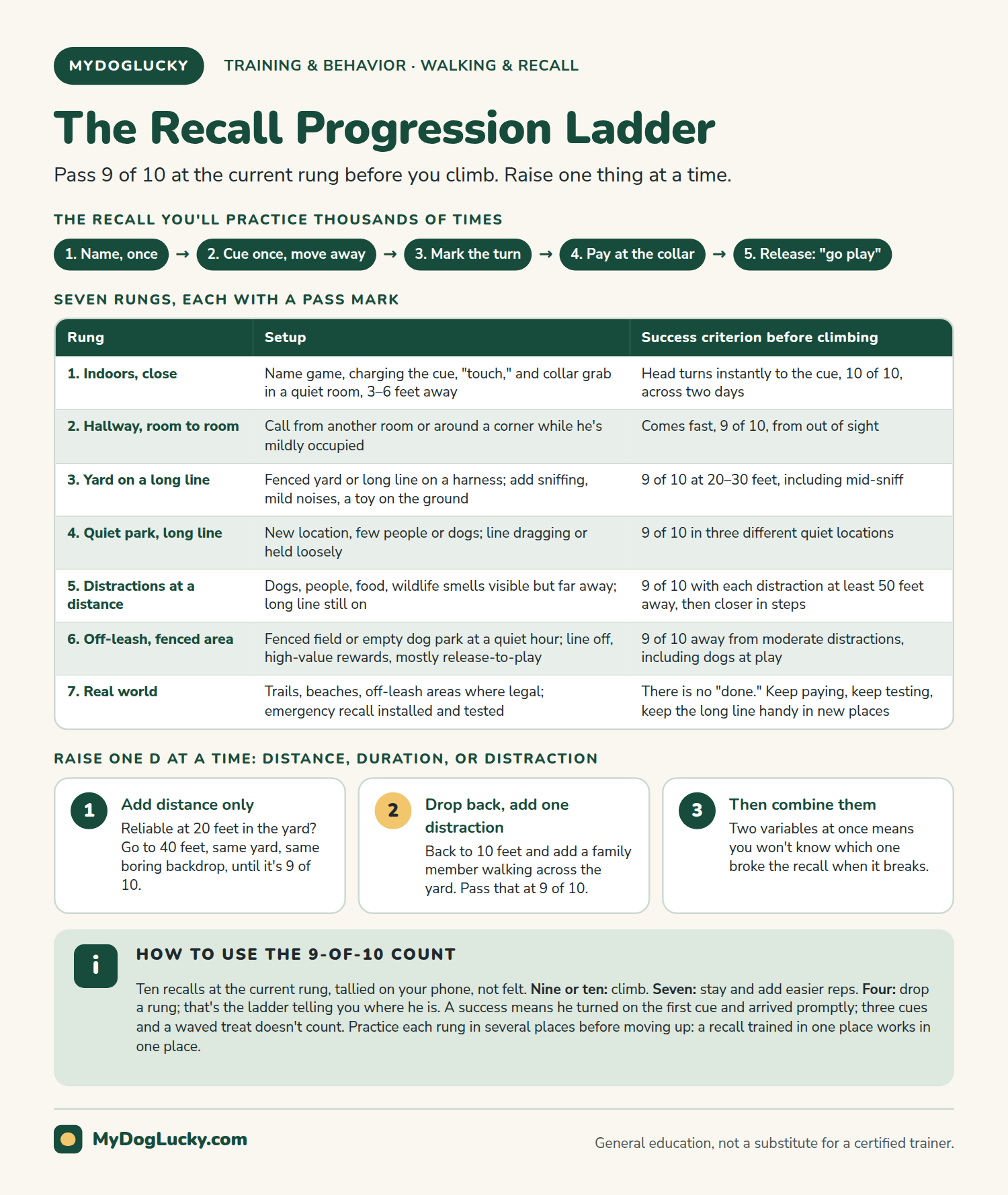
Progress in dog recall training happens one rung at a time, and every rung has a pass mark. The pass mark keeps you honest: you only climb when your dog has earned it, and you drop back a rung the moment he fails twice in a row. Trainers call the variables you’re raising the “three Ds,” for distance, duration, and distraction. Raise one at a time, never two.
Here’s the ladder. Notice that “real-world, off-leash” is the top rung and not the third one.
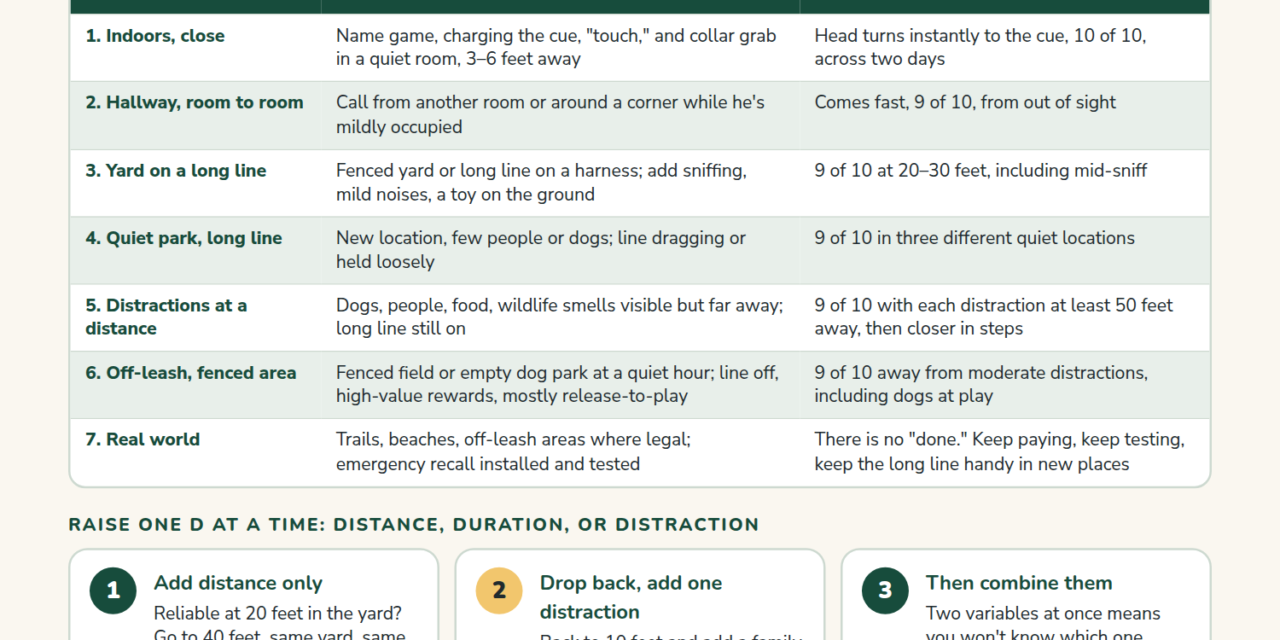
| Rung | Setup | Success criterion before climbing |
|---|---|---|
| 1. Indoors, close | Name game, charging the cue, “touch,” and collar grab in a quiet room, 3–6 feet away | Head turns instantly to the cue, 10 of 10 tries, across two days |
| 2. Hallway and room-to-room | Call from another room, from around a corner, while he’s mildly occupied | Comes fast, 9 of 10, from out of sight |
| 3. Yard on a long line | Fenced yard or long line on a harness; add sniffing, mild noises, a toy on the ground | 9 of 10 at 20–30 feet, including mid-sniff |
| 4. Quiet park on a long line | New location, few people or dogs, long line dragging or held loosely | 9 of 10 in three different quiet locations |
| 5. Distractions at a distance | Dogs, people, food, wildlife smells visible but far away; long line still on | 9 of 10 with each distraction at least 50 feet away, then closer in steps |
| 6. Off-leash, fenced area | Fenced field or empty dog park at a quiet hour; line off, high-value rewards, mostly release-to-play | 9 of 10 away from moderate distractions, including other dogs at play |
| 7. Real world | Trails, beaches, off-leash areas where legal; emergency recall installed and tested | There is no “done.” Keep paying, keep testing, keep the long line handy in new places |
How to Use the Success Criterion
“Nine of ten” is a real count, not a feeling. Keep a note on your phone. Ten recalls at the current rung, tally the successes, and only climb after you hit nine. If you get seven, stay put and add a few easier reps to rebuild confidence. If you get four, drop a rung. That’s not failure. That’s the ladder telling you where your dog actually is, which is more useful than where you hoped he’d be.
A “success” means he turned on the first cue and arrived within a reasonable time for the distance. A recall that needed three cues and a treat waved in the air is not a success, even if he eventually showed up.
Raise One D at a Time
Suppose your dog is reliable at 20 feet in the yard with no distractions. You want to add distance and a distraction at the same time, because you’re a busy person. Don’t. Add distance first (40 feet, same yard, same boring backdrop). When that’s at 9 of 10, drop the distance back to 10 feet and add the distraction (a family member walking across the yard). When that passes, combine them. Two variables at once means you won’t know which one broke the recall when it breaks.
Generalize Everywhere
Dogs don’t automatically transfer a skill from the kitchen to the park. A recall trained in one place is a recall that works in one place. Practice at each rung in several locations before moving up. Rung 4 on the ladder specifically asks for three different quiet places for this reason. Your dog needs to learn that the cue means the same thing in a parking lot, at a friend’s house, and on a trail.
Dog Recall Training With a Long Line: Handling and Safety
A long line is the tool that lets you practice outdoors before the recall is proven. Used well, it gives your dog room to roam and gives you a way to prevent a failed recall from becoming a chase. Used badly, it’s a tripwire for you, a neck injury for him, and a rope burn for whoever’s nearby.
Choosing a Line
Look for a 15- to 30-foot (5- to 10-meter) line in a material that doesn’t absorb water and doesn’t burn your hands on the way out. Coated webbing is a common choice because it stays light when wet and wipes clean; flat nylon is cheaper and fine for dry conditions. Wider is easier to grip. Skip anything with a loop handle at the end if you’ll be letting it drag, because loops snag on brush and on other dogs.
Do not use a retractable leash for recall work. The thin cord is hard to see, easy to lose control of, and can cause serious cuts and burns to people and dogs. Retractable leashes also keep tension on the line, which teaches pulling and gives you no way to shorten distance calmly.
Attach to a Harness, Not a Collar
Clip the long line to the back of a well-fitted harness. A dog hitting the end of a 30-foot line at full speed puts a lot of force on whatever it’s attached to, and you don’t want that force on his neck. Never attach a long line to a head halter, for the same reason, and never to a slip or prong collar.
Handling: Gloves, Hands, and Feet
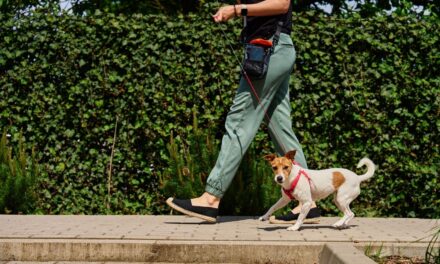
Wear gloves. Never wrap the line around your hand, wrist, or fingers; if your dog bolts, a wrapped line can break bones. Hold the line loosely and let it pay out through your gloved hand, or let it drag entirely in open, snag-free areas and step on it if you need to stop him.
Watch your feet and other people’s. Long lines wrap around ankles, tree trunks, and other dogs with surprising efficiency. Practice in open spaces before you take one onto a wooded trail, and shorten the line when other walkers are near.
Using the Line Without Reeling
The line’s job is to prevent your dog from leaving, not to drag him to you. If he ignores a recall on the long line, don’t reel him in. Stop him from continuing (step on the line or hold it), wait for him to look back, then make yourself interesting and cue again once he’s already moving toward you. Reeling teaches him that the recall is something done to him, which is exactly the association you’re trying to avoid.
When the recall is passing at 9 of 10 in a given place, let the line drag instead of holding it. Then move to a shorter line, then a lightweight “drag line” of just a few feet, and finally nothing. That gradual fade means your dog never notices the moment the safety net came off, so his behavior doesn’t change when it does.
Building a Recall Around Distractions
Distraction is the D that breaks most recalls, and it’s the one you can build most deliberately. The principle underneath all of it is that you can use the distraction itself as the reward.
Premack: Using the Distraction as the Paycheck
The Premack principle, in plain language, says a thing your dog wants to do can be used to reward a thing you want him to do. If your dog wants to sniff a bush, call him away from the bush, pay him, and then say “go sniff” and walk him back to it. The sniffing becomes the reward for coming. Do this with sniffing, with greeting a friendly dog, with chasing a ball, and, from a safe distance, with watching squirrels.
Over time, your dog learns that coming to you doesn’t cost him the interesting thing. It’s the toll booth on the way to the interesting thing. That flips the whole calculation. Instead of “recall or squirrel,” it becomes “recall, then squirrel.”
Recall Away From Other Dogs
Start far away. If your dog can’t take his eyes off a dog at 100 feet, you’re too close; back up until he can. Cue, pay heavily, release him to keep watching. Move in ten feet at a time over sessions, not minutes. Once he’s reliable near dogs at a distance, arrange a controlled setup with a friend’s calm dog: recall your dog away from a greeting after a few seconds, pay, and release him back to say hi. That “recall then release to the dog” pattern is the single best use of the Premack idea, because the dog is the biggest reward in the park.
Recall Past Food
Set a boring treat on the floor under a bowl or your foot so he can’t get it, then call him past it. Pay him with something better than what’s on the floor, then (this is the important part) release him to eat the floor treat after he’s come to you. Repeat with the food visible, then with the food uncovered but still under your control. You’re teaching him that coming to you is the fastest route to whatever he wants.
Recall From the Fence Line
Yard dogs often develop a fence-running routine: a neighbor’s dog, a passing jogger, a delivery truck, and the whole fence becomes a racetrack. Calling from the porch usually fails, because the fence is exciting and the porch is not. Go out there. Stand near the fence, wait for a lull, cue, and pay big when he turns. Then release him back to the fence. Build the habit while the fence is quiet before you try it while it’s loud.
A long line in the yard can help here too. It stops the fence running from being rehearsed while you’re teaching the alternative, and rehearsal is what makes fence running so hard to break.
Recall at Distance Around Wildlife
This is the hardest one, and the honest answer is that some dogs will never reliably recall off a deer in full flight. What you can build is a recall that works before the chase starts, when your dog has just noticed the movement and hasn’t yet committed. Practice on the long line in places where wildlife smells are strong but animals are scarce. Pay any glance back toward you. Over time, your dog learns to check in when he notices something, and that check-in is your window.
The Emergency Recall: A Separate Cue for a Different Job
Your everyday recall gets used dozens of times a week, in easy and medium situations, and sometimes it gets a little sloppy. That’s normal. The emergency recall is different. It’s a cue you use rarely, pay enormously every single time, and reserve for the moments when it has to work.
Why It Gets Its Own Cue
If you use the same word for “come inside now, dinner’s ready” and “stop, there’s a car,” the word carries the average value of all those situations. An emergency cue is never used for anything routine, so it never gets diluted. Many trainers use a whistle for this because it carries and sounds the same whether you’re calm or terrified. Others use an unusual word you’d never say by accident.
How to Install It
For the first two weeks, the emergency cue is never a request. It’s a promise. Give the cue when your dog is already close and easy to reach, then produce the best food he has ever eaten, a lot of it, fed piece by piece for twenty or thirty seconds. Three to five times a day, indoors, no distractions. The goal is a dog who hears the sound and comes barreling in with his eyes wide because he knows exactly what it means.
After two weeks, start using it at short distances with mild distractions, still paying the jackpot every time. Then in the yard on a long line. Then at the park. Never use it in a real emergency until it’s passed at 9 of 10 in the hardest setup you’ve built. And after every real-life use, go home and do a week of easy, jackpot-paid reps to recharge it.
Keep It Charged
Test the emergency recall once or twice a week in an easy setting, always with the jackpot. It’s cheap insurance. A cue that hasn’t been paid in three months is a cue you shouldn’t count on.
The Restrained Recall and Other Two-Person Games
A second person makes recall practice more fun and more effective, because it lets you build speed and enthusiasm without any of the pressure that comes from a single owner repeating a word.
The Restrained Recall
One person holds your dog gently by the harness or chest. You walk away, turn, get excited, and cue. The helper releases the instant the cue is given. Your dog, who has been straining to get to you, explodes across the space. Pay big at the collar. The restraint builds drive: the harder he wants to go, the faster he learns that this cue means “sprint.” Keep restraint gentle and brief, and skip it entirely with a dog who finds being held stressful.
Ping-Pong Recalls
Two people stand across a room or yard and take turns calling the dog. Each arrival gets paid. Increase the distance as he gets faster. This is the AKC’s “back-and-forth” game, and it’s an easy way to bank fifty repetitions in ten minutes while the kids feel like they’re playing.
Hide and Seek
Once your dog knows the cue, hide behind a door or a tree and call. Finding you becomes the game. Hide-and-seek builds a recall that works when you’re out of sight, which is exactly the situation you’ll face on a wooded trail. It also teaches your dog to keep track of where you are, which makes him check in more often on his own.
Dog Recall Training by Age, History, and Breed Type
The method doesn’t change across dogs. The expectations, the pace, and the equipment do.
Dog Recall Training for Puppies
Puppies are the easiest recall students you’ll ever have, because a young puppy’s instinct is to stay close to whoever is keeping him safe. Take advantage of it. Start the name game and charging the cue the first week home. Practice indoors and in a fenced yard. Pay every recall. Don’t let the puppy’s natural “velcro” phase fool you into thinking the recall is finished; it isn’t, and adolescence will make that clear.
VCA Animal Hospitals’ guidance on teaching puppies to come, wait, and follow recommends the same foundations: start close, make it rewarding, and never use the cue to end something the puppy enjoys.
Adolescents: The “Selective Hearing” Phase, Explained Kindly
Somewhere between roughly six and eighteen months, many owners report that the recall they built in puppyhood evaporates. The dog who ran to you at twelve weeks now glances over his shoulder and keeps going. This isn’t defiance or a moral failure. Adolescent dogs are more independent, more interested in the environment, and more sensitive to social and sexual scents than they were as puppies. The world got bigger and more interesting, and your reinforcement history didn’t keep pace.
The fix is to go back down the ladder. Put the long line back on. Drop to a rung where he’s reliable and rebuild from there, with better rewards than you used at four months. Most adolescent recalls come back with a few weeks of patient, well-paid work. What doesn’t work is deciding the dog is being “stubborn” and adding corrections, which teaches him the cue is now risky as well as boring.
Adult Rescue Dogs
An adult dog with an unknown history may arrive with a poisoned “come,” no recall at all, or a strong flight response when someone reaches for his collar. Assume nothing. Start with a brand-new cue, do the collar-grab game slowly and gently, and keep the long line on for months, not weeks. Some newly adopted dogs bolt when startled, and a dog who doesn’t yet know where “home” is may not come back on his own. Manage first; train second.
Seniors and Dogs With Hearing Loss
Older dogs can absolutely learn a recall, and many seniors have the most reliable recall in the house because they’ve had a decade of reinforcement history. What changes is the channel. If your dog’s hearing is fading, a verbal cue stops working in the exact moments you need it. Switch to a visual cue: a big arm sweep, a flashlight blink at dusk, or a vibration collar (vibration only, not shock) conditioned to predict a treat in the same way you charged the verbal cue.
VCA’s guidance on training deaf dogs describes this process: pair the vibration or visual signal with a reward until the dog reliably looks for you when it happens, then use it as a recall. Keep older dogs on a long line or in fenced areas if they can no longer hear traffic, and talk with your veterinarian about any hearing or vision change, since some causes are treatable.
Scent Hounds, Sighthounds, Huskies, and Honest Expectations
Some dogs were bred for generations to follow a scent, chase movement, or run for miles without checking in with anyone. Beagles and other scent hounds, greyhounds and other sighthounds, and northern breeds like huskies are the usual examples, though individuals vary enormously. These dogs can learn an excellent recall. Many do. But the gap between “excellent in most situations” and “reliable off a rabbit at a dead run” is wider for them, and it’s honest to say so.
For these dogs, the everyday recall and the emergency recall are still worth every minute of training. So is the decision to enjoy off-leash time in fenced spaces and on a long line in open ones. A long line on a beagle isn’t a training failure. It’s a reasonable accommodation for a dog whose nose is doing exactly what it was built to do.
A Four-Week Dog Recall Training Plan
Here’s a realistic month to start with. Sessions are five minutes or less, two or three times a day, and the whole thing assumes you’re paying every recall with something your dog genuinely wants. If a week doesn’t pass its criterion, repeat it. The calendar is a guide, not a deadline.
Week 1: Charge the Cue and Build the Games
- Days 1–3: Charge the new cue indoors (cue, treat, ten to twenty pairings per session). Start the name game and “touch.” Begin the collar-grab game at the level of a light touch.
- Days 4–7: Add the first real recalls at 3–6 feet indoors, with movement and a mark on the turn. Ping-pong recalls if you have a helper. Start charging the emergency cue separately, indoors, with the jackpot.
- Criterion: 10 of 10 head turns at the cue indoors; collar touch accepted happily.
Week 2: Out of Sight and Into the Yard
- Days 8–10: Room-to-room and around-the-corner recalls. Hide-and-seek in the house. Collar grab progresses to a gentle hold and leash clip.
- Days 11–14: Yard or long line, 10–20 feet, no distractions. Begin recall-then-release: most recalls end with “go play.” Emergency cue continues indoors at short distance.
- Criterion: 9 of 10 from out of sight indoors; 9 of 10 at 20 feet in the yard.
Week 3: Distance and Mild Distraction
- Days 15–18: Yard at 30 feet. Add one mild distraction at a time: a toy on the ground, a family member walking through, a sniffable patch. Recall past covered food. First quiet-park session on the long line.
- Days 19–21: Two more quiet locations. Emergency cue moves to the yard on a long line, jackpot every time.
- Criterion: 9 of 10 at 30 feet with a mild distraction; 9 of 10 in three quiet places.
Week 4: Distractions at a Distance
- Days 22–25: Long line at the park with dogs and people visible far away. Recall, pay, release to keep watching. Move closer in steps only when the previous distance passes.
- Days 26–28: Controlled recall away from a friend’s calm dog, then release back to greet. First test of a dragging line in a fenced area if everything else is passing.
- Criterion: 9 of 10 with distractions at 50 feet; long line still on in any unfenced area.
By the end of the month, most dogs have a recall that works in easy and medium settings and a foundation for the harder rungs. That’s a real result. The rest is months of the same, in more places, with the line getting lighter.
Troubleshooting: Five Common Recall Problems
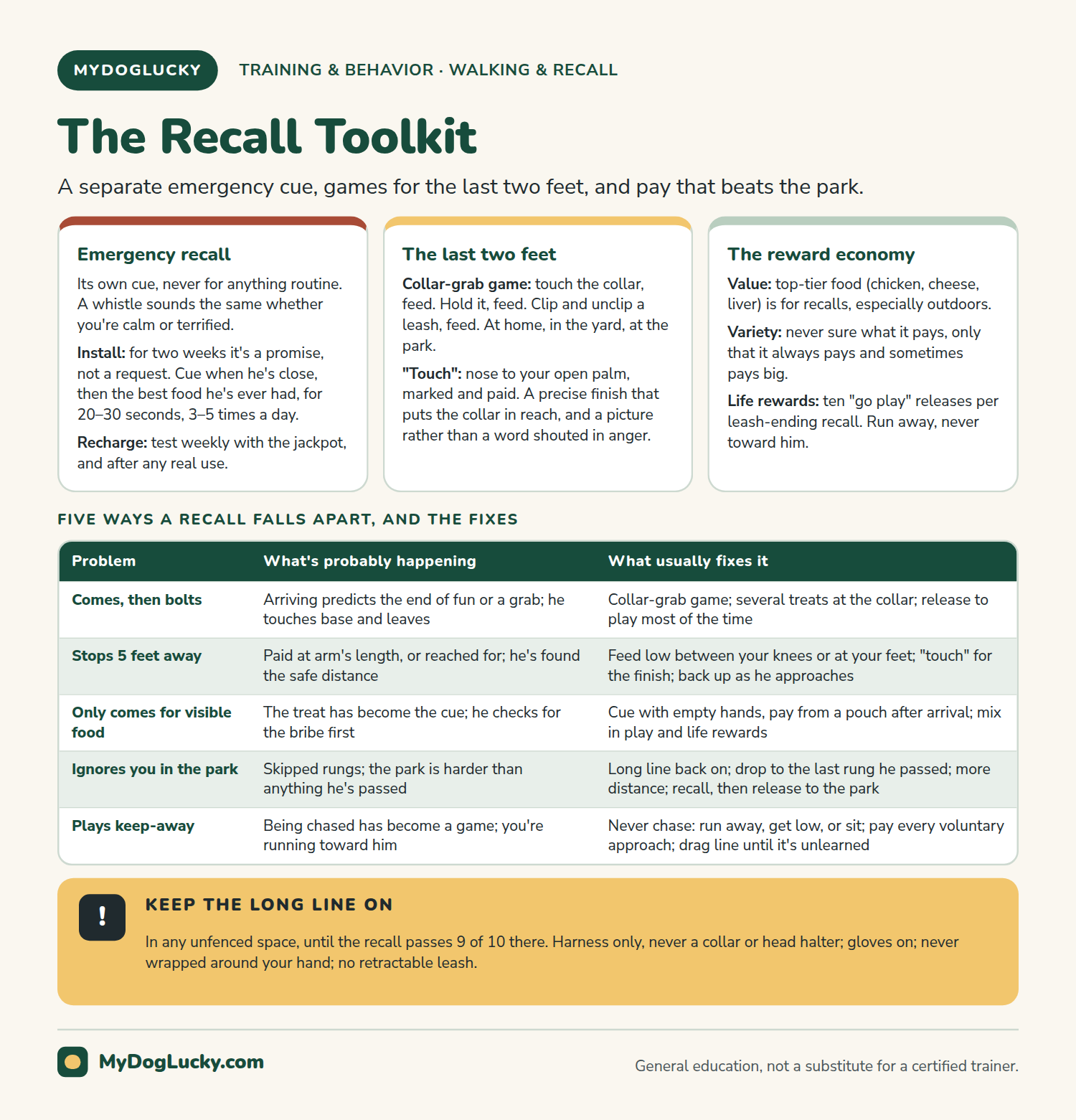
Most recall problems come down to one of five patterns. Each has a specific cause and a specific fix, and none of them is solved by saying the word louder.
| Problem | What’s probably happening | What usually fixes it |
|---|---|---|
| Comes, then bolts | Arriving predicts the end of fun or a grab; he’s learned to touch base and leave | Collar-grab game; feed several treats at the collar; release to play most of the time; never leash on every recall |
| Stops 5 feet away | You’ve been paying at arm’s length, or reaching for him; he’s found the safe distance | Feed from your hand between your knees or at your feet; use “touch” for a precise finish; back up as he approaches so he follows all the way in |
| Only comes when he sees food | The treat has become the cue; he checks for the bribe before deciding | Hide food in a pouch or pocket; cue with empty hands, pay after arrival; mix in play and life rewards; vary the size of the payout |
| Ignores you in the park | You’ve skipped rungs; the park is harder than anything he’s passed | Long line back on; drop to the last rung he passed; increase distance from distractions; Premack the park itself |
| Plays keep-away | Being approached or chased has become a game; you’re running toward him | Never chase; run away, get low, or sit; pay every voluntary approach; manage with a drag line until the game is unlearned |
Problem 1: Comes, Then Bolts
This one is almost always a prediction problem. Your dog has learned that arriving leads to a leash, a grab, or the walk ending, so he touches base and leaves before any of that happens. The fix has three parts. Play the collar-grab game until a hand on the collar predicts food. Feed three or four treats in a row at the collar, so arriving has a duration to it. And release him back to play on most recalls, so leaving isn’t the only way to keep the fun going.
Problem 2: Stops Five Feet Away
The dog who stops just out of reach has usually been paid at that distance, or has been reached for once too often. Change where the food appears. Feed from a hand held low between your knees, or drop the treat between your feet, so he has to come all the way in to collect. Teach “touch” and use it for the finish, since the palm gives him a precise target. Back up a few steps as he approaches, so he follows you into the pocket of space right in front of you.
Problem 3: Only Comes When the Food Is Visible
If you’ve been holding the treat up while you call, the treat has become the cue and the word is just noise. Put the food away. Cue with empty, relaxed hands, then produce the reward from a pouch or pocket after he arrives. Mix in rewards he can’t see coming: a tug game, a thrown ball, a sprint, a release to sniff. He needs to learn that the cue is the reliable predictor, not the sight of the bag.
Problem 4: Ignores You in the Park
This is the most common complaint, and it usually means the park is several rungs above anything your dog has passed. He isn’t ignoring you. He’s in a situation where the cue has almost no history and the competing rewards are enormous. Put the long line back on, go to the far edge of the park where distractions are distant, and rebuild there. Pay heavily and release him back to the environment after each recall. Move closer to the action only as the count allows.
Problem 5: Playing Keep-Away
Keep-away starts when someone chases a dog, even once. The dog discovers that being pursued is a spectacular game, and from then on, an approaching human is the starting gun. Stop chasing, permanently. When he dodges, turn and run away from him instead, or drop to a crouch and study something fascinating on the ground. Pay every approach he makes on his own, no matter how small. Use a drag line so you can prevent the game without lunging. It takes a few weeks to unlearn, and it will come back the first time anyone in the house forgets and gives chase.
What to Do When Your Dog Won’t Come Right Now
Training is for later. This section is for the moment you’re standing in a field with a dog who has decided not to come, and the sun is going down.
In the moment: what tends to work, and what doesn’t
- Don’t chase, and don’t shout. Chasing turns it into a game; an angry voice makes coming to you less appealing than staying away.
- Run away from him. Turn, whoop, and jog off in the opposite direction. Most dogs follow movement that’s leaving.
- Get low. Crouch or sit on the ground and look at something in the grass with great interest. Curiosity pulls many dogs in.
- Throw a party. Laugh, clap, talk in a silly voice. Act as if the best thing in the world just happened over here.
- Open a car door. Many dogs will jump into a familiar car when they won’t come to a hand. Same with an open house door or gate.
- Use a familiar sound. A treat bag crinkle, the squeak of his toy, the jingle of the leash clip.
- Use the emergency cue once, if it’s installed and charged, and pay the full jackpot when he arrives. Don’t repeat it if it fails; you’ll dilute it.
When he finally arrives, whether that’s in ten seconds or ten minutes, the only correct response is genuine warmth and the best reward you have on you. Every fiber of you may want to express how you feel about the last ten minutes. Don’t. The lesson he takes home is about the last thing that happened, and the last thing that happened needs to be good.
If He’s Truly Gone: Lost-Dog Basics
If your dog is out of sight and not responding, act quickly and calmly. Stay near where he was last seen for a while if it’s safe; many dogs circle back. Leave something with your scent, like a jacket, at that spot if you must leave. Call local animal shelters and animal control the same day, and check your dog’s microchip registration is current so a scan leads back to you.
Post a recent photo on neighborhood apps and local lost-pet groups with the location and time. If he’s seen but won’t approach strangers, ask people not to chase him; a scared dog runs from pursuit. Sitting quietly, or leaving food and a familiar object, often works better.
When to Get Help From a Professional
A basic recall is something most owners can build themselves with the plan above. Some situations call for a qualified professional, and asking for help early is faster and cheaper than fixing a poisoned cue later.
- The recall falls apart around a specific trigger (other dogs, wildlife, bikes) despite weeks of work on the ladder, and you can’t get far enough away to find a starting point.
- Your dog shows fear or reactivity toward the things you’re trying to recall him away from. That’s a different problem than recall, and it needs a different plan.
- Your dog bolts or runs from you when startled, especially a newly adopted dog. Flight behavior needs careful, gentle handling.
- You’ve been told to use a shock collar and want a humane alternative that works.
- You need an off-leash recall for a working, sporting, or hiking lifestyle and want to get there faster and more reliably than trial and error.
Look for a trainer certified by the Certification Council for Professional Dog Trainers (CCPDT) or accredited by the International Association of Animal Behavior Consultants (IAABC), and ask directly how they handle a dog who doesn’t come. The answer should involve management, better rewards, and a step back down the ladder, not corrections. For fear, reactivity, or flight, a veterinary behaviorist (a veterinarian board-certified by the American College of Veterinary Behaviorists) or a certified behavior consultant is the right call, and your veterinarian can refer you. Fear Free-certified trainers and veterinary teams are another good sign that the approach will be reward-based.
Common Mistakes That Poison a Recall
Repeating the Cue
“Come. Come! COME. Come here. Buddy, come!” Every repetition teaches your dog that the first one didn’t count. Say it once. If he doesn’t respond, the setup was too hard; make it easier and try again in a moment, rather than layering more cues on the same failure.
Calling for Bad Things
Covered above, and worth repeating, because it’s the most common way a good recall goes bad. If the next thing is a bath, a nail trim, a crate, ear drops, or the end of the park visit, go and get your dog. Or call, pay, play for a minute, and then do the thing. The cue must never be the thing that ends the good part.
Testing Instead of Training
Owners sometimes “test” the recall in a hard setting to see whether it’s working. Every test the dog fails is a rep of ignoring the cue, and those reps count. Set him up to succeed, and let the 9-of-10 count tell you when to climb.
Stopping the Rewards Once It “Works”
A recall is never finished. Once it’s reliable, you can vary the reward and skip the food sometimes, but the average payout has to stay high for the life of the dog. The environment keeps paying your dog for ignoring you. You have to keep paying him for the alternative.
Using a Bribe Instead of a Reward
A bribe is shown before the behavior. A reward appears after. If your dog only comes when he sees the bag, you’ve been bribing. Hide the food and pay from a pocket after he arrives.
Skipping Rungs
The dog who’s reliable in the yard is not ready for the beach. Every skipped rung is a failed recall waiting to happen, and failed recalls in exciting places teach the exact lesson you don’t want.
Reaching for the Dog
Reaching toward an approaching dog makes many dogs slow down or swerve. Keep your hands at your sides or low until he’s in, then bring the treat to the collar. Let him come into your space, not the other way around.
Frequently Asked Questions About Dog Recall Training
How long does dog recall training take?
A charged cue and a reliable indoor recall can take a week or two. A recall that holds up in a quiet park on a long line often takes a month or two of short daily sessions. A recall you’d trust off-leash around dogs and wildlife typically takes months, sometimes a year, and it needs maintenance for life. Anyone promising a reliable off-leash recall in a few weeks is selling something.
What’s the best cue for dog recall training?
Any short, distinctive sound your dog hasn’t learned to ignore. If “come” already means “eventually,” start fresh with a new word or a whistle. A whistle carries farther and sounds the same no matter how you feel, which is why many trainers use one for the emergency recall.
Should I use a shock collar for recall?
No. The AVSAB’s 2021 position statement recommends reward-based training and links shock collars and other aversive tools to fear, anxiety, and aggression, with no evidence they’re necessary. The statement cites research in which reward-based recall training was at least as effective as shock-collar training, with faster responses in the reward-trained group. A shock collar also puts your dog in the position of being punished near the very things you want him to feel safe returning from.
My dog only comes when I have treats. How do I fix that?
Stop showing the food before you call. Cue with empty hands, then pay from a pouch or pocket after he arrives. Add rewards he can’t predict: a tug, a sprint, a release to sniff. The cue should be the reliable predictor of good things, not the sight of the bag.
How do I do dog recall training for puppies?
Start the first week home. Play the name game, charge the cue, teach “touch,” and make collar touches predict treats. Practice indoors and in fenced spaces, pay every recall, and enjoy the phase when your puppy follows you everywhere. Then expect adolescence to test it, and be ready to go back to the long line and rebuild.
Can an older dog or a rescue dog learn a recall?
Yes. Adult dogs learn recall the same way puppies do, though a rescue with an unknown history may need a brand-new cue and a slower, gentler collar-grab game. Seniors with hearing loss can learn a visual cue or a vibration cue (vibration only, never shock) using the same charging process.
Is dog recall training with a long line necessary?
In any unfenced space, yes, until the recall has passed at 9 of 10 in that kind of setting. A long line prevents a failed recall from becoming a chase or a road crossing, and it lets you practice outdoors without gambling. Attach it to a harness, wear gloves, never wrap it around your hand, and never use a retractable leash instead.
What if my dog comes but won’t let me touch his collar?
That’s the collar-grab problem, and it’s common. Rebuild the association separately: touch the collar, feed; hold the collar, feed; clip the leash, feed. Do it at home first, then everywhere. Once a hand on the collar reliably predicts a treat, the recall will start finishing at your hand instead of two feet away.
How often should I practice dog recall training?
Short sessions, five minutes or less, two or three times a day, plus a few “free” recalls sprinkled into every walk and every play session. Frequency beats duration. Fifty easy, well-paid recalls a week will build more than one long weekend session.
My dog’s recall used to be great and now he ignores me. What happened?
If he’s between six and eighteen months, it’s probably adolescence: more independence, more interest in the world, and a reinforcement history that hasn’t kept up. If he’s older, check whether the cue has been used for something unpleasant lately, whether rewards have tapered off, or whether you’ve moved to harder environments faster than the count allowed. Either way, the fix is the same: long line on, drop a rung, better rewards, rebuild.
Where to Start This Week
Pick a fresh cue tonight, and charge it in the kitchen before bed: cue, treat, ten times. Tomorrow, add the name game and the collar touch. This weekend, order a long line and start the yard reps. That’s the whole first week, and it’s enough.
The dog who can’t hear you at thirty feet isn’t being difficult. He’s telling you where the reinforcement history runs out. Dog recall training is the slow, cheerful work of extending that history one easy rep at a time, in one more place than last week, with one more distraction than last time. Pay every recall. Protect the cue. Keep the line on until the count says otherwise. And when he finally turns away from the squirrel and sprints to you, throw the kind of party the neighbors talk about.
Sources
- American Veterinary Society of Animal Behavior. Position Statement on Humane Dog Training (2021)
- American Kennel Club. Training Your Dog to Come When Called (accessed September 2026)
- American Kennel Club. Reliable Recall: Teaching Your Dog to Always Come When Called (accessed September 2026)
- American Kennel Club. Want Your Dog to Come When Called? Play a Game (accessed September 2026)
- VCA Animal Hospitals. Training Your Puppy to Come, Wait, and Follow (accessed September 2026)
- VCA Animal Hospitals. Off-Leash Training for Dogs (accessed September 2026)
- VCA Animal Hospitals. Teaching and Training a Deaf Dog (accessed September 2026)
- ASPCA. Positive Reinforcement Training (accessed September 2026)
- Merck Veterinary Manual. Behavior Problems in Dogs (pet owner version; accessed September 2026)
- Karen Pryor Clicker Training. Training a Steadfast Recall (accessed September 2026)
- Fear Free Happy Homes. Clicker Training Basics (accessed September 2026)
- Certification Council for Professional Dog Trainers. Find a Certified Trainer (accessed September 2026)
- International Association of Animal Behavior Consultants. Find a Behavior Consultant (accessed September 2026)
- American College of Veterinary Behaviorists. Find a Veterinary Behaviorist (accessed September 2026)
This article is general education for U.S. dog owners. It is not individualized training or veterinary advice for your dog. A recall that fails around fear, reactivity, or flight behavior should be evaluated by a certified trainer, certified behavior consultant, or veterinary behaviorist. Check local leash laws before any off-leash practice, and keep your dog on a long line or in a fenced area until the recall has been tested in that kind of setting. Any sudden change in your dog’s responsiveness, hearing, or vision is a reason to talk with your veterinarian.