
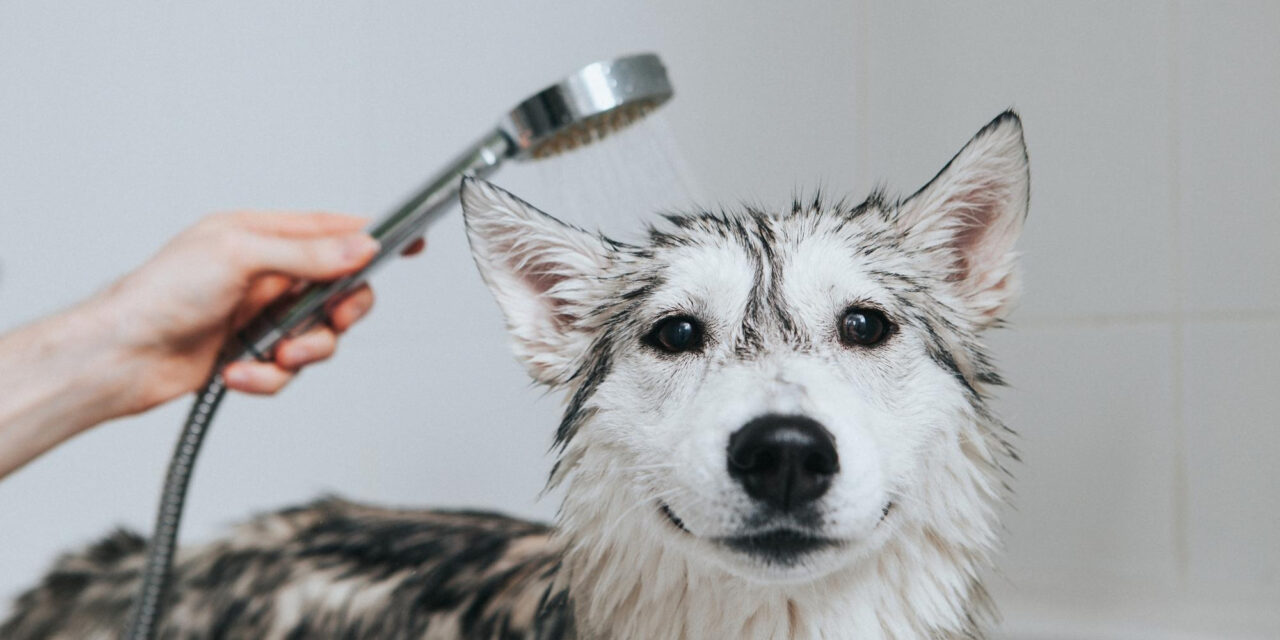
How often should you bathe your dog? For most dogs, once every four to six weeks is a reasonable starting point. But your dog’s actual answer depends on his coat type, his skin, and how he spends his weekends.
A short-haired dog who naps on the couch needs a different schedule than a double-coated dog who swims every afternoon. Bathe too rarely and odor, allergens, and matting build up. Bathe too often and you can strip the natural oils that protect your dog’s skin, leading to dryness and irritation.
This guide skips the single universal number. Instead, it gives you a matrix to match your dog’s coat type and lifestyle to a real frequency range. You’ll also get the shampoo, technique, and troubleshooting to make bath time work for both of you.
What’s in this guide
- How often should you bathe your dog? The quick answer
- Why bathing frequency isn’t one-size-fits-all
- Understanding your dog’s coat type
- The dog bathing frequency matrix
- Five factors that push your schedule up or down
- Reading your dog’s skin and coat before you decide
- Choosing the right shampoo
- What you need before bath time
- Grooming tools that make bathing easier
- A step-by-step bathing routine
- Bathing in an apartment or without a tub
- Bathing on a budget: DIY vs. the groomer
- Bathing puppies: how young is too young?
- Introducing bath time to a dog who’s never been bathed
- Bathing senior dogs and dogs with mobility limits
- Keeping your dog fresh between baths
- Bathing for specific situations
- Common dog bathing mistakes
- Signs your dog’s skin needs a vet, not just a bath
- Building a routine that actually sticks
- Your dog bathing checklist
- Common questions about bathing your dog
- Sources
How often should you bathe your dog? The quick answer
Most healthy adult dogs do well with a bath every four to six weeks. That’s a starting point, not a rule carved in stone. Your dog’s actual number moves up or down based on his coat, his skin, his activity level, and the season.
A short, smooth coat can often stretch to eight weeks or longer between baths. A dog with a thick double coat or allergies may need a bath every one to two weeks instead. So might a dog with a habit of rolling in questionable things. Neither dog is doing it wrong. They’re just different dogs.
The two mistakes that cause the most problems
Bathing too rarely lets odor, allergens, and dead hair build up. Bathing too often strips the natural oils that keep skin healthy, which can lead to dryness, flaking, and irritation. Both mistakes are common, and both are easy to fix once you know your dog’s actual coat type and lifestyle.
Why bathing frequency isn’t one-size-fits-all
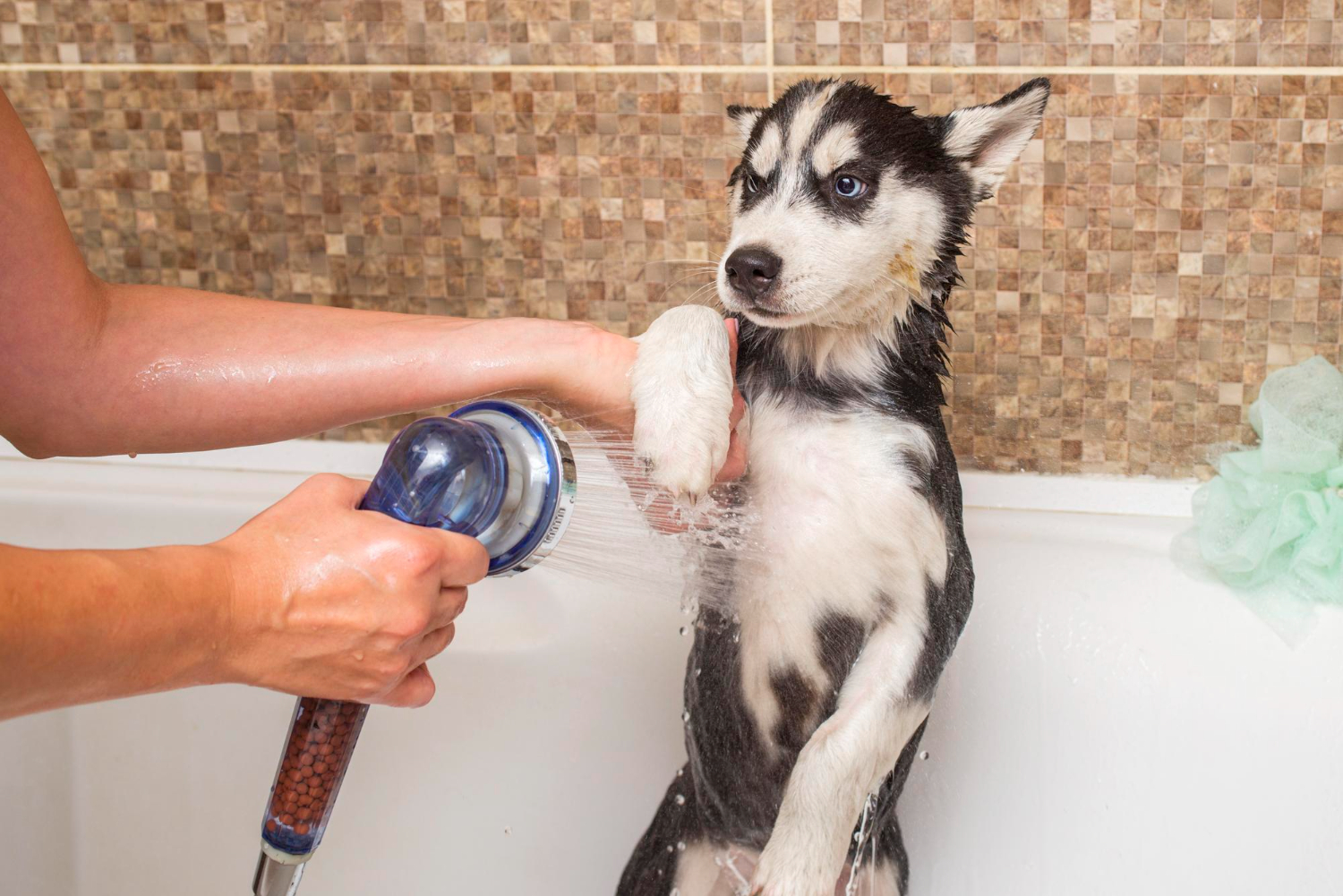
Veterinarians describe dog bathing schedules in ranges, not fixed numbers, because so many individual factors are in play. There are no hard and fast rules for bathing, according to veterinary guidance. Reasonable frequency ranges from once a week to only a few times a year, depending on the dog.
That range feels enormous until you break it down by what actually drives it. The key factors are coat type and skin health. Outdoor time and household allergies matter too. Once you know where your dog falls on each of those factors, the picture narrows fast. How often should you bathe your dog? The answer gets a lot more specific.
Veterinary sources are also consistent on the two failure modes. Under-bathing leads to odor and skin problems from built-up allergens and debris. Over-bathing strips natural oils and can trigger dryness, flaking, and irritation. The goal isn’t the most baths or the fewest. It’s the right rhythm for your specific dog.
How often should you bathe your dog? A straight answer starts with understanding why frequency matters at all. A dog’s skin naturally produces oils that protect against moisture loss and minor everyday irritants. Each bath removes some of that layer along with the dirt. A well-timed schedule lets the oil layer rebuild between washes. A too-frequent one keeps stripping it faster than your dog’s skin can replace it. That’s the mechanism behind most over-bathing complaints.
Understanding your dog’s coat type
Coat type is the single biggest factor in how often your dog needs a bath. Most dogs fall into one of five broad categories, though many mixed-breed dogs blend traits from more than one.
- Short, smooth coat (Labrador, Beagle, Boxer). Minimal grooming needs, sheds year-round, dirt and oil rinse off easily.
- Double coat (Golden Retriever, German Shepherd, Husky). A soft undercoat plus a coarser outer layer. Needs regular de-shedding more than frequent bathing.
- Long, silky coat (Collie, Afghan Hound, Yorkshire Terrier). Prone to tangles and mats, which makes brushing at least as important as bathing.
- Curly or wiry coat (Poodle, Bichon Frise, Wire Fox Terrier). Traps dirt and moisture close to the skin, and often needs professional trimming alongside bathing.
- Hairless or near-hairless (Xoloitzcuintli, Chinese Crested). Little or no coat to protect the skin, so it needs direct, consistent skin care instead of fur care.
Not sure which category fits your dog? Look at what a bad hair day actually looks like for him. A dog who mats easily is telling you something different. A dog who just smells a little ripe by Friday is telling you something else.
The dog bathing frequency matrix
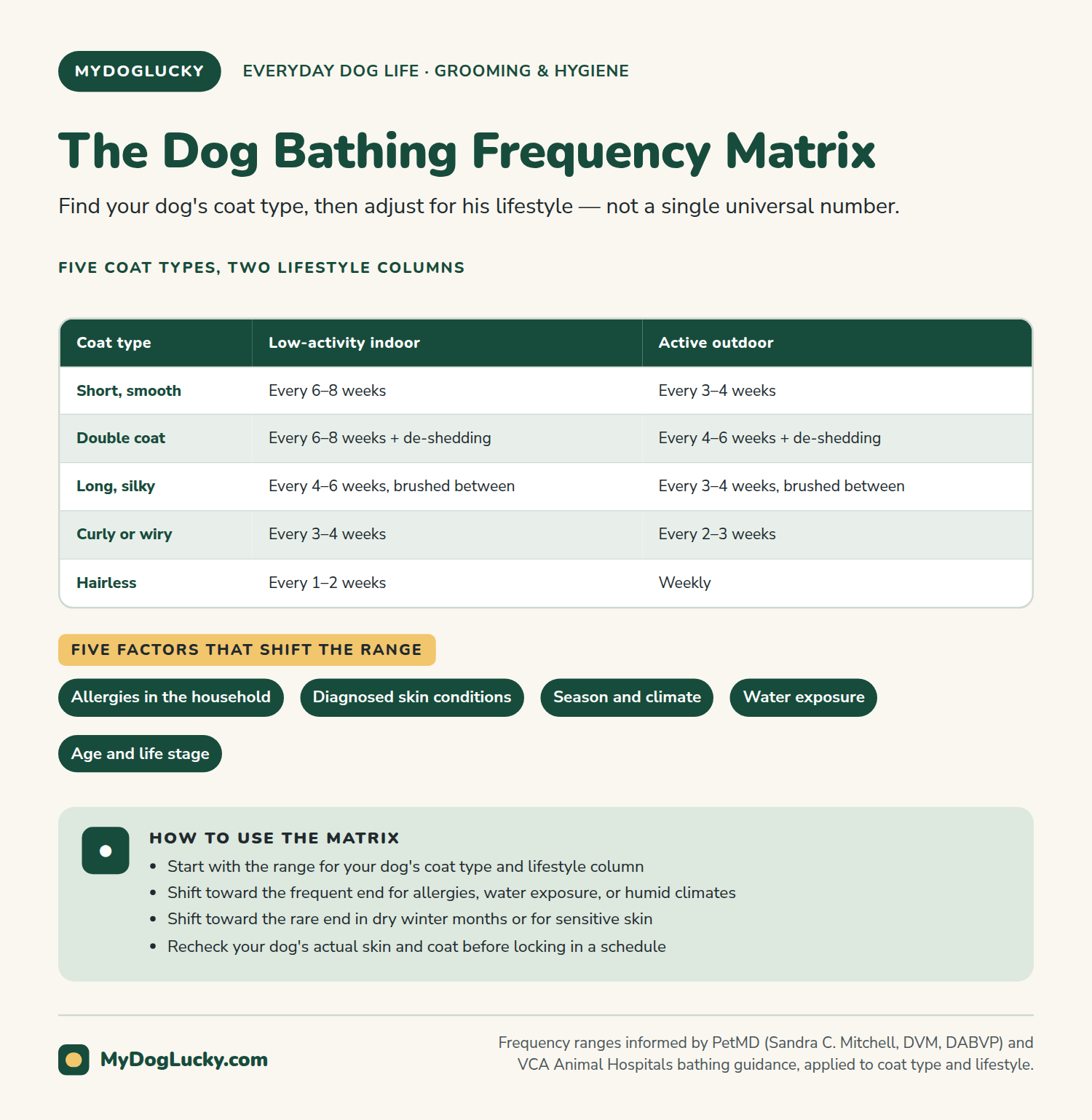
Here’s where coat type and lifestyle come together into an actual number. Find your dog’s coat type on the left, then adjust using the lifestyle column that fits him best.
| Coat type | Low-activity indoor lifestyle | Active outdoor lifestyle |
|---|---|---|
| Short, smooth | Every 6–8 weeks | Every 3–4 weeks |
| Double coat | Every 6–8 weeks, plus regular de-shedding | Every 4–6 weeks, plus regular de-shedding |
| Long, silky | Every 4–6 weeks, brushed between baths | Every 3–4 weeks, brushed between baths |
| Curly or wiry | Every 3–4 weeks | Every 2–3 weeks |
| Hairless or near-hairless | Every 1–2 weeks | Weekly |
Start with the range for your dog’s row and lifestyle column. Then check the factors below, since allergies, skin conditions, and specific events can shift that number in either direction.
Putting it together: three example dogs
An abstract table is easier to use with a real example behind it. Here’s how the matrix plays out for three different dogs.
A four-year-old Labrador, short coat, backyard and daily walks
Row: short, smooth coat. Column: active outdoor lifestyle, since he’s outside most days. That points to a bath roughly every three to four weeks, with a quick towel-off after muddy walks in between.
A seven-year-old Golden Retriever, double coat, mostly indoors with occasional hikes
Row: double coat. Column: somewhere between indoor and outdoor. This dog lands around every five to six weeks for a full bath. Weekly de-shedding brushing manages the undercoat regardless of bath schedule.
A two-year-old Poodle mix, curly coat, apartment living
Row: curly or wiry coat. Column: low-activity indoor lifestyle. That suggests every three to four weeks. Pair it with a professional trim every six to eight weeks to keep the curls from matting between baths.
An eight-year-old hairless Xoloitzcuintli, mostly indoors
Row: hairless or near-hairless. Column: low-activity indoor lifestyle. That still points to every one to two weeks, since there’s no fur layer to buffer the skin between baths. A gentle, moisturizing formula matters more here than for any other coat type on this list.
Five factors that push your schedule up or down
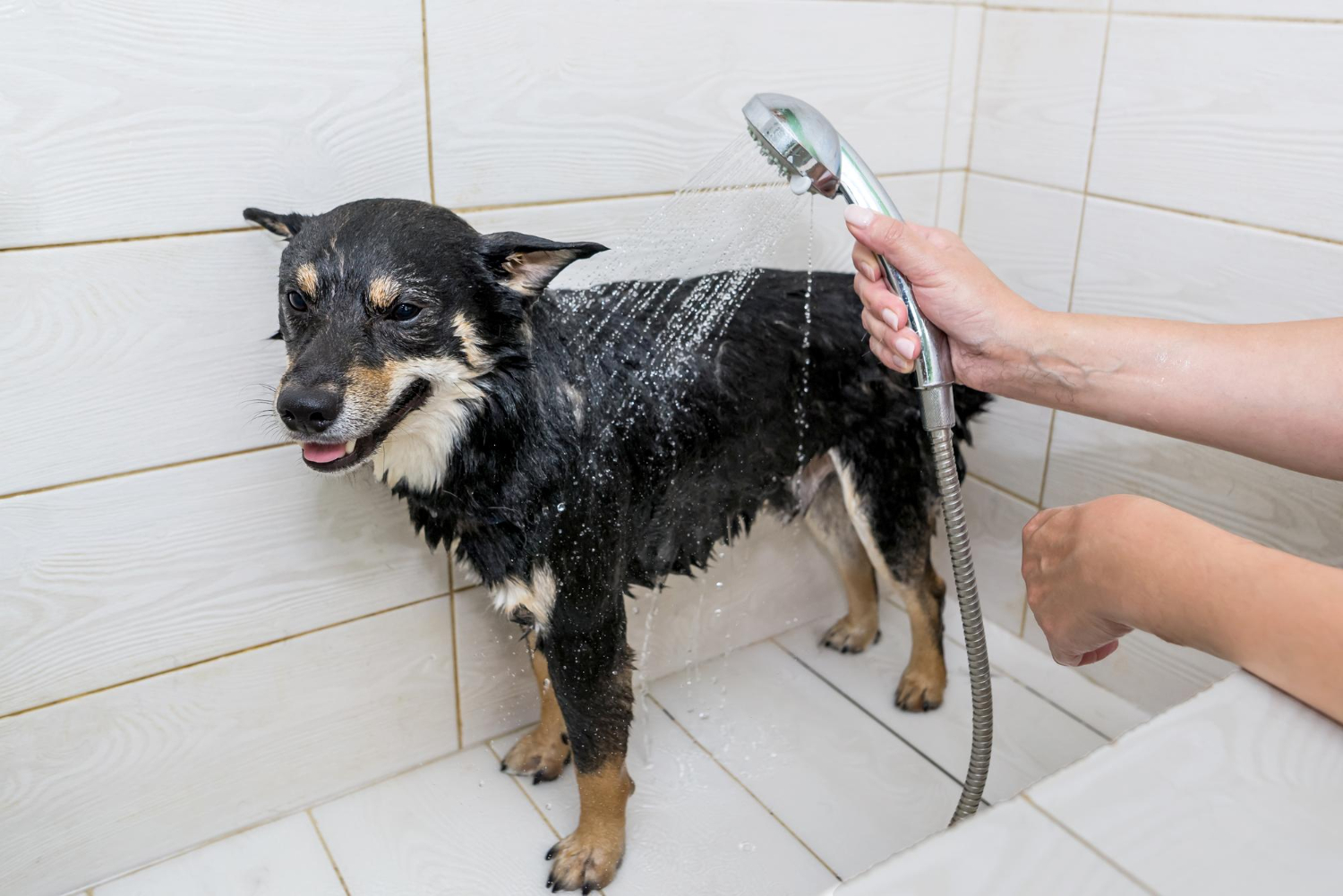
The matrix gives you a starting range. These five factors come up again and again. They’re the most common reasons a real dog’s schedule ends up at one edge of the range or the other.
1. Allergies in the household
More frequent bathing reduces the dander and allergens a dog carries, which can help household members with pet allergies. If allergies are a factor in your home, lean toward the more frequent end of your dog’s range. Ask your vet or an allergist about a safe minimum interval.
2. Skin conditions
A dog with diagnosed skin issues often needs a different approach. His schedule should come from a veterinarian, not a general guide like this one. Using the wrong product or frequency on unhealthy skin can make the underlying problem worse instead of better.
3. Season and climate
Warm months often call for more frequent baths, since heat, humidity, allergens, and parasite exposure all increase together. Cold, dry months usually call for fewer baths and a more moisturizing shampoo. Indoor heating already dries out skin on its own.
4. Water exposure
A dog who swims regularly needs more frequent, thorough rinsing to remove chlorine, salt, or lake residue. A full shampoo bath isn’t always needed every time, though. Rinsing after every swim protects the skin more than it might seem to at first.
5. Age and life stage
Puppies and senior dogs both tend to need gentler bathing. It’s often less frequent too, compared with a healthy adult dog in his prime. The specifics for each life stage get their own sections further down this guide.
Reading your dog’s skin and coat before you decide
The matrix and the five factors get you close. Your dog’s actual skin and coat, checked by hand, gets you the rest of the way. A quick weekly check tells you more than any general chart can.
What a well-timed schedule looks like
Part the coat down to the skin in two or three spots. Healthy skin looks smooth, without redness, flaking, or a strong odor. The coat itself should feel soft rather than greasy or brittle. It shouldn’t release a cloud of dander when you run a hand through it, either.
Signs you’re bathing too often
Watch for a dull, dry, or brittle coat. Also watch for skin that looks flaky right after a bath. A dog who seems itchier after washing than before is another clue. These are common signs that the natural oil layer isn’t getting time to recover between baths.
Signs you’re bathing too rarely
A noticeably greasy coat is one sign to shorten the interval. So is a persistent odor that returns within a day or two of a bath, or visible debris and matting. A dog who’s suddenly attracting more attention from the household for the wrong reasons is telling you something too.
Adjust one variable at a time
If you change your dog’s schedule, give it two or three bath cycles before judging the result. Changing the shampoo and the frequency at the same time makes it hard to tell which adjustment actually helped.
Choosing the right shampoo
The shampoo matters as much as the schedule. Dog skin is less acidic than human skin, with roughly a third as many cell layers. Those cells also regenerate faster. That structural difference makes a dog’s skin more easily irritated by products formulated for a different species.
Human shampoo, even a gentle baby formula, is built around human skin’s more acidic pH. Using it on a dog can shift his skin’s natural pH. That shift can lead to dryness, flaking, and a higher risk of infection. Veterinary dermatologists are consistent on this point. Human shampoo isn’t a safe substitute for dog shampoo, regardless of how mild the label claims it is.
- Standard dog shampoo works for most healthy coats and skin. Look for a pH-balanced, tear-free formula for easier all-over use.
- Moisturizing shampoo helps in dry winter months or for naturally dry-skinned breeds.
- Medicated shampoo treats a specific diagnosed condition. It should come from your vet, with instructions on frequency and contact time.
- Flea and tick shampoo is a treatment, not a routine product. Follow the label and your vet’s guidance rather than using it on a regular schedule.
Check the shelf life
Replace shampoo that’s over a year old or has been stored somewhere damp. If you dilute shampoo for easier application, mix only what you need for that one bath. Don’t store diluted product for later.
Reading the label
A short, plain-language ingredient list is generally a reasonable sign, though it isn’t a guarantee of anything by itself. If your dog has known sensitivities, ask your vet which ingredients to avoid before trying a new shampoo. That beats testing it on your dog’s whole coat first. A product labeled specifically for sensitive skin is worth trying if you’ve noticed irritation with a standard formula.
What you need before bath time
Gathering everything before you start helps. It keeps a wet, soapy dog from having to wait around while you hunt for a towel.
- A non-slip mat for the tub or sink floor
- Dog-formulated shampoo, and conditioner if your dog’s coat needs it
- Two to three absorbent towels
- A cup or handheld sprayer for controlled rinsing
- A brush suited to your dog’s coat type, for before and after
- Treats, for a calmer, more cooperative bath
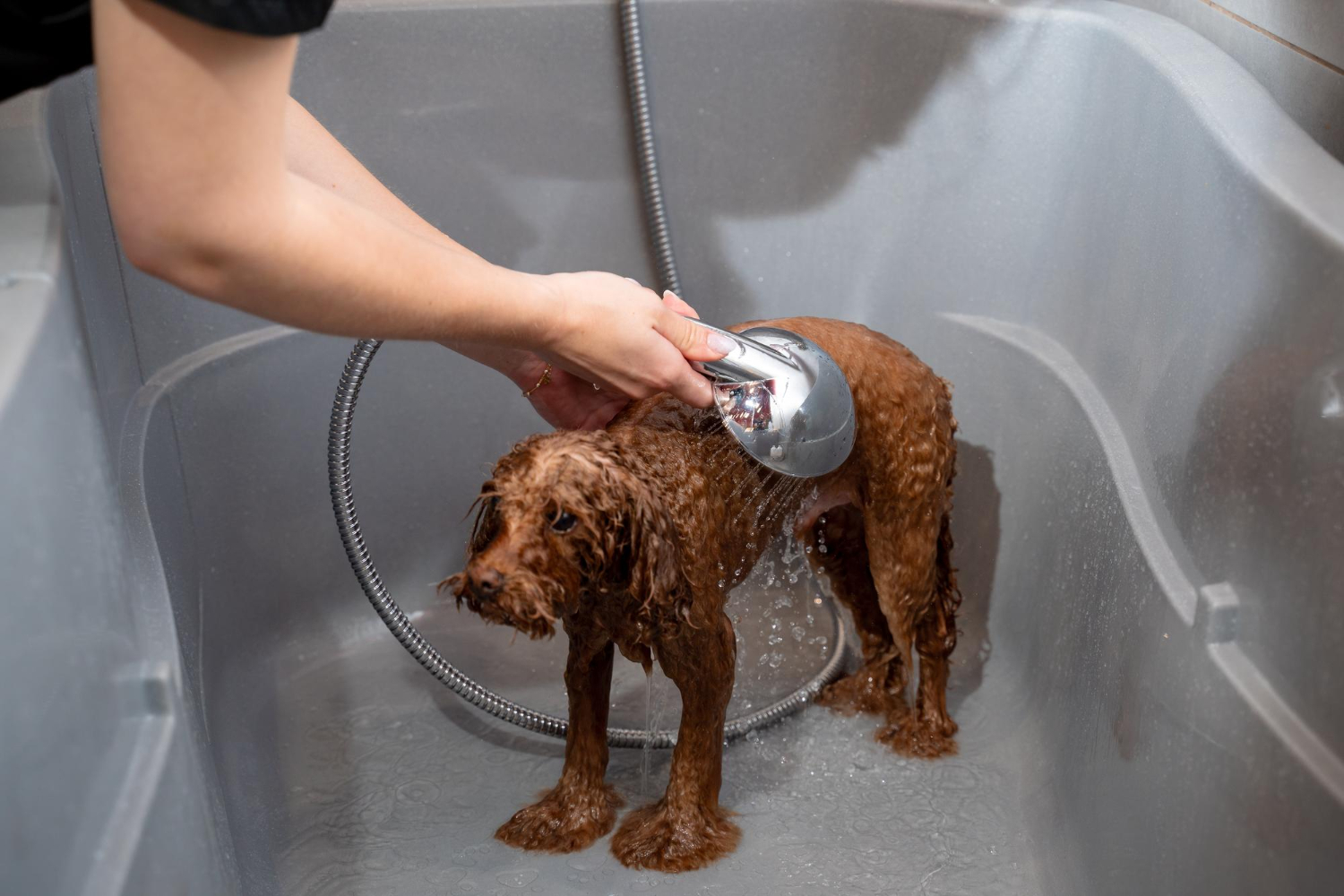
A handheld sprayer attachment, even an inexpensive one, makes rinsing dramatically easier than a cup alone. Thorough rinsing is one of the most important steps for preventing irritation. That makes a sprayer worth the small investment if you bathe your dog at home regularly.
Grooming tools that make bathing easier
The right brush turns a fifteen-minute wrestling match into a five-minute routine. Match the tool to your dog’s coat type from earlier in this guide.
| Coat type | Recommended tool | What it does |
|---|---|---|
| Short, smooth | Rubber curry brush or bristle brush | Loosens dead hair, distributes oils |
| Double coat | Undercoat rake | Reaches the dense undercoat without cutting the topcoat |
| Long, silky | Slicker brush plus wide-tooth comb | Works through tangles before they become mats |
| Curly or wiry | Slicker brush plus metal comb | Prevents matting close to the skin |
| Hairless or near-hairless | Soft washcloth | Gentle skin cleaning without a brush at all |
A single good brush for your dog’s specific coat type does more than a drawer full of mismatched tools. If you’re unsure which one to buy first, ask a groomer or your vet’s front desk. They handle these tools daily and usually have a quick opinion.
A pet-specific dryer speeds up drying for thick or double coats considerably. That can be a dedicated forced-air unit or a human hair dryer on a cool setting. It isn’t a requirement for every dog. But for a heavy-coated breed in a humid climate, faster drying helps more. It leaves less time for bacteria and yeast to take hold in a damp undercoat.
A step-by-step bathing routine
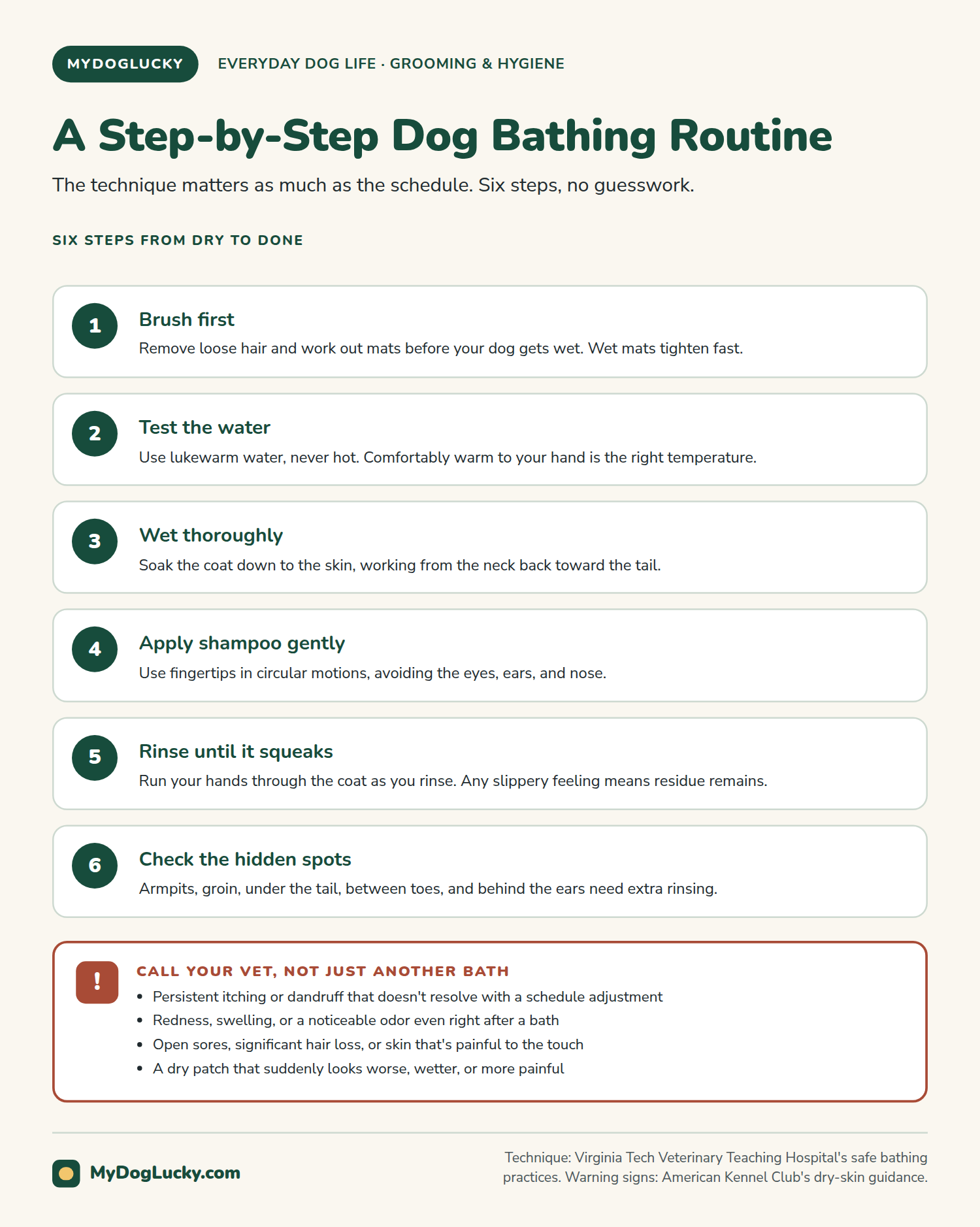
This sequence follows the technique veterinary bathing guidance recommends, adapted for a typical home setup.
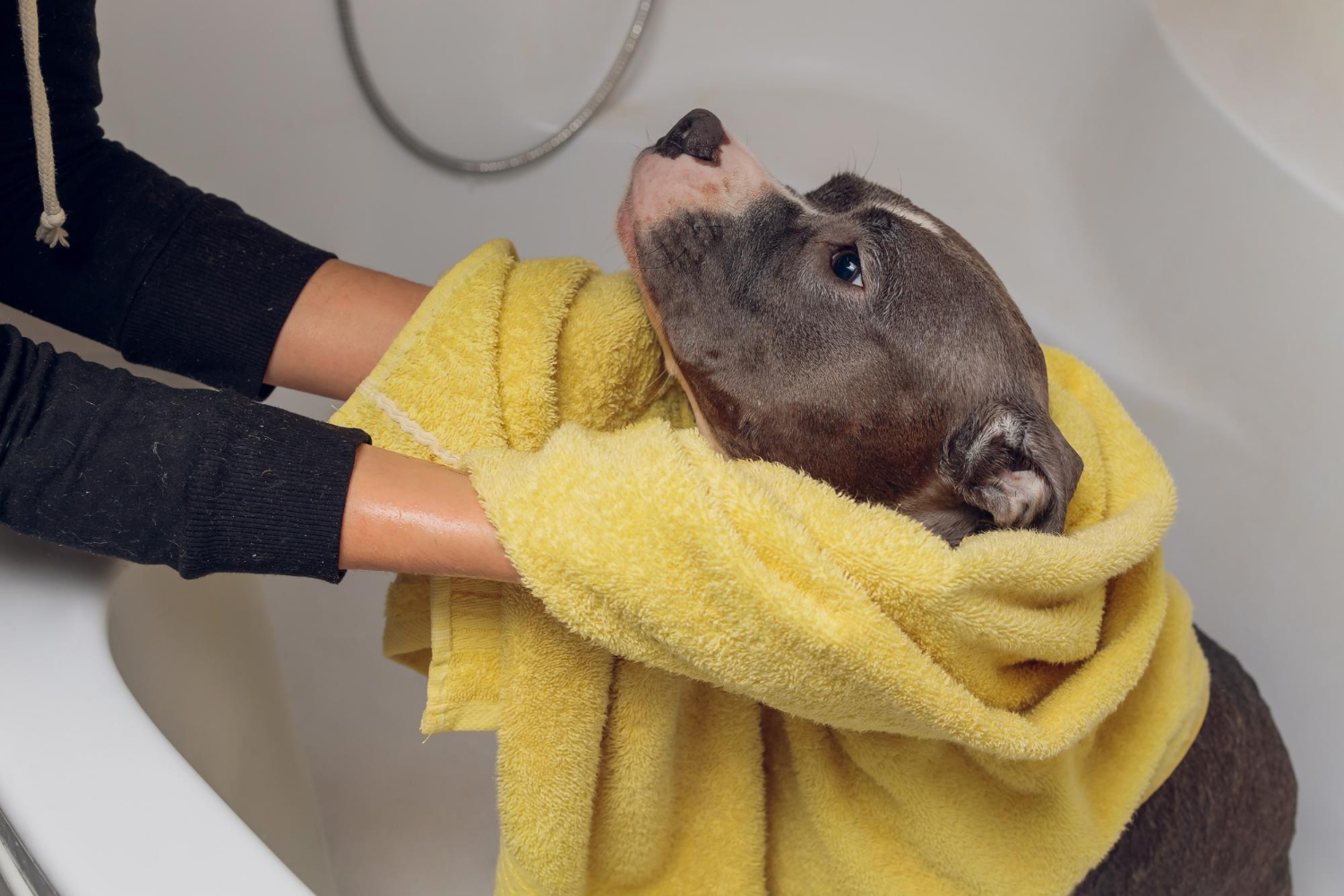
- Brush first. Remove loose hair and work out mats before your dog gets wet. Wet mats tighten and become much harder to remove.
- Test the water. Use lukewarm water, never hot. What feels comfortably warm to your hand is a safe starting point.
- Wet thoroughly. Soak the coat down to the skin, working from the neck back toward the tail.
- Apply shampoo gently. Use fingertips in circular motions, avoiding the eyes, ears, and nose.
- Rinse until it squeaks. Run your hands through the coat as you rinse. Any slippery feeling means shampoo residue is still there.
- Check the hidden spots. Armpits, groin, under the tail, between the toes, and behind the ears trap shampoo and need extra rinsing attention.
Drying your dog safely
Press towels against the coat instead of rubbing, which reduces tangling on longer coats. If you use a blow dryer, keep it on a cool or low setting and keep it moving constantly. Holding heat in one spot, even on the “low” setting, can burn a dog’s skin faster than it would yours. Dry skin folds and the spaces between toes completely, since trapped moisture there is a common source of irritation.
Skip the bath if your dog isn’t up for it
Hold off if your dog’s skin looks inflamed or has open sores. The same goes if he seems uncomfortable when you touch a specific area. Call your vet instead of bathing as planned. A normal bath on compromised skin can make things worse.
Bathing in an apartment or without a tub
A full bathtub makes bathing easier, but it isn’t the only option. A kitchen sink works well for small dogs, with a rubber mat to prevent slipping on the smooth basin.
For larger dogs in a tub-free home, a walk-in shower with a handheld sprayer is a reasonable substitute. Some apartment buildings and pet-supply stores also offer self-service dog wash stations. These include a raised tub, sprayer, and towels for a flat fee, without the cleanup at home afterward.
Weather permitting, an outdoor bath with a garden hose works too. Just make sure the water is warm enough and you have a way to contain your dog in one spot. A yard hose bath in cold weather risks a genuinely unpleasant, and unsafe, experience for your dog.
Bathing on a budget: DIY vs. the groomer
A DIY bath at home costs only the shampoo, typically a few dollars per bath when you buy in bulk. A professional groomer bath costs more per visit. It includes expert handling, proper drying equipment, and often a nail trim or ear check at the same time.
| Option | Typical cost pattern | Best for |
|---|---|---|
| DIY at home | Lowest ongoing cost, higher time investment | Dogs who tolerate handling well, simple coats |
| Self-service wash station | Mid-range, pay per visit | Large dogs, apartment dwellers without a tub |
| Professional groomer | Highest per visit, less frequent | Curly or wiry coats needing trims, anxious dogs, mobility-limited dogs |
Many households land on a mix. DIY baths handle routine maintenance. A professional groomer takes on the coat types or situations that are genuinely harder to manage alone.
Stretching the DIY dollar
Buying shampoo in a larger bottle usually lowers the per-bath cost. Just use it before the one-year shelf-life mark. A single quality brush suited to your dog’s coat type pays for itself many times over. That’s the one covered earlier in this guide. Cheap ones that snap or pull just need replacing anyway.
Bathing puppies: how young is too young?
Most puppies can start getting real baths around eight weeks old. By then, they’ve usually had their first round of vaccinations and are regulating their body temperature well. Before that age, a damp washcloth wipe-down handles small messes without the stress of full immersion.
Keep early baths short, use lukewarm water, and make the experience as calm and positive as you can. A puppy’s first few baths shape how he feels about bath time for years. Rushing or scaring him now creates a harder habit to undo later.
Introducing bath time to a dog who’s never been bathed
A puppy who’s never felt water before benefits from a slow, positive introduction. So does a newly adopted adult dog with an unknown history. Rushing this step is the most common reason a dog ends up fearful of baths for years afterward.
- Start dry. Let your dog explore the empty tub or sink with treats and praise, no water involved yet.
- Add a shallow inch of water. Reward calm behavior with treats and a relaxed voice, and stop if he seems overwhelmed.
- Introduce the sprayer or cup separately. Let him see and hear it running away from his body first.
- Wet just the paws and legs. Build up gradually over several short sessions rather than a full bath on day one.
- Work up to a full bath only once he’s relaxed through every earlier step. Some dogs get there in one session. Others need a week of short, low-stakes practice first.
A humbling admission
We assumed our own rescue would love water because he was part Lab. He flattened himself against the tub wall like the drain was personally offensive to him. Five short sessions later, he tolerates baths fine. He has simply never once looked like he’s enjoying it, and that’s a perfectly acceptable outcome too.
Bathing senior dogs and dogs with mobility limits
Older dogs often have thinner, more sensitive skin and less tolerance for standing for long periods. A non-slip mat matters even more here. A raised tub, or a helper to support your dog’s weight, can prevent a fall during an otherwise routine bath.
Watch for signs of pain during handling, like flinching, stiffening, or reluctance to bear weight on a particular leg. A senior dog who suddenly resists a bath he used to tolerate fine is worth mentioning to your vet. That change in behavior can be an early sign of joint pain or another medical issue.
A shorter, more frequent series of quick rinses can work better than one long, tiring bath. This helps a dog who struggles to stand for extended periods. Splitting the job works too — front half one day, back half the next. That’s a reasonable accommodation, not a compromise on cleanliness.
Keeping your dog fresh between baths
You don’t need a full bath to handle everyday grime. A few lower-effort options fill the gap between scheduled baths.
- Pet-safe grooming wipes handle paws, face, and quick touch-ups after a walk.
- Waterless or dry shampoo freshens the coat without water. It’s useful for a dog who’s mid-recovery, or simply having a bad week.
- Regular brushing distributes natural oils through the coat and removes loose hair and debris before it becomes a bigger job.
- Paw wipes after walks cut down on tracked-in dirt and de-ice chemicals in winter.
These options extend the time between full baths without letting odor or debris build up in the meantime.
A note on dry shampoo
Dry shampoo is a stopgap. It’s not a replacement for the schedule you land on for how often should you bathe your dog. Leaning on it to stretch past your dog’s realistic interval just delays the buildup it’s meant to manage.
Bathing for specific situations
After a skunk encounter
Standard shampoo won’t fully clear skunk oil. A dedicated skunk-odor product, or a homemade mixture your vet can recommend, works far better than repeated regular baths.
After rolling in something unpleasant
An immediate bath, even outside the normal schedule, is reasonable here. One off-schedule bath for genuine mess won’t meaningfully disrupt your dog’s skin, as long as it isn’t a daily habit.
During flea or tick treatment
Follow your vet’s specific guidance on bathing around topical flea and tick treatments. Some products need a dry period before or after application to stay effective.
Before or after surgery
Your vet will tell you exactly when bathing is safe around a surgical site. Don’t bathe over stitches, staples, or an incision without that explicit go-ahead.
After frequent swimming
A plain-water rinse after each swim helps during a heavy swimming season. Pair it with a full shampoo bath on your normal schedule to balance cleanliness against over-washing.
After a vet-diagnosed hot spot or skin infection
Follow your vet’s specific bathing instructions for the treatment period, which often differ from your dog’s normal schedule. A medicated shampoo left on too briefly, or used too often without guidance, can undercut the treatment either way.
While traveling
A pack of pet-safe grooming wipes and a small travel bottle of your dog’s regular shampoo cover most trips. Skip experimenting with an unfamiliar hotel or campground shampoo option. An unknown product is more likely to irritate your dog’s skin than your own routine formula.
Common dog bathing mistakes
Using human shampoo in a pinch
It might seem harmless for a one-time bath, but the pH mismatch is real even for a single use. Keep dog shampoo on hand so you’re never tempted.
Rinsing too briefly
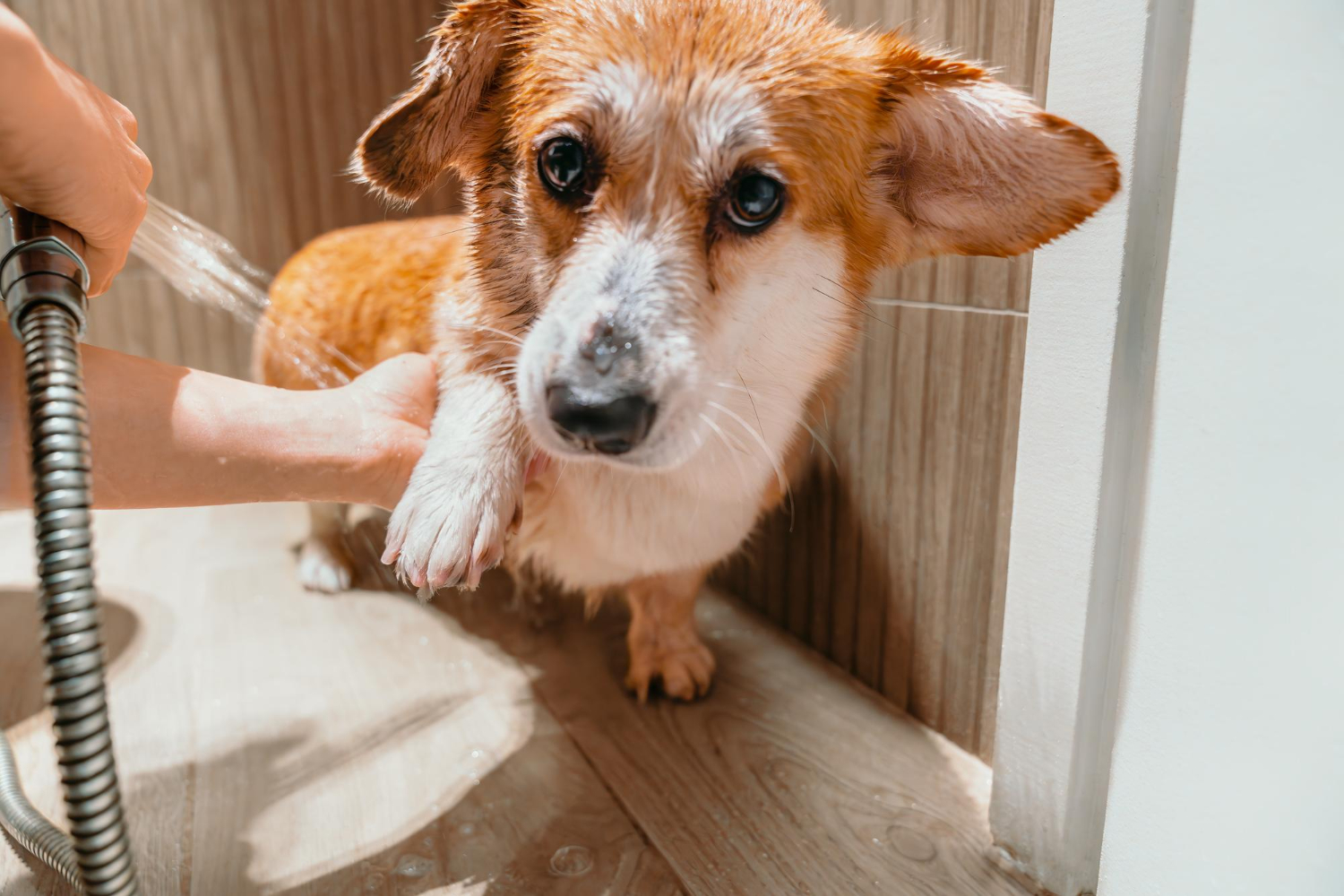
Leftover shampoo residue is one of the most common causes of post-bath itching and flaking. When in doubt, rinse another thirty seconds longer than feels necessary.
Using water that’s too hot
Hot water feels soothing to you but can dry out and irritate a dog’s more sensitive skin. Lukewarm is the right temperature every time.
Skipping the brush-out first
Bathing over mats tightens them further and makes the eventual removal more uncomfortable for your dog. Always brush before you wet the coat.
Bathing on a fixed calendar regardless of need
A rigid schedule ignores what your dog’s coat and skin are actually telling you. Treat the matrix above as a starting range. Adjust based on how your dog looks and smells in real time.
Signs your dog’s skin needs a vet, not just a bath
Most everyday odor and mild flakiness resolve with a normal bath and a consistent routine. Some signs point to something a bath alone won’t fix.
Monitor at home
Mild, occasional dandruff or dryness with no other symptoms is usually fine to watch. Try a moisturizing shampoo and a slightly longer gap between baths. See if it resolves within a couple of weeks.
Call your vet this week
Persistent itching and ongoing dandruff despite a schedule adjustment are worth a veterinary visit. So are redness or a noticeable odor even right after a bath, rather than more home troubleshooting.
Seek veterinary care promptly
Open sores, significant hair loss, and swelling all point to a condition that needs diagnosis and treatment, not another bath. Skin that’s painful to the touch does too. Don’t wait out symptoms like these hoping they resolve on their own.
Dry skin and coat symptoms include itchiness, dandruff, flaking, pimples, scaling, hair loss, inflammation, odor, increased oiliness, and scabs. These symptoms can point to allergies, parasites, infections, or a systemic condition, not simply “needs a bath.” See your veterinarian as soon as you notice them, especially if they persist or worsen.
A secondary infection can also develop on top of ordinary dry or irritated skin. That’s especially true if your dog has been scratching at one spot repeatedly. That combination is worth a same-week call: a known dry patch that suddenly looks worse, wetter, or more painful. Don’t wait for the next scheduled bath to see if it improves on its own.
Building a routine that actually sticks
The best bathing schedule is the one you’ll actually keep. A theoretically perfect four-week interval helps less than it sounds. If you consistently forget it until week nine, an honest six-week rhythm you actually stick to works better.
A simple reminder works better than relying on memory alone. That might be a phone alert, a calendar mark, or tying bath day to something you already do regularly. Some households bathe every other weekend without exception. Others watch the dog’s coat and go by feel. Either approach works. Just make sure it’s consistent enough to keep pace with your specific dog’s needs from the matrix above.
Revisit the schedule with the seasons. A routine that worked in mild spring weather may need adjusting. Tighten it for a humid summer, or loosen it for a dry winter. Treat the matrix as your starting point each season, not a number you set once and never touch again.
Your dog bathing checklist
Bookmark this section as your quick answer to how often should you bathe your dog. Check it before every trip to the tub.
- Coat type identified, and matrix range checked.
- Lifestyle and season factored in, adjusting up or down from the baseline.
- Dog-specific, pH-balanced shampoo on hand, replaced if over a year old.
- Brush-out completed before wetting the coat.
- Lukewarm water confirmed before your dog gets in.
- Full rinse completed, including hidden spots.
- Complete, gentle drying, especially skin folds and between toes.
Seven checks, and how often should you bathe your dog stops being a guessing game. That’s the whole method behind this guide. It beats picking a number that doesn’t fit your dog.
Common questions about bathing your dog
Can I bathe my dog too often even with gentle shampoo?
Yes. Even a gentle, dog-formulated shampoo strips some natural oil with every wash. Frequency matters independently of how mild the product is.
What if my dog hates baths?
Short sessions, treats, a non-slip mat, and a calm tone all help. If fear seems severe, pushing through it at home may not be the answer. A professional groomer or a slow, separate desensitization plan often works better.
Is it okay to bathe my dog in cold weather?
Yes, as long as you dry him completely and keep him warm afterward. A cold, damp coat in a chilly house isn’t comfortable and can contribute to a chill.
Do I need conditioner for my dog?
Long or dry coats often benefit from a dog conditioner. Short, smooth coats usually don’t need one.
Can I use baby wipes instead of pet wipes?
Pet-formulated wipes are the safer default, for the same pH reasons that rule out human shampoo. Check with your vet before making baby wipes a regular substitute.
How do I know if my dog has a skin infection instead of just dry skin?
Infections often come with odor, redness, swelling, or discharge that plain dryness doesn’t. When in doubt, a vet visit settles it faster than guessing at home.
Should I bathe my dog before or after a vet visit?
Either is generally fine for a routine visit. If your vet is examining a skin issue specifically, ask first. A recent bath can sometimes affect what they’re able to see or test.
Does diet affect how often I need to bathe my dog?
Diet can influence coat and skin health over time, but it isn’t a substitute for an appropriate bathing schedule. Talk to your vet if you suspect diet is playing a role in ongoing skin issues.
My dog rolled in something dead outside. What now?
An immediate off-schedule bath is the right call here. One extra bath for a genuine mess won’t meaningfully disrupt a normal skin-care routine.
Can I trim my dog’s nails during bath time?
Yes, and many owners find wet nails easier to trim than dry ones. Do it before the bath gets your dog worked up. Or wait until he’s calm and dried off, rather than mid-wash.
Is oatmeal shampoo actually helpful, or just marketing?
Oatmeal-based formulas are a common choice for dogs with mild dry skin or itchiness, and many owners report they help. For a diagnosed skin condition, ask your vet whether a medicated option would serve your dog better.
How often should you bathe your dog if he has thick fur and lives somewhere humid?
Lean toward the more frequent end of your coat type’s range in the matrix above. Humidity holds onto moisture and odor in a thick coat longer than a dry climate does. A slightly shorter interval usually keeps up better.
Can bathing help with mild seasonal shedding?
A bath followed by thorough brushing, while the coat is still damp, loosens more loose undercoat than dry brushing alone. It removes more of it, too. It’s a reasonable tool during a heavy shedding season, not a replacement for regular brushing the rest of the year.
What water temperature is actually safe for puppies specifically?
The same lukewarm standard applies, but puppies lose body heat faster than adult dogs. Keep the bathroom warm, the session short, and have a dry towel ready the moment the bath ends.
Sources
- PetMD. How Often Should You Bathe Your Dog? (Sandra C. Mitchell, DVM, DABVP)
- American Kennel Club (AKC). Dry Skin on Dogs: Signs, Symptoms, Treatments
- VCA Animal Hospitals. True or False: Bathing Your Pet Once a Week Can Dry Out Their Skin and Coat
- Virginia Tech Veterinary Teaching Hospital. Safe Bathing Practices: Protecting Your Pet’s Skin
- PetMD. Can You Use Human Shampoos on Dogs? (Dr. Jamie Lovejoy, DVM, Tufts Cummings School of Veterinary Medicine)
This article is general education for U.S. dog owners. It is not individualized veterinary advice. Ask your veterinarian about anything specific to your dog.



Trackbacks/Pingbacks