Diabetes in dogs is a lifelong condition, and it is also a manageable one. In almost every canine case, the pancreas has stopped making enough insulin, the hormone that lets the body use sugar from food. Without insulin, glucose piles up in the blood, spills into the urine, and pulls water along with it. That is why the classic early picture is a dog who drinks more, urinates more, eats well, and still loses weight.
Treatment means insulin injections, usually twice a day, paired with consistent meals, consistent exercise, and regular rechecks. Most owners who felt sick reading the word “injections” are giving them calmly within a couple of weeks. Many diabetic dogs go on to live comfortably for years.
This guide walks through the emergency signs first, because two situations linked to diabetes can turn dangerous within hours. After that it covers what the disease is, who tends to get it, how a vet confirms it, what treatment involves, how you monitor at home, what complications to expect, what it costs, and how to keep yourself standing through a long stretch of caregiving. If you have just been handed this diagnosis, take a breath. You have time to learn this, and the learning curve is shorter than it looks tonight.
What’s in this guide
- Diabetes in dogs: the short answer
- Emergency signs: ketoacidosis and low blood sugar
- What diabetes mellitus is in dogs (and why diet alone doesn’t manage it)
- How common it is and which dogs are at higher risk
- Signs of diabetes in dogs: classic, subtle, and easy to miss
- How a veterinarian diagnoses diabetes in dogs
- Treatment: insulin, diet, exercise, and concurrent disease
- Learning to give insulin injections
- Monitoring at home: what to log and when to call
- Complications: cataracts, infections, and ketoacidosis
- Life expectancy and quality of life
- Costs and budgeting
- Travel, sitters, and boarding with a diabetic dog
- Caregiver fatigue: the part nobody warns you about
- Common mistakes with diabetes in dogs
- Frequently asked questions about diabetes in dogs
- Sources
Diabetes in Dogs: The Short Answer
Diabetes in dogs almost always means diabetes mellitus, a shortage of insulin that leaves the body unable to move glucose out of the bloodstream and into cells. The signs build gradually: more drinking, more urinating, a bigger appetite, weight loss, and often cloudy eyes within months. A veterinarian confirms it with blood and urine tests, then starts insulin injections, typically every twelve hours, alongside a steady feeding and exercise routine.
Two things make this disease different from the version many people know in humans. First, dogs are not usually able to manage diabetes with diet and weight loss alone. Their pancreas has generally lost the ability to make insulin, so replacing it is the treatment. Second, the goal is not a specific number on a meter. The goal is a dog who feels well: drinking normally, holding a stable weight, and not tipping into dangerously low blood sugar. Your veterinarian will call that being “regulated,” and it is a range, not a target.
Your role is narrower than it sounds and more important than it seems. You give the injections on schedule, feed the same food in the same amounts at the same times, keep exercise consistent, watch the water bowl, and write things down. The vet adjusts. You observe. That division of labor is what keeps most diabetic dogs safe.
Emergency Signs: Ketoacidosis and Low Blood Sugar
Most days with a diabetic dog are ordinary. Two situations are not, and both can move from “something seems off” to life-threatening within hours. Read this section now, while your dog is fine, so the signs are already familiar if they ever show up.
Go to a veterinarian now if you see any of these
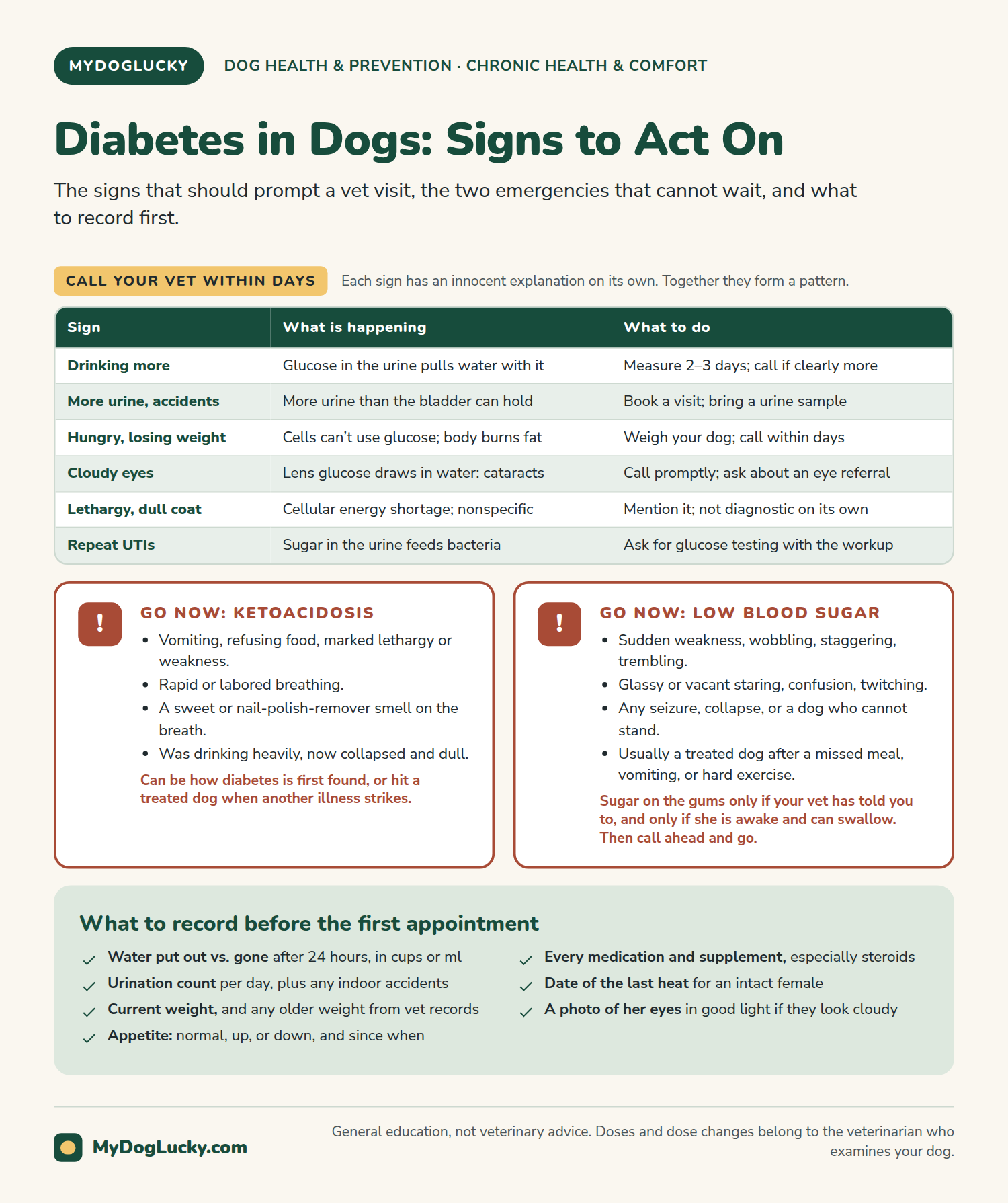
- Signs of diabetic ketoacidosis (DKA): vomiting, refusing food, marked lethargy or weakness, rapid or labored breathing, a sweet or nail-polish-remover smell on the breath, or a dog who has been drinking heavily and now seems collapsed and dull. DKA can occur in a dog who has not yet been diagnosed, and also in a treated dog whose diabetes has slipped out of control, often because of another illness.
- Signs of low blood sugar (hypoglycemia): sudden weakness, wobbling or staggering, trembling, glassy or vacant staring, confusion, twitching, seizures, or collapse. This can happen in a treated dog after a missed or reduced meal, vomiting, unusually hard exercise, or an insulin dose that no longer matches her needs.
- Any seizure, or a dog who cannot stand or will not respond to you.
For suspected low blood sugar, if your veterinarian has already told you to do so, you can rub a small amount of a sugar source such as corn syrup or honey on the gums of a dog who is awake and able to swallow, then go straight to the clinic. Do not pour liquid into the mouth of a dog who is seizing or unconscious, and keep your fingers out of a seizing dog’s mouth. The sugar buys minutes. It does not replace the visit. Call ahead so the team is ready when you arrive.
Why Ketoacidosis Happens
When cells cannot get glucose, the body starts breaking down fat for fuel and produces ketones. In small amounts ketones are harmless. When they accumulate, the blood turns acidic, the dog becomes dehydrated, and electrolytes fall out of balance. That is diabetic ketoacidosis. The Merck Veterinary Manual and the 2018 AAHA Diabetes Management Guidelines both describe it as a medical emergency that typically needs hospitalization, intravenous fluids, and careful insulin therapy under monitoring.
DKA is often the way diabetes is first discovered in dogs whose early signs went unnoticed. It also shows up in diagnosed dogs when something else goes wrong: pancreatitis, a urinary tract infection, Cushing’s disease, or any illness that makes the body more resistant to insulin. The practical lesson is simple. A diabetic dog who stops eating, vomits, or seems flat is not a wait-and-see dog. She needs to be seen the same day, and sooner if breathing changes or the breath smells sweet.
Why Low Blood Sugar Happens
Hypoglycemia is the flip side of treatment. Insulin lowers blood glucose. If the usual dose meets an unusual day, such as a skipped meal, a bout of vomiting, a long hike, or a dog whose insulin needs have quietly dropped, glucose can fall too far. The brain runs on glucose, so the signs are neurological: weakness, wobbling, trembling, confusion, seizures. VCA Animal Hospitals lists these signs and advises immediate veterinary attention rather than home management.
Your veterinarian will likely give you a written plan for this before you ever go home with insulin. If they have not, ask for one. Knowing in advance what to do, and having a sugar source in the cupboard and the car, turns a frightening moment into a rehearsed one.
What Diabetes Mellitus Is in Dogs (and Why Diet Alone Doesn’t Manage It)
Insulin is a hormone made by beta cells in the pancreas. After a meal, glucose from food enters the bloodstream, and insulin acts as the signal that lets muscle, liver, and fat cells take that glucose in and use it. When insulin is missing, glucose stays in the blood at high levels while the cells behave as if the dog were starving. That mismatch explains almost every sign of the disease.
Dogs Are Nearly Always Insulin-Deficient
Human medicine separates type 1 diabetes, where the immune system destroys the insulin-producing cells, from type 2, where cells become resistant to insulin and the pancreas eventually cannot keep up. Veterinary sources such as the Merck Veterinary Manual and the AKC describe canine diabetes as overwhelmingly the insulin-deficient form, often compared to type 1. By the time a dog shows signs, most of her beta cells are gone, and they do not come back.
This is why the plan for diabetes in dogs is different from the plan for many diabetic cats. Cats frequently have the insulin-resistant form and can sometimes go into remission with diet changes and early treatment. The AVMA notes that newer oral medications exist for some cats. For dogs, insulin replacement is the treatment. Diet, exercise, and weight management support it and make it work more smoothly, but they cannot substitute for it. If you have read online about “reversing” diabetes with a special food, that advice was written for a different species.
What “Insulin Resistance” Means in a Dog
Some dogs do have a resistance component layered on top of the deficiency. Certain hormones and medications blunt insulin’s effect, which is why intact females in the progesterone-dominant phase after a heat, dogs with Cushing’s disease, and dogs on long-term corticosteroids appear so often in the risk-factor lists. In those dogs, the resistance can push a struggling pancreas over the edge, and it can also make the diabetes harder to control after diagnosis. Removing the source of resistance, for example by spaying, is part of treatment when it applies.
Not the Same as Diabetes Insipidus
Owners sometimes come across a second condition with a similar name. Diabetes insipidus involves a problem with water balance rather than sugar and is far less common. It also causes heavy drinking and urination, which is exactly why a veterinarian tests rather than guesses from the water bowl alone. Everything in this guide refers to diabetes mellitus.
How Common It Is and Which Dogs Are at Higher Risk
Diabetes in dogs is common enough that most general-practice veterinarians manage several cases at any given time, and uncommon enough that many owners have never met a diabetic dog before their own. Published estimates vary with the population studied. Cornell’s Riney Canine Health Center and the Merck Veterinary Manual both describe it as one of the more frequently diagnosed endocrine diseases, with prevalence estimates that land somewhere around a fraction of a percent to about one percent of dogs. Veterinarians report that diagnoses have become more frequent over recent decades, which likely reflects both better testing and longer canine lifespans.
Age and Sex
Most dogs are diagnosed in middle age or later. VCA and Merck both place the typical window at roughly seven to ten years old, though younger dogs are occasionally affected, including a rare juvenile form. Females are diagnosed more often than males, and intact females carry the highest risk. The hormone progesterone, which rises for weeks after every heat cycle, drives insulin resistance. The AKC summarizes the sex difference as unspayed females being roughly twice as likely to develop diabetes as males.
Health Conditions That Raise the Risk
Several concurrent conditions appear repeatedly across veterinary sources:
- Obesity. Excess body fat increases insulin resistance and is a consistent risk factor across species.
- Pancreatitis. Repeated or severe inflammation of the pancreas can destroy insulin-producing tissue. Some dogs develop diabetes after one severe episode; others after years of milder, recurring ones.
- Cushing’s disease (hyperadrenocorticism). Excess cortisol opposes insulin. The AVMA lists Cushing’s among conditions that increase diabetes risk in dogs, and the two diseases often coexist.
- Hypothyroidism. Also on the AVMA’s list for dogs; an underactive thyroid can complicate glucose control.
- Long-term corticosteroid use. Steroid medications, prescribed as a class for allergies, inflammation, and immune conditions, raise blood glucose and can unmask diabetes in a susceptible dog. This does not mean those medications were wrong to use; it means the prescribing veterinarian weighs the tradeoff and may monitor glucose during treatment. Some progestin-type hormone medications carry a similar effect.
- Chronic infections. Dental disease, skin infections, and urinary tract infections appear in the AVMA’s risk list and can also make an existing case harder to regulate.
Breeds Reported at Higher Risk
Breed lists differ from source to source, and a breed name never predicts an individual dog. With that caution, breeds that veterinary references and the AKC commonly report at elevated risk include Miniature Schnauzers, Miniature and Toy Poodles, Bichons Frises, Samoyeds, Keeshonden, Australian Terriers, Cairn Terriers, Beagles, Pugs, and Dachshunds. Mixed-breed dogs are diagnosed all the time. If your dog belongs to one of these breeds, the useful takeaway is a slightly lower threshold for asking about a urine glucose check when drinking seems to change, not a reason to worry in advance.
Signs of Diabetes in Dogs: Classic, Subtle, and Easy to Miss
The textbook picture is easy to state and surprisingly easy to overlook in a real household, because each sign has an innocent explanation on its own. Together they form a pattern.
The Classic Four
Veterinarians talk about the “three Ps” plus weight loss. Increased urination (polyuria) happens because excess glucose spills into the urine and drags water with it. Increased thirst (polydipsia) follows, because the body is losing fluid. Increased appetite (polyphagia) happens because the cells are effectively starving no matter how much the dog eats. And weight loss happens for the same reason: the body starts burning fat and muscle for fuel it cannot get from glucose.
A dog who is eating enthusiastically, drinking more than usual, asking to go out more often, and getting thinner is showing the classic picture of diabetes in dogs. That combination deserves a veterinary visit within days, not weeks.
The Subtle Early Signs
Before the classic pattern is obvious, owners often notice smaller things and explain them away:
- The water bowl empties faster. You refill it twice a day instead of once. It is easy to blame the weather.
- Accidents in a house-trained dog. A dog who has not had an indoor accident in years suddenly cannot make it through the night, or leaves a large, dilute puddle rather than a small one.
- Asking to go out at night. Restlessness at 2 a.m. that turns out to be a full bladder.
- A dull or thinning coat, or flaky skin. Nonspecific, but common.
- Cloudiness in the eyes. Diabetic cataracts can develop quickly, sometimes over weeks. A bluish or milky look to the lens is worth mentioning immediately.
- Recurrent urinary tract infections. Sugar in the urine feeds bacteria. A dog with a second or third UTI in a year should have her glucose checked.
- Lower energy on walks. A gradual change, easy to attribute to age.
The Later Signs
If the disease goes unrecognized, appetite eventually fails rather than increases. Vomiting, lethargy, depression, and weakness follow, and at that point the dog may already be in or near ketoacidosis. The AKC describes this progression from early to advanced signs, and it is the reason this guide puts the emergency section first. A dog who has been drinking heavily for weeks and now will not eat is not “finally settling down.” She is getting sicker.
| Sign | What is happening | What to do |
|---|---|---|
| Drinking more than usual | Glucose in urine pulls water out of the body; thirst rises to compensate | Measure daily intake for 2–3 days; call your vet if clearly increased |
| Urinating more, or new accidents | Larger urine volume than the bladder can hold overnight | Note frequency and volume; schedule a visit with a urine sample |
| Hungry but losing weight | Cells cannot take up glucose; the body burns fat and muscle | Weigh your dog; call your vet within days |
| Cloudy eyes | Excess glucose in the lens draws in water and causes cataracts | Call your vet promptly; ask about ophthalmology referral |
| Lethargy, dull coat | Energy shortage at the cellular level; nonspecific | Mention alongside other signs; not diagnostic alone |
| Repeat urinary infections | Sugar in urine supports bacterial growth | Ask for glucose testing with the UTI workup |
| Vomiting, not eating, sweet breath, rapid breathing | Possible ketoacidosis | Emergency care now |
| Weakness, wobbling, trembling, seizure (treated dog) | Possible low blood sugar | Sugar on gums only if your vet has instructed it, then go now |
What to Record Before the First Appointment
You do not need to diagnose anything. You need to be a precise witness. A few days of notes turn “she seems to drink a lot” into information a veterinarian can act on:
- How much water you put out and how much is gone after 24 hours, in cups or milliliters.
- How many times she urinates in a day and whether any accidents happen indoors.
- Her current weight on a bathroom scale (weigh yourself, then yourself holding her) and any older weight you can find from past vet records.
- Appetite: normal, increased, or decreased, and since when.
- Any medications or supplements she takes, especially steroids.
- For an intact female, the date of her last heat.
- A photo of her eyes in good light if you have noticed any cloudiness.
How a Veterinarian Diagnoses Diabetes in Dogs
The diagnosis itself is usually straightforward. Confirming it, ruling out look-alikes, and finding anything else that will complicate treatment takes a little more work, and that extra work is where the money and time go at the first visit.
Persistent High Blood Glucose Plus Glucose in the Urine
The 2018 AAHA guidelines and Merck describe the diagnostic core as persistent hyperglycemia (high blood sugar) combined with glucosuria (glucose in the urine) in a dog showing consistent clinical signs. In dogs, a single high reading in a stressed animal is less of a problem than it is in cats, but veterinarians still look for persistence rather than a one-off number. A dog with the classic signs, a high fasting glucose, and sugar in the urine is, in most cases, diabetic.
Fructosamine
Fructosamine is a blood test that reflects average glucose over roughly the preceding one to three weeks. It helps distinguish a dog whose glucose was briefly elevated from one whose glucose has been high for a while. Your veterinarian may use it at diagnosis and again later as one of several tools for checking how well treatment is working. It is not a substitute for watching the dog, and it does not catch short dips into low blood sugar.
Ruling Out and Finding Concurrent Disease
Because so many other conditions cause similar signs or make diabetes harder to control, the initial workup is usually broader than a glucose check. The AVMA describes a panel of blood and urine tests, including a urine bacterial culture, as the standard approach. What each piece is for:
| Test | Why your vet may run it | What it can change |
|---|---|---|
| Blood glucose | Confirms hyperglycemia; repeated to establish persistence | The diagnosis itself |
| Urinalysis | Checks for glucose and ketones in urine, urine concentration, and signs of infection | Confirms glucosuria; flags ketones (urgency) and possible UTI |
| Urine culture | Diabetic dogs often have silent bladder infections that keep glucose unstable | Antibiotic treatment before insulin can work well |
| Fructosamine | Reflects average glucose over the past 1–3 weeks | Separates a stress spike from true diabetes; later tracks control |
| Complete blood count and chemistry panel | Assesses kidneys, liver, electrolytes, and overall health; screens for other disease | Detects dehydration, organ problems, or ketoacidosis needing hospitalization |
| Pancreatic lipase test | Screens for pancreatitis, a common companion condition | Diet choice (often lower fat) and pain management |
| Thyroid testing | Hypothyroidism can complicate regulation | Adds thyroid treatment if needed |
| Cushing’s screening (often deferred) | Excess cortisol causes insulin resistance; testing is more reliable once diabetes is somewhat controlled | Treating Cushing’s can dramatically improve diabetic control |
| Blood pressure, eye exam, abdominal imaging | Case-dependent: checks for complications or underlying causes | Referral to ophthalmology; identifies pancreatic or adrenal disease |
Not every dog needs every test on the first day. A well dog with textbook signs may start with the basics and add tests if regulation proves difficult. A sick dog with ketones in her urine will get more, faster. Ask your veterinarian which tests are essential today and which can wait, and what each one is meant to rule in or out. That is a reasonable question, and a good clinic will welcome it.
Treatment: Insulin, Diet, Exercise, and Concurrent Disease
Treatment of diabetes in dogs rests on four legs. Insulin does the heavy lifting. Diet, exercise, and the management of other illnesses keep the load steady so that the insulin dose your veterinarian chooses keeps working from one day to the next.
Insulin Injections, Usually Twice a Day
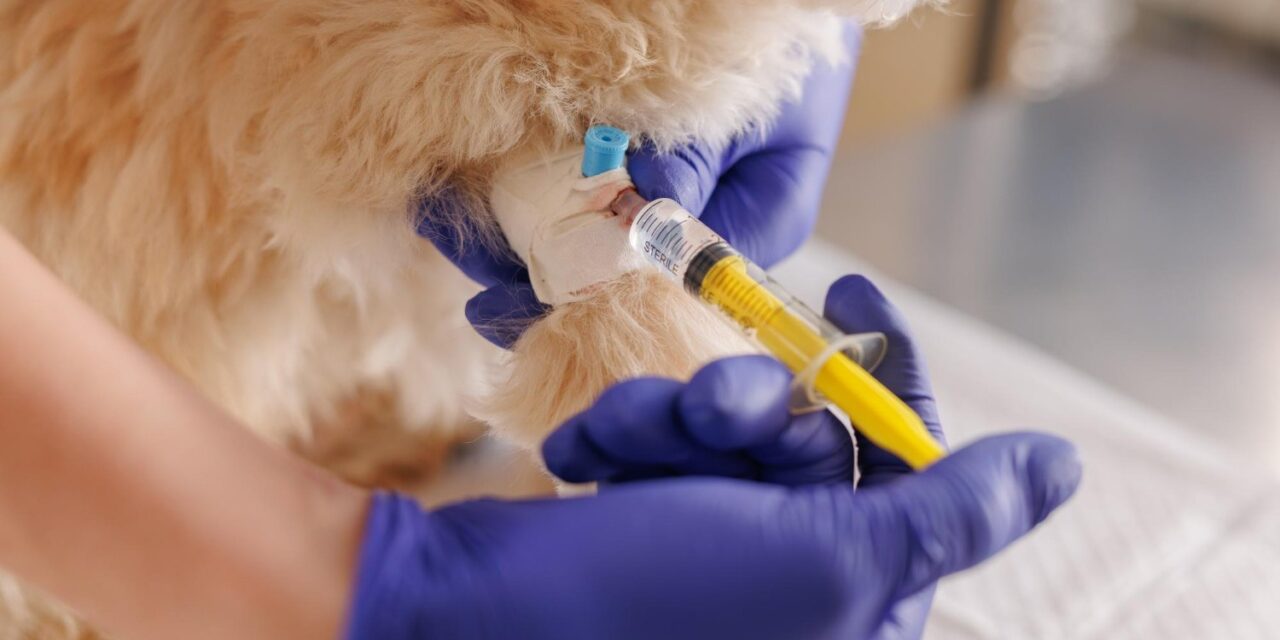
The 2018 AAHA guidelines describe injectable insulin given every twelve hours as the standard of care for dogs, and Merck, VCA, and the AVMA describe the same routine. Insulin is given under the skin with a very small needle, typically at mealtimes so that food and insulin arrive together.
Several types of insulin are used in dogs. They differ in how quickly they start working and how long they last. Intermediate-acting insulins, including products labeled for veterinary use, are the most common starting choice. Longer-acting insulin analogs originally developed for people are used in some dogs, particularly when the intermediate-acting options do not last long enough. Your veterinarian chooses the type and the starting dose based on your dog’s weight, her bloodwork, and their own experience, and then adjusts from there. This guide does not list doses on purpose. The right amount for one dog can be dangerous for another, and it changes over time for the same dog.
One practical safety point belongs here. Insulins come in different concentrations, and each concentration has its own matching syringe. Using the wrong syringe with the wrong insulin delivers the wrong amount. Buy only the syringes your veterinarian specifies, and if you ever change insulin types, ask directly whether the syringes change too.
The First Weeks: Regulation Is a Process
Nobody gets the dose right on day one, and veterinarians do not expect to. The AAHA guidelines describe starting with a conservative dose, giving it time to take effect, and then reassessing with a blood glucose curve and, above all, with how the dog is doing at home. Dose changes come in small steps, and your vet will usually leave a dose in place for at least a week or so before judging it, because the body takes time to settle and because changing too fast risks overshooting into hypoglycemia.
Expect several rechecks in the first one to two months. Expect your veterinarian to ask about water intake, urination, appetite, weight, and energy at every one of them. Those questions are not small talk. They are the primary data.
Glucose Curves and What “Regulated” Means
A blood glucose curve is a series of readings taken every hour or two across a full insulin cycle, usually eight to twelve hours, either in the clinic or at home. It shows the vet how far glucose drops after the injection, when the lowest point occurs, and how long the insulin lasts.
AAHA’s guidance walks through interpreting these curves, and one point deserves emphasis: a single high reading is not a reason to increase the dose. If the lowest point of the curve is too low, the dog may be rebounding to high readings afterward, and more insulin would make that worse. This rebound pattern is one reason veterinarians insist on curves and clinical signs rather than a reading or two.
“Regulated” does not mean “normal blood sugar all day.” A regulated dog is one whose clinical signs are controlled: she drinks and urinates a normal amount, holds a stable healthy weight, has a good appetite, is bright, and does not have episodes of low blood sugar. The AAHA guidelines frame the therapeutic goal as controlling signs while avoiding hypoglycemia, and they accept blood glucose ranges in treated dogs that would look high in a healthy one. A dog can be well regulated with readings a human diabetic would find alarming. Your veterinarian will define the range for your dog.
Diet: Consistent, Measured, and Chosen With Your Vet
For dogs, the AAHA guidelines are notably relaxed about the specific diet and notably strict about consistency. Any complete and balanced food that your dog will eat reliably can work, as long as the same food is fed in the same amount at the same times every day. The insulin dose is set against that routine. Change the food, and the dose may no longer match.
Within that rule, some features tend to help. Diets with higher fiber and complex carbohydrates slow the absorption of glucose after a meal and smooth out the peaks, which is why the AKC and VCA mention them. Dogs with concurrent pancreatitis or high blood fats often do better on lower-fat food. Overweight dogs benefit from gradual, vet-supervised weight loss, because losing fat reduces insulin resistance. Semi-moist foods that are high in simple sugars are generally poor choices. Prescription therapeutic diets designed for diabetic dogs exist; whether one is worth it for your dog, or whether her current food is fine, is a conversation for your veterinarian.
Timing matters as much as content. Most vets pair each injection with a meal and prefer that the dog eat first, or at least be clearly willing to eat, before the insulin goes in. Ask, before you ever face it, what you should do if she refuses a meal or eats only part of one. Many clinics give a written rule for exactly this situation. Follow theirs, not one from the internet.
Exercise: Steady Beats Spectacular
Exercise lowers blood glucose by helping muscles take up sugar. That is useful when it is predictable and risky when it is not. A dog who walks twenty minutes twice a day, every day, has a routine her insulin dose can be set against. A dog who lounges all week and then hikes for three hours on Saturday can drop into hypoglycemia by Saturday afternoon. VCA and the AKC both recommend consistent, moderate activity. If you want to add a big outing, talk to your vet first about how to handle food and insulin that day, and carry a sugar source.
Spaying Intact Females
For an intact female, spaying is part of diabetes treatment, not an unrelated elective. Every heat cycle brings weeks of high progesterone, which drives insulin resistance and can make regulation nearly impossible. Merck and VCA both recommend spaying diabetic females as soon as it is safe to do so, and in some dogs diagnosed during the post-heat phase, control improves substantially afterward. Your veterinarian will time the surgery around stabilizing the diabetes enough for anesthesia to be reasonable.
Treating What Else Is Going On
Diabetes that will not settle is often diabetes with company. A silent urinary tract infection, untreated Cushing’s disease, hypothyroidism, chronic pancreatitis, or dental disease can each keep glucose bouncing no matter how carefully the insulin is adjusted. This is why a good workup looks past the glucose number, and why a veterinarian struggling to regulate a dog will circle back to those tests. Treating the companion condition frequently brings the diabetes into line.
Learning to Give Insulin Injections
This is the part most owners dread and, within a few weeks, the part most owners describe as easier than trimming nails. The needles are tiny. The volume is small. Dogs rarely react to the injection itself, and many learn to associate it with the meal that comes with it.
The Demonstration Visit
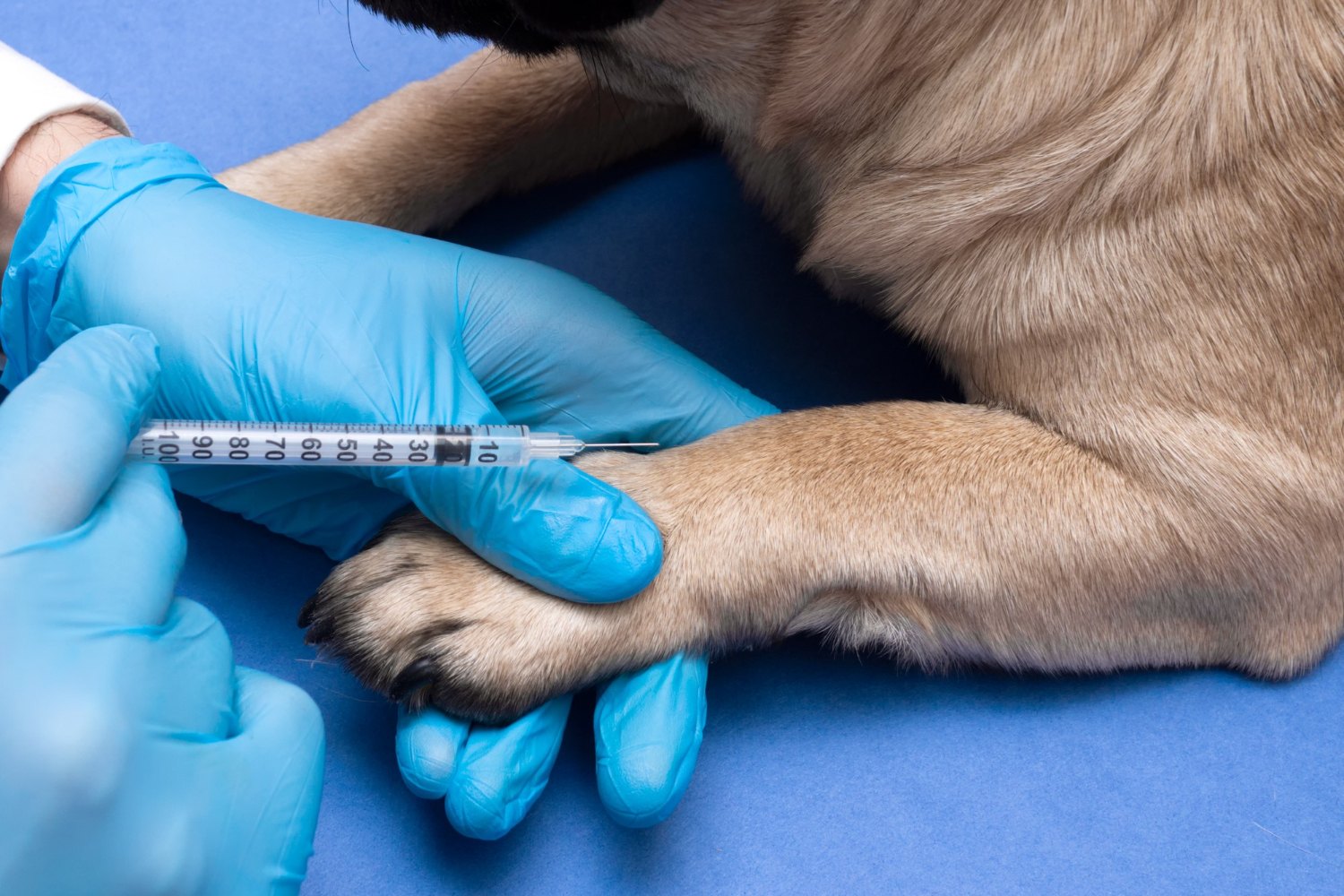
Before you take insulin home, a veterinary technician or veterinarian should walk you through the whole routine in person: taking the insulin out of the refrigerator, gently mixing it by rolling rather than shaking (some types need mixing, some do not; ask which yours is), drawing up the prescribed amount, checking for air bubbles, choosing an injection site, lifting a tent of skin, inserting the needle, and pressing the plunger. Then you should do it yourself while they watch, with saline or with the real dose. Ask to do it twice. Ask them to watch you read the syringe, because misreading the markings is a far more common error than a bad injection.
If your clinic hands you the vial and a pamphlet without a demonstration, ask for one. It is a reasonable request, and it is standard practice.
Needle Nerves
Plenty of people are afraid of needles, and some faint at the sight of blood. That does not disqualify you from caring for a diabetic dog. A few things that help, based on what owners commonly report: practice with a saline-filled syringe on an orange until the motion is automatic; give the injection while your dog is eating so she is distracted and you are focused on her rather than the needle; and have a partner or friend hold the dog and talk to you for the first week.
Nearly everyone who starts terrified ends up steady. The fear does not usually go away because you become brave. It goes away because the routine becomes boring.
Rotate Sites and Watch the Skin
Insulin is injected under the skin, and most vets suggest rotating among several spots along the sides of the body and flanks rather than always using the scruff, where absorption can be less consistent. Rotating also prevents sore or thickened patches. If you notice a lump, redness, or a spot your dog flinches at, mention it at the next visit.
If You Are Not Sure the Dose Went In
Sometimes the needle slips through the tent of skin and the insulin ends up on the fur. Sometimes the dog moves. The rule veterinarians repeat, and the one AAHA emphasizes, is this: if you are not certain the full dose went in, do not give another. A missed dose produces a few hours of high glucose. A double dose can produce hypoglycemia. Note what happened, watch her more closely, and tell your vet. The same logic applies to a dose you simply forgot: do not double the next one to catch up. Call and ask what to do.
Train a Second Person
You will get sick. You will have a work trip. Your car will break down on the way home. A diabetic dog needs someone who can give an injection on schedule, and that means at least one other person, a partner, an adult child, a neighbor, a trusted sitter, who has practiced the routine under your supervision and knows where the insulin, syringes, sugar source, and emergency phone numbers live. Doing this in the first month, while you are still learning yourself, is far easier than doing it in a crisis.
Insulin storage and handling, as a class
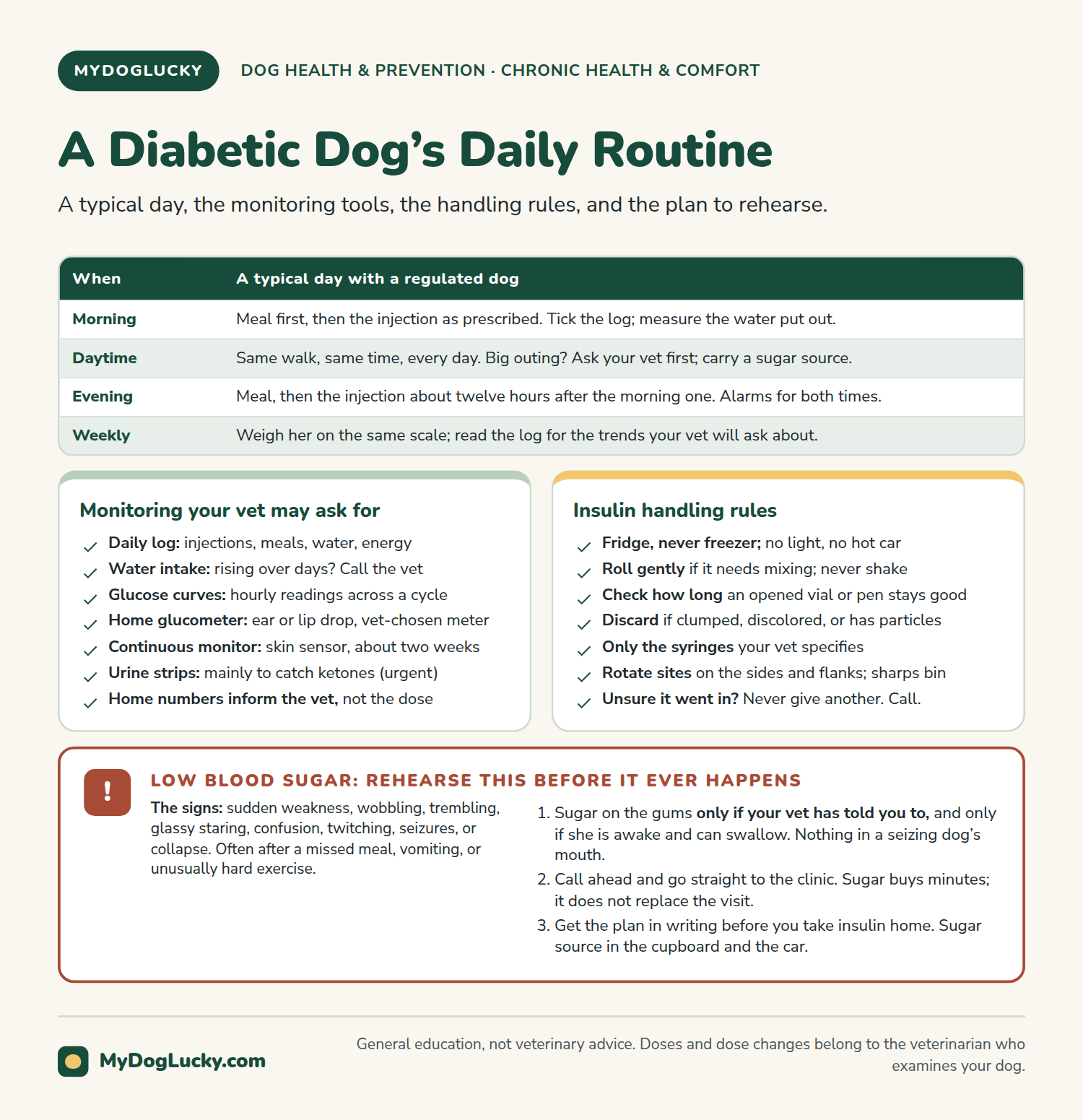
- Keep insulin refrigerated, never frozen, and away from light. Do not leave it in a hot car.
- Mix by rolling gently between your palms if your insulin type requires mixing. Do not shake vigorously.
- Check the label for how long a vial or pen is good after first use, and ask your vet what they recommend. Many are discarded well before the printed expiration once opened.
- Discard insulin that looks clumped, discolored, or has particles that do not disperse.
- Use only the syringes your veterinarian specifies for your insulin’s concentration.
- Dispose of needles in a sharps container or as your local rules require.
Insulin that has been mishandled can quietly lose potency, which shows up as a dog who seems “unregulated” for no reason. If control slips, one of the first questions your vet will ask is how the insulin has been stored.
Monitoring at Home: What to Log and When to Call
Home monitoring is where owners have the most control and, often, the most anxiety. The reassuring truth is that the most valuable monitoring tool is a notebook, not a meter. Your veterinarian is looking for patterns over days and weeks, and you are the only one positioned to see them.
The Daily Log
A simple log, on paper or on your phone, should capture:
- Injection times and confirmation that each dose was given. A checkbox prevents the “did I already do it?” panic, which matters in households where two people share the job.
- Meals: what, how much, and whether she finished.
- Water intake: the single best home indicator of control. Measure what you put out and what is left. A steady rise over several days is a call-your-vet signal.
- Urination: frequency, accidents, and any straining or blood.
- Weight: weekly on the same scale.
- Energy and behavior: normal, dull, restless, wobbly.
- Anything unusual: vomiting, diarrhea, coughing, a new medication, a big outing.
Bring the log to every recheck. Veterinarians consistently say a two-week log tells them more than a single glucose reading taken in a nervous dog at the clinic.
Blood Glucose Monitoring at Home
Many owners learn to check blood glucose at home with a portable glucometer, using a small drop of blood from the edge of the ear or the inside of the lip. The AAHA guidelines and VCA note that meters calibrated for dogs read differently from human meters, so ask your vet which device they want you to use and how to interpret its numbers. Home readings avoid the stress-related distortion of clinic readings and make home glucose curves possible.
Continuous glucose monitoring devices, small sensors applied to the skin that report glucose every few minutes for up to about two weeks, have moved from human medicine into veterinary use. Many veterinarians now use them for curves, especially in dogs who are hard to regulate or difficult to sample. They are placed and interpreted under veterinary direction. If your vet suggests one, it is a reasonable option; if they have not, it is a reasonable question.
Whatever you use, do not adjust insulin based on your own readings unless your veterinarian has explicitly given you rules for doing so. Home numbers are information for the vet. They are not a license to change the dose.
Urine Strips and the Water Bowl
Urine test strips that measure glucose and ketones are inexpensive and can be useful when your vet recommends them. Their main value is catching ketones, which is an urgent finding. Urine glucose alone is a blunt instrument; a well-regulated dog may still spill some glucose, and a dog in trouble may not spill more than usual. Your veterinarian will tell you whether strips are worth using for your dog and what a positive ketone result should trigger. For most households, the water bowl remains the better everyday gauge.
When to Call Your Veterinarian
Call the same day if
- She refuses a meal, or eats less than half, and you are unsure whether to give insulin.
- She vomits, has diarrhea, or seems unwell in any way. Illness changes insulin needs.
- Water intake has clearly climbed over several days, or urination has increased, or accidents have returned.
- She seems dull, weak, or less interested in walks than usual.
- You gave a dose you are unsure about, missed one, or suspect a double.
- The insulin was left out, frozen, or looks different.
- A new medication has been started by any other veterinarian or specialist.
- Her eyes look cloudier, or she is bumping into things.
None of these is an emergency on its own. All of them are reasons to talk to the clinic before the next injection rather than after.
Go now if
- Weakness, wobbling, trembling, confusion, seizure, or collapse (possible low blood sugar).
- Vomiting with lethargy, refusal to eat, rapid breathing, or sweet-smelling breath (possible ketoacidosis).
- Ketones on a urine strip, if your vet has told you that finding means an immediate visit.
Complications: Cataracts, Infections, and Ketoacidosis
Good control reduces complications; it does not eliminate them. Knowing what to expect helps you notice changes early and, in the case of cataracts, spares you a shock that many owners describe as harder than the diagnosis itself.
Cataracts and Blindness Are Common, and Dogs Adapt
This is the complication most likely to affect your dog. Excess glucose enters the lens of the eye, is converted into a sugar alcohol that draws in water, and the lens turns cloudy. Cornell and VCA both report that a large majority of diabetic dogs develop cataracts, frequently within the first year or so after diagnosis, and sometimes within weeks. Cataracts can form even in well-regulated dogs.
The good news is real. Dogs are not people, and a blind dog with intact hearing, smell, and a familiar home usually adapts within weeks to a degree that surprises the household. Keeping furniture in place, using scent and sound cues, and blocking stairs during the adjustment period all help.
Cataract surgery by a veterinary ophthalmologist can restore vision in many diabetic dogs; it is a specialist procedure with its own costs and requirements, and candidacy depends on how well the diabetes is controlled and on the health of the rest of the eye. Rapidly forming cataracts can also cause inflammation inside the eye, so cloudiness is a reason to call promptly rather than a change to simply note.
Urinary Tract Infections
Sugar-rich urine is an inviting environment for bacteria, and diabetic dogs are prone to bladder infections that often produce no obvious signs. An untreated UTI, in turn, makes regulation harder. This is why your vet may recommend urine cultures at intervals even when your dog seems fine, and why straining, blood in the urine, or a sudden return of accidents should be reported the same day.
Ketoacidosis
Covered in the emergency section above and worth restating: DKA can occur in a diagnosed dog, usually when another illness pushes her out of control. Hospitalization, fluids, and intensive insulin therapy are the treatment, and the earlier she arrives, the better the odds. The pattern to memorize is vomiting, not eating, and lethargy in a diabetic dog.
Other Complications
Diabetic neuropathy, nerve damage that causes weakness in the hind legs, is a well-known complication in cats and is rare in dogs. Diabetic dogs may be more prone to skin infections, slow-healing wounds, and dental disease, and some develop high blood pressure or protein loss through the kidneys over time. Merck notes that concurrent pancreatitis is common. None of these is inevitable, and routine rechecks with bloodwork and urinalysis are how your veterinarian keeps ahead of them.
Life Expectancy and Quality of Life
Owners ask two questions at diagnosis: how long, and how well. Honest answers to both.
Published survival figures for diabetes in dogs look grim at first glance, with some studies reporting a median survival of around two years after diagnosis. Those numbers deserve context. They include dogs euthanized at or soon after diagnosis, dogs who arrive in severe ketoacidosis, and dogs diagnosed at eleven or twelve who would have had limited years regardless. Veterinary sources including the AVMA and the AKC make the point that dogs who make it through the first months of regulation frequently go on to live normal or near-normal lifespans. Experienced clinicians often describe the first six months as the risky stretch and the years after as, for many dogs, unremarkable.
Quality of life for a regulated diabetic dog is generally good. She eats, walks, plays, and sleeps like any other dog. The disease imposes a schedule on the household far more than it imposes suffering on the dog. Where quality of life falters, it is usually because of uncontrolled disease, a difficult concurrent condition, or blindness in a dog who struggles to adapt. All three are things your veterinary team can work on with you.
It is also fair to say that not every household can take this on, and that choosing not to is not a moral failure. Twice-daily injections at fixed times, recurring vet costs, and years of vigilance are a real commitment. If you are unsure, say so to your veterinarian. They have had this conversation many times and can help you think through what is realistic, including what support might make it possible.
Costs and Budgeting
Diabetes is one of the more expensive chronic conditions to manage, mostly because the expense never stops. Prices vary widely by region, clinic, insulin type, and dog size, so the figures below are broad orientation to be verified locally, not quotes.
Where the Money Goes
- Diagnosis and initial workup. The exam, bloodwork, urinalysis, and culture can run from a few hundred dollars into the low thousands if hospitalization for ketoacidosis is needed.
- Insulin. A vial or pen may last anywhere from a couple of weeks to a couple of months, depending on the dog’s size and the product. Monthly insulin costs commonly fall in a range from tens of dollars to well over a hundred; large dogs on higher volumes and dogs on human-analog insulins tend to sit at the higher end.
- Syringes and supplies. Modest but constant: syringes, a sharps container, alcohol swabs if used, glucometer strips or continuous monitors if you go that route, urine strips.
- Rechecks and curves. Frequent in the first two months, then typically every few months once regulated. Each recheck may include bloodwork or a fructosamine, and curves done in clinic add a day-stay fee.
- Diet. A therapeutic diet costs more than a standard one; a consistent standard diet may cost nothing extra.
- Complications. Cataract surgery at a specialty practice is a significant expense, often several thousand dollars per eye or both. Emergency care for DKA or severe hypoglycemia can also be substantial.
Ways to Manage the Cost
Ask your veterinarian whether a less expensive insulin type is appropriate for your dog before assuming the first choice is the only choice, and whether a written prescription can be filled at a pharmacy that offers better pricing. Ask about the least expensive syringes that match your insulin. Ask whether home glucose curves, once you are trained, can replace some in-clinic ones. Buy supplies in bulk when they are stable. Some clinics offer wellness plans that spread recheck costs across the year.
On pet insurance: most policies exclude pre-existing conditions, and a diagnosis of diabetes made before enrollment will almost certainly be excluded permanently. A policy taken out before diagnosis, with a chronic-condition benefit that renews annually, can cover a large share of ongoing costs. If you have a young dog and are considering insurance, this disease is one of the reasons it can be worth it. If your dog is already diagnosed, insurance is unlikely to help with the diabetes itself, though it may still cover unrelated problems. Read the policy language on “chronic” and “pre-existing” carefully before relying on either.
Travel, Sitters, and Boarding With a Diabetic Dog
A diabetic dog changes how you leave the house, and a little planning restores most of your freedom.
Day-to-Day Absences
An injection schedule of every twelve hours leaves a wide window in the middle of the day. Long workdays, errands, and evenings out are compatible with the routine as long as the morning and evening times hold steady. Where households struggle is with shift work or unpredictable hours. Solutions that owners commonly use include a trained second person, a dog walker who has been taught to inject, and a frank conversation with the vet about which timing windows are acceptable.
Choosing a Sitter or Boarding Facility
Not every sitter or kennel will take a diabetic dog, and some who say yes should not. Questions to ask:
- Have you cared for diabetic dogs before, and can you describe your injection routine?
- Who gives the injections, and what happens if that person is unavailable?
- What will you do if she refuses a meal? (The right answer is “call you and the vet,” not “give the insulin anyway” or “skip it and see.”)
- Do you know the signs of low blood sugar, and what is your plan if you see them?
- How is insulin stored on your premises?
- Which emergency clinic would you use, and how far away is it?
Veterinary clinics that offer medical boarding, and some veterinary technicians who pet-sit on the side, are often the most reliable options. A sitter who comes to your home keeps the dog’s routine, food, and exercise unchanged, which is the arrangement most likely to keep her regulated. Whichever you choose, have them practice an injection with you before you leave.
The Written Care Sheet
Leave a one-page sheet that anyone could follow: insulin name and concentration as your vet wrote it, the dose exactly as prescribed, injection times, the food and amount at each meal, what to do if she does not eat (your vet’s rule), the signs of low blood sugar and the sugar-on-gums instruction if your vet has given it, your regular vet’s and the nearest emergency clinic’s phone numbers, and your own contact information. Tape a copy to the refrigerator where the insulin lives.
Traveling With Her
Insulin travels well in an insulated bag with a cold pack, not directly against ice. Carry more than you need in case of delays, keep it in carry-on luggage on flights, and bring a copy of the prescription. Time zones complicate a twelve-hour schedule; ask your veterinarian how to shift the timing gradually rather than jumping several hours in a day. Pack her usual food in measured portions, and keep exercise close to what she gets at home. A sugar source goes in the bag every time.
Caregiver Fatigue: The Part Nobody Warns You About
The first weeks after diagnosis are full of adrenaline. You learn the injections, you watch her constantly, you feel proud when the first recheck goes well. Then the months stretch out, and the schedule that seemed manageable becomes a quiet weight. Every morning and every evening, for years, without exception. Vacations require logistics. A late meeting becomes a source of guilt. The cost keeps arriving.
This is caregiver fatigue, and it is a normal response to a long, unrelenting responsibility. It does not mean you love your dog less. It usually shows up as irritability around the injection time, dread of the next vet bill, a creeping resentment you feel guilty about, or numbness. Owners of dogs with chronic illness describe it in remarkably similar terms.
A few things help. Share the job: two trained people who alternate weeks are far more sustainable than one person who never gets a break. Automate what you can: alarms for both injection times, pre-portioned meals, a standing order for supplies. Let the routine be boring; boring is the goal, and it is a sign of success.
Tell your veterinarian honestly how you are doing, because they may be able to simplify the plan, reduce recheck frequency once she is stable, or point you toward lower-cost options you did not know about. And if the weight becomes more than tiredness, if you find yourself unable to function or thinking you cannot go on, that is a reason to talk to someone about your own health, not just your dog’s.
Your dog does not need a flawless caregiver. She needs a consistent one who is still standing in year three. Protecting your own reserves is part of protecting her.
Common Mistakes With Diabetes in Dogs
The same errors come up again and again, most of them made by careful, loving owners on an ordinary busy day.
Skipping a Dose Because She “Seems Fine”
A well-regulated dog looks like a healthy dog, and it becomes tempting to think a missed injection here or there will not matter. Each skipped dose sends glucose climbing for half a day, and repeated skips push toward ketoacidosis. If a dose is missed, note it, watch her, and call your vet about what to do next.
Doubling Up After a Missed or Uncertain Dose
The most dangerous mistake on this list. Two doses close together, or a “catch-up” dose, can drop glucose far below safe levels. The rule is never to give a second injection when you are unsure the first one went in, and never to give extra to make up for a missed one. Call instead.
Changing Food on a Whim
The dose was set against a specific food and amount. A new bag, a new flavor, a switch to a different formula because the store was out, a well-meaning family member adding rice or gravy: each one changes how much glucose enters the bloodstream and when. If a change is unavoidable, tell your vet before it happens, not after control slips.
Feeding Treats Freely
Treats are not off the table, but they must be predictable. A consistent, small treat given at the same time each day can be built into the plan. Handfuls from the table, cheese for pills, a chew that lasts an hour, and the neighbor’s biscuits all add sugar and fat the dose does not account for. Ask your veterinarian which treats fit and how many, and make sure everyone in the house follows the same rule.
Ignoring Changes at the Water Bowl
Water intake is the earliest and most reliable sign that regulation is drifting. Owners who refill the bowl without measuring miss a signal that a veterinarian would act on. A measuring cup and a line in the log take fifteen seconds.
Adjusting the Dose Yourself
Meters and continuous monitors put numbers in front of you, and numbers invite tinkering. Unless your vet has given you explicit rules for adjusting, do not. High readings have several possible causes, including rebound from lows, and the fix for one is the opposite of the fix for another.
Letting Rechecks Slide Once Things Are Stable
Insulin needs change with weight, age, activity, other illnesses, and, in intact females, the heat cycle. A dog who was regulated in March may not be by September. The recheck schedule your veterinarian sets is the mechanism for catching that drift before it becomes a crisis.
Not Having an Emergency Plan Written Down
Hypoglycemia does not wait for a convenient moment. If the plan lives only in your head, it fails when you are the one who is not home. Write it, post it, and rehearse it with everyone who cares for her.
Frequently Asked Questions About Diabetes in Dogs
Can diabetes in dogs be reversed with diet or weight loss?
Almost never. Unlike many cats, dogs nearly always have the insulin-deficient form, meaning the pancreas has lost the ability to make enough insulin. Diet and weight management make treatment work better and can reduce the amount of insulin needed, but insulin replacement remains the treatment. The rare exception is a female diagnosed during the post-heat phase whose diabetes improves markedly after spaying, and even then most dogs still need insulin.
How long does it take to get a diabetic dog regulated?
Commonly one to three months, with several rechecks and dose adjustments along the way. Some dogs settle faster; dogs with concurrent illness may take longer. Regulation is judged mainly by how the dog is doing at home, drinking, urinating, eating, and holding weight, along with glucose curves or fructosamine.
What happens if I miss an insulin injection?
Glucose rises for the rest of that cycle, and the dog may drink and urinate more that day. One missed dose is rarely dangerous. What is dangerous is giving extra insulin to compensate. Note the miss, watch her, and call your veterinarian for instructions before the next dose.
Can I give the injection if my dog will not eat?
Do not decide this alone. Insulin given to a dog who has not eaten can cause low blood sugar. Most veterinarians provide a written rule for partial or refused meals, which may involve a reduced dose or skipping and calling. Ask for that rule at the start, and follow it.
Will my dog go blind?
Many diabetic dogs develop cataracts, frequently within the first year, and cataracts can cause blindness. Dogs typically adapt well to vision loss in a familiar home. Cataract surgery by a veterinary ophthalmologist restores vision in many cases, if the diabetes is controlled and the eye is otherwise healthy. Report any cloudiness promptly, since fast-forming cataracts can also inflame the eye.
How often does a diabetic dog need to see the vet?
Frequently at first, often every one to two weeks during initial regulation. Once stable, most veterinarians recheck every three to six months with an exam, weight, and some combination of bloodwork, fructosamine, urinalysis, or a glucose curve. Any change in signs, illness, or a new medication warrants a visit outside the schedule.
Is it safe to check my dog’s blood sugar at home?
Yes, when your veterinarian has shown you how and told you which meter and which numbers to expect. Home monitoring is useful and reduces stress-related distortions. The important limit is that home readings inform the vet; they do not authorize you to change the dose unless your vet has given you rules for doing so.
Can a diabetic dog still go on hikes or play hard?
Yes, with planning. The key is consistency: similar activity at similar times each day. Occasional big outings are possible, but discuss food and insulin timing for that day with your veterinarian beforehand, carry a sugar source, and watch for weakness or wobbling afterward.
What is the difference between a “regulated” dog and normal blood sugar?
A regulated diabetic dog has controlled signs and no hypoglycemia, while her blood glucose still runs higher than a nondiabetic dog’s for parts of the day. Veterinary guidelines deliberately accept that, because chasing normal numbers with more insulin raises the risk of dangerous lows. Your vet defines the acceptable range for your dog.
Does pet insurance cover diabetes in dogs?
If the policy was in force before the diagnosis and covers chronic conditions with a renewing benefit, often yes, subject to deductibles and limits. If the diagnosis came first, the condition is almost always excluded as pre-existing. Read the specific policy language and ask the insurer in writing before assuming coverage.
Where This Leaves You
Diabetes in dogs is a long commitment rather than a short crisis, and most of it is routine: the same food, the same walks, the same two injections, the same log, the same rechecks. The disease rewards consistency more than cleverness. Your veterinarian sets the dose and adjusts it. You keep the days alike, watch the water bowl, write things down, and call when something changes.
If you are reading this on the night of a diagnosis, the useful next steps are small. Ask your clinic for an in-person injection demonstration and a written plan for missed meals and low blood sugar. Start a log tomorrow morning. Pick the second person who will learn the routine with you. And put a bottle of corn syrup where you can find it in the dark. Everything after that is one ordinary day at a time, and ordinary days are exactly what a diabetic dog needs.
Sources
- American Animal Hospital Association. 2018 AAHA Diabetes Management Guidelines for Dogs and Cats (Behrend E, Holford A, Lathan P, Rucinsky R, Schulman R; published 2018; online resource updated 2022).
- American Animal Hospital Association. Blood Glucose Curves and Interpreting Glucose Curves (2018 guideline resources).
- Behrend E, et al. 2018 AAHA Diabetes Management Guidelines for Dogs and Cats. Journal of the American Animal Hospital Association 2018;54(1):1–21.
- Merck Veterinary Manual. Diabetes Mellitus in Dogs and Cats (professional edition; accessed September 2026).
- VCA Animal Hospitals. Diabetes Mellitus in Dogs – Overview (accessed September 2026).
- VCA Animal Hospitals. Diabetes in Dogs – Testing and Monitoring (accessed September 2026).
- Cornell University College of Veterinary Medicine, Riney Canine Health Center. Diabetes in Dogs (accessed September 2026).
- American Veterinary Medical Association. Diabetes in Pets (accessed September 2026).
- American Kennel Club. Diabetes in Dogs: Symptoms, Causes, Diagnosis, and Treatment (updated October 27, 2025).
This article is general education for U.S. dog owners. It is not individualized veterinary advice, a diagnosis, or a substitute for an in-person veterinary exam. It deliberately contains no insulin doses and no instructions for adjusting a dose; those decisions belong to the veterinarian who examines your dog. If your dog shows weakness, wobbling, trembling, seizures, or collapse, or vomiting with lethargy, refusal to eat, rapid breathing, or sweet-smelling breath, seek veterinary care right away rather than waiting.