
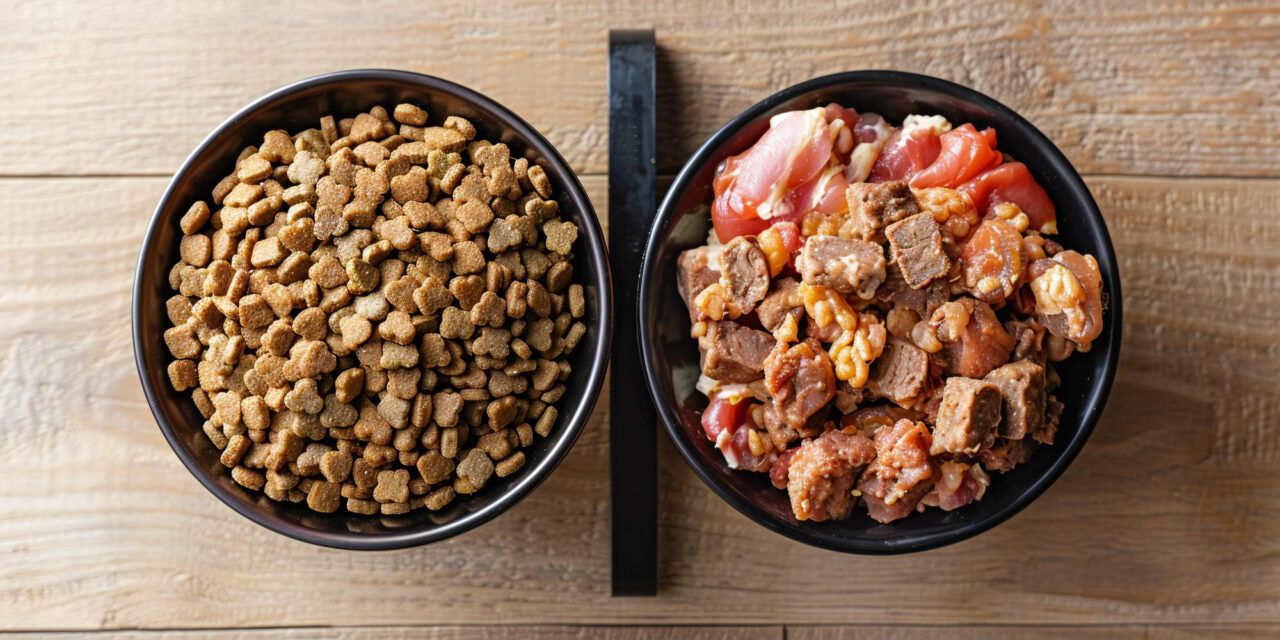
Wet vs. dry dog food is one of the most-searched dog nutrition questions there is, and it usually gets asked standing in a pet store aisle holding a can in one hand and a bag of kibble in the other. Both formats can be complete and balanced under AAFCO’s standards. Both work well for millions of healthy dogs. Neither one is the universally “better” choice, no matter how confidently a store display or a well-meaning relative suggests otherwise.
What actually differs between wet and dry dog food is more specific than “better” or “worse.” It comes down to moisture content, calorie density, cost per calorie (not per can or per bag), storage life once opened, dental impact, and how much water a format adds to your dog’s day. This guide walks through each tradeoff with real math you can copy yourself, an honest look at the “kibble cleans teeth” claim, and a decision framework built around your dog, your budget, and your actual kitchen routine.
One note on scope: this article compares formats by category — moisture, calories, cost structure, ingredient-quality signals, manufacturer transparency — not by brand or product ranking. If your dog has a diagnosed health condition, eats a prescription diet, or you’re weighing two specific products, bring the actual labels to your veterinarian. They can look at your dog’s bloodwork and body condition in a way this article can’t.
What’s in this guide
- Wet vs. dry dog food: why there’s no single right answer
- Nutritional differences: moisture, calories, and reading labels fairly
- Cost comparison: why wet food costs more than it looks like
- Convenience and storage tradeoffs
- The dental health question: what “kibble cleans teeth” gets wrong
- Hydration: does wet food help a dog who under-drinks?
- Texture preferences and picky eaters
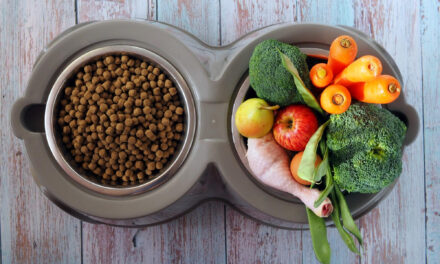
- Mixing and topping: combining wet and dry
- Switching formats: transition considerations
- Life stages and situations that tilt the decision
- How to compare two specific foods fairly
- Common mistakes when comparing wet and dry food
- A decision framework, not a verdict
- Frequently asked questions
- Sources
Wet vs. Dry Dog Food: Why There’s No Single Right Answer
Search “wet vs dry dog food” and you’ll find plenty of confident answers pointing in opposite directions. One site insists kibble is the only responsible choice. Another insists canned food is obviously superior because it “looks more like real meat.” Both are overselling a format that’s really just one part of a bigger decision.
Here’s the more useful framing: most reputable manufacturers make both wet and dry versions of a given formula to similar nutrient targets. The question usually isn’t which format is nutritionally superior in some abstract sense. It’s which format fits your specific dog, your specific budget, and your specific household — because those factors genuinely do change the right answer, even when the nutrition science stays constant.
Both Formats Can Be “Complete and Balanced”
The Association of American Feed Control Officials, or AAFCO, sets the nutrient profiles that most U.S. pet foods are formulated or tested against. A food that meets those standards can carry a nutritional adequacy statement — language like “formulated to meet the nutritional levels established by the AAFCO Dog Food Nutrient Profiles” — regardless of whether it’s sold in a bag or a can. That statement, not the format, is what tells you a food is meant to be a complete diet rather than a treat or topper.
In other words, wet and dry are packaging and processing choices, not competing nutritional philosophies. A well-formulated canned food and a well-formulated kibble can both meet your dog’s needs. What changes between them is moisture, texture, cost structure, and a handful of practical tradeoffs this guide covers one at a time.
Nutritional Differences: Moisture, Calories, and Reading Labels Fairly
This is where wet vs. dry comparisons go wrong most often. Owners glance at the guaranteed analysis on two bags — or a bag and a can — and assume the numbers are directly comparable. They aren’t, and understanding why is the single most useful thing in this entire article.
Moisture Content: The Biggest Structural Difference
Dry kibble typically runs around 10% moisture. Canned or wet food typically runs closer to 75–80% water, according to guidance from the Cummings School’s Clinical Nutrition Service. That single difference explains almost everything else that follows: calorie density, cost per calorie, and how much a can vs. a cup actually feeds your dog.
Because wet food is mostly water by weight, a dog eating a wet diet needs to eat considerably more food, by weight, to get the same calories as a dog eating dry food. That’s normal and expected — it isn’t a sign either food is “watered down” or lower quality. It’s just what removing most of the moisture from a food does to its weight.
Comparing Protein and Fat the Right Way: Dry Matter Basis
Here’s the label-reading trap almost everyone falls into. Say a dry food lists 33% crude protein and a canned food lists 8% crude protein. At a glance, the dry food looks like it has roughly four times more protein. It probably doesn’t.
Those guaranteed analysis numbers are reported “as-fed,” meaning they include all the water still in the food. To compare fairly, you need the dry matter basis instead — the percentage of protein once you mathematically remove the water. Once you do that, a dry food at 33% protein and a canned food at 8% protein can land at nearly identical protein levels, around 36% on a dry matter basis, because the canned food’s water was diluting its as-fed number the whole time.
The formula worth keeping in your notes app
To convert an as-fed percentage to dry matter: divide the nutrient percentage by (100 minus the moisture percentage), then multiply by 100.
Dry matter % = [as-fed % ÷ (100 − moisture %)] × 100
Run both foods through this formula using their own moisture guarantees, and you’re finally comparing protein, fat, or fiber on equal footing — not comparing a concentrated number to a diluted one.
Calorie Density: Why a Cup and a Can Aren’t Equivalent
Because dry food has so little water, it’s calorie-dense by volume — a cup of kibble packs a lot of calories into a small space. Wet food is calorie-dilute by comparison; a whole can might contain meaningfully fewer calories than an equivalent-looking portion of kibble, simply because so much of the can’s weight is water, not energy.
This is exactly why feeding directions that say “one can equals X cups of kibble” deserve a second look. Most current pet food labels are required to carry a calorie statement (typically kcal per kilogram and per a common household measure, like a cup or a can) precisely because guaranteed analysis percentages alone can’t tell you how much energy is actually in a serving. Always check the calorie statement, not the protein percentage, when you’re trying to figure out how much of either food your dog actually needs.
Why Ingredient Lists Are Skewed by Moisture Too
Ingredient lists face the same distortion as the guaranteed analysis, and it’s worth understanding before you use one to judge quality. Ingredients are listed by weight, before cooking or processing, from heaviest to lightest. Wet food’s first ingredient is very often something like “chicken” or “chicken broth” — and it earns that top spot largely because of all the water weight it’s carrying, not necessarily because the finished can contains dramatically more actual meat protein than a comparable dry food.
Dry food, by contrast, loses most of its water during processing, so a meat ingredient that started out heavy on the intake line can end up lower on the finished ingredient list simply because the water evaporated out of it, while a dry ingredient like a grain or legume — which never carried much water weight to begin with — can rank higher by comparison. None of that tells you which food has more usable protein once you account for moisture the way the dry matter basis calculation does.
The practical takeaway: don’t judge a wet food as “meatier” than a dry food, or vice versa, purely from where an ingredient sits on the list. Ingredient order is a weight snapshot, not a nutrient snapshot, and it’s especially unreliable for comparing across formats rather than within one. Real ingredient-quality signals worth looking for instead include named protein sources (like “chicken” or “beef” rather than a vague “meat” or “animal” byproduct), a manufacturer willing to share a full nutrient analysis on request, and consistent quality control testing — not just where an ingredient happens to fall in the list.
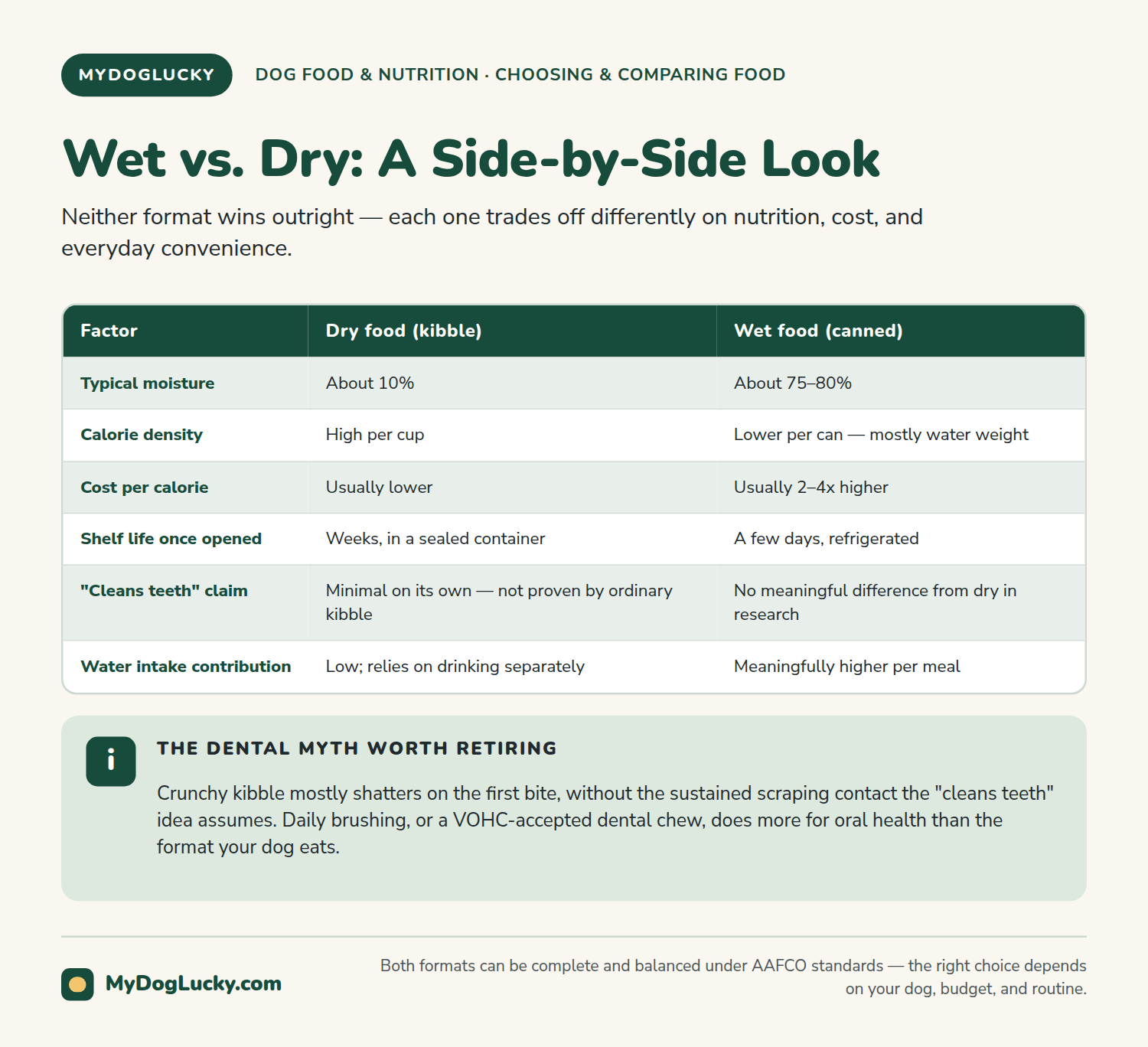
| Factor | Dry food (kibble) | Wet food (canned) |
|---|---|---|
| Typical moisture | About 10% | About 75–80% |
| Calorie density | High per cup | Lower per can, higher per calorie of water weight |
| Typical cost per calorie | Usually lower | Usually higher |
| Shelf life once opened | Weeks, in a sealed container | A few days, refrigerated |
| Dental “cleaning” effect | Minimal on its own; not proven by ordinary kibble alone | None claimed; no meaningful difference from dry in most research |
| Contribution to water intake | Low; relies on the dog drinking separately | Meaningfully higher, useful for some individual dogs |
Cost Comparison: Why Wet Food Costs More Than It Looks Like
A single can often looks cheap next to a giant bag of kibble. That comparison is misleading, and it’s one of the most common reasons owners feel blindsided by their actual monthly food spending.
Price Per Can vs. Price Per Calorie
Because wet food is mostly water, you’re paying, in part, for water, packaging, and processing — not just calories. A dog eating an all-wet diet typically needs several cans a day to hit the same calorie target one cup of kibble would cover. Multiply that out over a month, and wet food usually costs noticeably more per calorie than dry food, even when the per-can price looks modest at checkout.
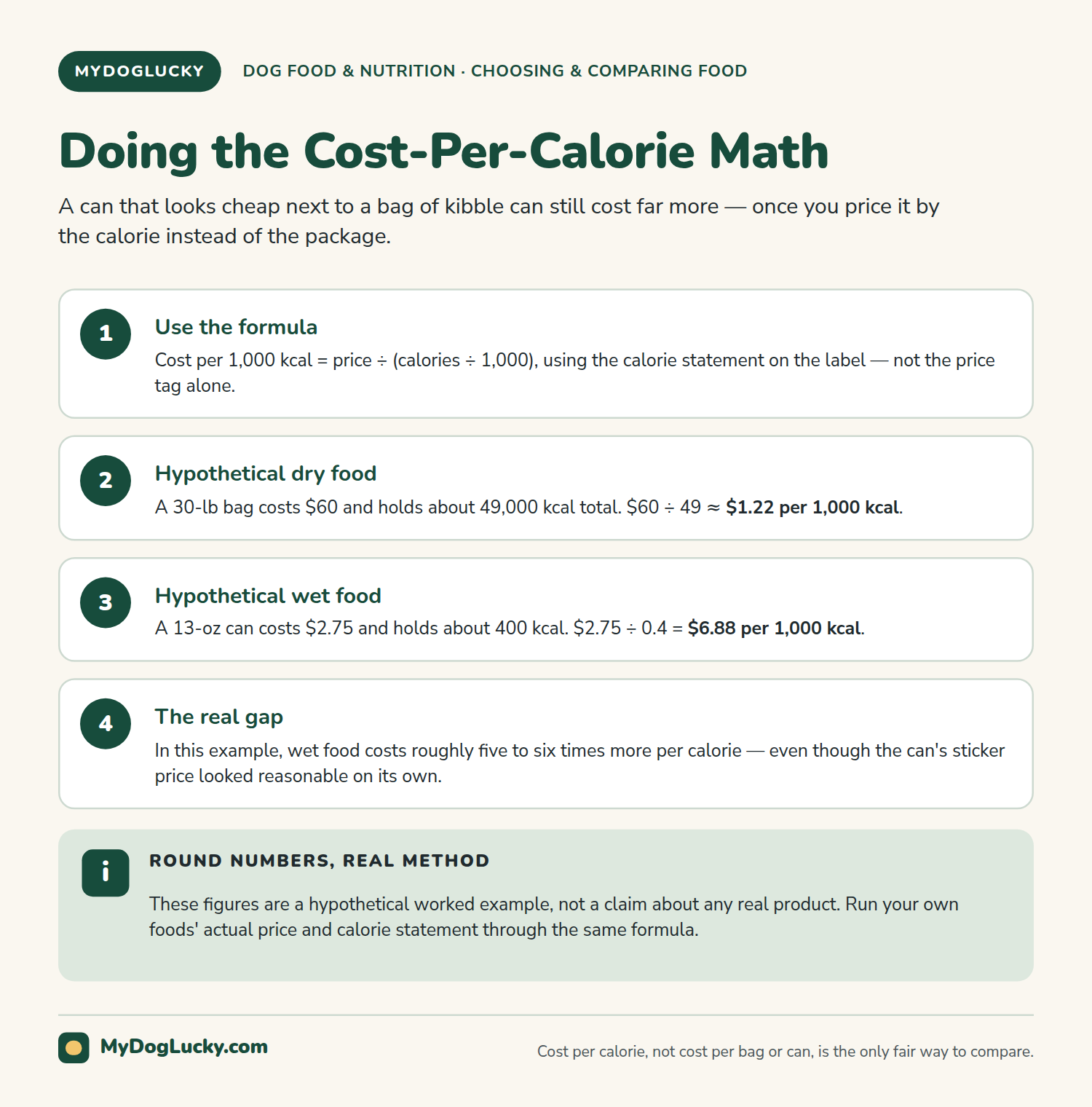
The only fair way to compare cost is price per unit of energy, not price per package. That means calculating cost per 1,000 kilocalories (kcal) for each food, using the calorie statement on the label — not the price tag alone.
A rule of thumb for the real cost gap
Across most product categories, an all-wet diet commonly runs somewhere in the range of two to four times the cost per calorie of an equivalent-quality dry diet, though the exact gap varies a lot by brand and formula. If your household budget is tight, that gap is worth running the actual numbers on before committing to an all-wet feeding plan.
A Worked Example You Can Copy
Here’s a fully hypothetical example, using round numbers, to show the math — not a claim about any real product.
- Hypothetical dry food: a 30-pound bag costs $60 and provides about 3,600 kcal per kilogram. A 30-pound bag is about 13.6 kg, so the bag holds roughly 49,000 kcal total. Cost per 1,000 kcal: $60 ÷ 49 ≈ $1.22 per 1,000 kcal.
- Hypothetical wet food: a 13-ounce (about 369 g) can costs $2.75 and provides about 400 kcal per can. Cost per 1,000 kcal: $2.75 ÷ 0.4 = $6.88 per 1,000 kcal.
In this hypothetical example, the wet food costs roughly five to six times more per calorie than the dry food — even though the can’s sticker price looked entirely reasonable on its own. Your actual numbers will differ; the point is the method, not these specific figures.
Where the Cost Difference Comes From
It isn’t a conspiracy or a markup gimmick. Canned food requires heavier packaging (metal or retort pouches instead of a paper-lined bag), more shipping weight and volume per calorie delivered (because you’re shipping water), and a different manufacturing and sterilization process. Those real costs get passed along in the price, which is a large part of why wet food consistently lands more expensive per calorie than dry food across most brands and price tiers.
None of that makes wet food a bad value for the right dog. A senior dog who needs the hydration boost, or a small dog whose total daily calories are modest, may make an all-wet or mostly-wet diet financially reasonable even with the higher per-calorie cost. It just means going in with real numbers instead of a gut feeling from the price tag.
Convenience and Storage Tradeoffs
Cost isn’t the only practical difference. Storage, shelf life, and everyday logistics matter just as much once you’re living with the food day to day, not just buying it.
Shelf Life Once Opened
An opened bag of dry kibble, stored in a cool, dry place (ideally in its original bag, sealed inside an airtight container to protect against oxygen, light, and pests), generally stays acceptable for several weeks. An opened can of wet food is a different story: it typically needs refrigeration right away and should be used within a few days, with any leftovers in the bowl discarded well before that if they’ve sat out for more than a couple of hours, according to veterinary guidance from VCA Animal Hospitals.
That shorter window matters more than it sounds like on paper. A half-used can sitting in the back of the fridge for a week isn’t a minor lapse — it’s a food safety problem, the same way leftover human food would be.
Storage, Travel, and Portability
Dry food travels easily: it’s lightweight, doesn’t need refrigeration, and a resealable container or bag handles boarding, road trips, or a weekend at a relative’s house without much planning. Wet food is heavier per calorie, needs a cooler or fridge access once opened, and single-serve pouches or small cans (rather than one large can you’re portioning across days) tend to work better for travel specifically because you’re not managing a half-used, refrigeration-dependent leftover on the road.
If your household travels often, boards your dog regularly, or just has an unpredictable schedule, that portability difference is worth weighing alongside the nutrition and cost math above.
Feeding Logistics and Mess
Dry food works well with auto-feeders, and it’s simple to pre-portion for a pet sitter or a confusing week. Wet food generally can’t sit out in an auto-feeder safely, needs to be served fresh at each meal, and creates more bowl cleanup, more smell, and occasionally more mess for a food-motivated dog who eats with enthusiasm. None of that is a dealbreaker — it’s just one more real-life factor that tips the practical scale for a lot of households, especially busy ones.
The Dental Health Question: What “Kibble Cleans Teeth” Gets Wrong
This is the claim that refuses to die, and it deserves a straight answer rather than another repeat of the old talking point.
Where the Idea Came From
The logic sounds reasonable on its face: crunchy kibble should scrape plaque off teeth the way a firm apple might, while soft canned food just gets swallowed with minimal chewing. That intuitive story is exactly why the idea spread so widely — and exactly why it’s worth checking against actual evidence instead of taking it on faith.
What the Evidence Actually Shows
The Merck Veterinary Manual states it plainly: “the common perception that dry kibble, as opposed to canned food, decreases plaque and calculus through mechanical cleaning does not necessarily always hold true.” Most standard kibble shatters on the first bite, with minimal contact against the tooth surface before it’s gone — it doesn’t get the sustained scraping contact the “crunching cleans teeth” idea assumes. VCA Animal Hospitals’ guidance on nutrition and periodontal disease goes further, noting that clinical research shows ordinary dry food alone does not meaningfully improve oral health compared with wet food.
That’s a genuinely useful thing to know, because it resets expectations. Feeding kibble instead of canned food is not, on its own, a dental care plan — even though it’s one of the most commonly repeated pieces of “common sense” dog advice out there.
What Does Help: VOHC-Accepted Products and Toothbrushing
Some products are specifically engineered and tested for dental benefit, and that’s a meaningfully different category from ordinary dry food. The Veterinary Oral Health Council (VOHC) awards its Seal of Acceptance to dental diets, chews, and treats that pass independent trials demonstrating they measurably reduce plaque and calculus (tartar). Products with the VOHC seal are formulated with specific kibble size, texture, and fiber structure designed to resist shattering immediately, plus, in some cases, ingredients that interfere with plaque mineralization — not just “crunchiness” in general.
Even VOHC-accepted diets and dental chews work best as part of a bigger plan, not a stand-alone fix. According to the Merck Veterinary Manual, daily or at least every-other-day toothbrushing remains the most effective way to maintain periodontal health in dogs — more effective than diet alone, regardless of format. If daily brushing genuinely isn’t realistic for your household, a VOHC-accepted dental chew or diet, used consistently, is a reasonable evidence-backed supplement. Ordinary dry kibble, fed simply because it’s dry, isn’t a substitute for either one.
⚠️ Don’t let “he eats dry food” delay a dental exam
Bad breath, visible tartar, red or bleeding gums, reluctance to chew on one side, or pawing at the mouth are reasons to schedule a veterinary dental check — regardless of whether your dog eats wet, dry, or a mix of both. Feeding kibble is not a reason to skip or delay a professional evaluation if you’re noticing any of these signs.
Hydration: Does Wet Food Help a Dog Who Under-Drinks?
This is the angle owners of picky drinkers, senior dogs, and dogs with certain health histories tend to ask about most, and it deserves a careful, non-diagnostic answer.
How Much Water Is In Each Format
Given the moisture numbers above — roughly 10% for dry food versus roughly 75–80% for wet food — it’s straightforward math that a dog eating mostly or entirely wet food takes in considerably more water through food alone than a dog eating mostly dry kibble. A dog on dry food is relying almost entirely on drinking from the bowl to meet its water needs; a dog on wet food gets a meaningful head start from every meal.
For most healthy dogs who drink normally, this difference isn’t something to worry about — plenty of dry-fed dogs stay perfectly well hydrated by drinking enough water on their own. It becomes more relevant for individual dogs with a lower thirst drive, some seniors, and dogs with specific health conditions where veterinarians commonly discuss total water intake as part of the management plan.
When Hydration Becomes a Veterinary Conversation, Not a DIY Fix
It’s tempting to treat “switch to wet food” as a simple home fix for a dog who doesn’t seem to drink much. Resist that instinct until you’ve talked with your veterinarian. A dog who’s drinking noticeably less than usual, or noticeably more than usual, can be showing an early sign of a health issue that needs an actual diagnosis — not just a food swap that might mask the pattern your vet would otherwise catch.
⚠️ When reduced water intake needs a call to your vet, not just a food change
- Your dog is drinking noticeably less than normal, especially paired with low energy or reduced appetite.
- Your dog is drinking noticeably more than normal — increased thirst can be just as significant a signal as decreased thirst.
- You already know your dog has a kidney, urinary, or heart-related diagnosis, where hydration is part of an existing management plan.
- Your dog seems dehydrated — dry or tacky gums, skin that’s slow to spring back when gently lifted, lethargy.
- A senior dog’s drinking or urination habits have changed in the last few weeks.
Any of these is worth a same-week (or sooner) call to your veterinarian, who can evaluate what’s actually going on rather than guessing from a food label alone.
Once a veterinarian has looked at the full picture, adding moisture through wet food, a topper, or plain water mixed into a meal is sometimes part of a legitimate management plan for specific dogs and specific conditions. That’s a conversation to have with your vet using your dog’s actual history and bloodwork — not a self-diagnosis exercise built on a blog post, including this one.
Texture Preferences and Picky Eaters
Some dogs have genuine, consistent texture preferences, and it’s worth taking those seriously rather than assuming every picky eater is being difficult for no reason.
Why Some Dogs Prefer One Texture Over the Other
Wet food tends to be more aromatic straight out of the can or pouch, which can make it more appealing to a dog with a reduced sense of smell (common in some seniors) or a dog going through a low-appetite stretch. Some dogs also simply prefer the mouthfeel of a softer food, the same way some people strongly prefer soup to a sandwich. Other dogs love the crunch and are perfectly content with kibble their whole lives and show zero interest in canned food when it’s offered.
Neither preference is a problem to fix on principle. A dog who reliably eats a complete and balanced diet, maintains a healthy body condition, and shows normal energy is doing fine on the format he prefers — whichever one that turns out to be.
What to Try Before Assuming “Picky”
Before concluding a dog is simply picky, it’s worth ruling out a few other explanations, since dental pain, nausea, or a recent flavor/formula change can all look like pickiness from the outside:
- Check for dental discomfort if a dog who used to eat kibble happily suddenly avoids it, especially paired with head-tilting while chewing or dropping food.
- Rule out a recent change — a new bag from a different manufacturing batch can smell or taste slightly different, which sometimes throws off a sensitive eater temporarily.
- Try gentle warming for wet food, since slightly warming a portion (never hot) can increase aroma and appeal for a dog who’s lost some interest in a cold bowl.
- Watch the whole pattern, not one skipped meal. A dog who skips one meal but is otherwise normal is usually fine. A dog who’s consistently under-eating for more than a day or two, especially alongside other symptoms, is a reason to call your veterinarian rather than keep experimenting with food.
Mixing and Topping: Combining Wet and Dry
You don’t have to choose one format exclusively. Mixing wet and dry is common, and for a lot of dogs and households, it’s a genuinely reasonable middle ground.
How to Mix Without Unbalancing the Diet
The main thing to watch is total calories, not just “adding a little extra.” A spoonful of wet food mixed into a normal portion of kibble adds real calories on top of what was already a complete meal, and doing that daily, without adjusting the base portion down slightly, can lead to gradual weight gain over months. If you’re regularly topping or mixing, it’s worth recalculating your dog’s total daily calories across both foods combined — the same “how much to feed your dog” math you’d use for a single food, just applied to the blended total.
One caveat worth flagging directly: if your dog is on a prescription or therapeutic diet for a specific medical condition, don’t add a regular wet or dry topper without checking with your veterinarian first. Mixing in an unrelated food can dilute the therapeutic formulation’s intended effect, sometimes in ways that aren’t obvious just by looking at the bowl.
A simple starting approach for mixing
- Pick one food as the “base” that provides the bulk of daily calories — often the lower-cost-per-calorie dry food.
- Add a modest portion of the second food as a topper, starting small (a spoonful or two) rather than half-and-half.
- Recalculate total daily calories across both foods combined, and adjust the base portion down slightly to compensate.
- Watch body condition over several weeks, not days, and adjust the ratio if you notice gradual weight changes.
Common Mixing Approaches
A few patterns show up often in real households:
- Wet as a topper on dry. A small amount of wet food stirred into kibble, mainly for palatability or to encourage a slow or picky eater.
- Split by meal. Dry food in the morning, wet food in the evening (or vice versa), which can simplify portioning while still offering some texture variety.
- Wet with a splash of warm water on dry. Not technically “mixing formats,” but a genuinely useful trick for a dog who needs extra moisture without the cost of an all-wet diet — plain water mixed into kibble adds hydration at essentially no cost.
- Alternating by day. Full wet-food days and full dry-food days on a rotation, which works for some households but makes the calorie math slightly more involved to track consistently.
Switching Formats: Transition Considerations
Whether you’re moving from dry to wet, wet to dry, or introducing mixing for the first time, a gradual transition matters more than most owners expect.
A Gradual Transition Schedule
A dog’s digestive system, including the balance of gut bacteria that helps process food, adjusts to whatever it’s been eating consistently. Switching dog food abruptly — especially between formats as different as wet and dry — can trigger loose stool, gas, or a temporarily upset stomach, even when the new food is perfectly good quality. A gradual transition over seven to ten days, increasing the new food’s share of the bowl a little each day while decreasing the old food’s share, gives the gut time to adjust.
A standard transition timeline
- Days 1–2: About 25% new food, 75% old food.
- Days 3–4: About 50% new food, 50% old food.
- Days 5–6: About 75% new food, 25% old food.
- Days 7 and beyond: 100% new food, assuming stools have stayed normal throughout.
Signs the Transition Needs to Slow Down
Mild, temporary softening of stool during the first couple of transition days isn’t unusual and often resolves on its own. Slow the transition down — stretch each stage out an extra day or two — if you see loose stool that persists past a couple of days, repeated vomiting, or a dog who seems uncomfortable or refuses to eat the new mixture. If symptoms are more than mild, or your dog has a known sensitive stomach or an underlying digestive condition, loop in your veterinarian before continuing rather than pushing through on your own timeline.
Life Stages and Situations That Tilt the Decision
The general nutrition tradeoffs above apply broadly, but certain life stages and situations genuinely shift which format tends to work better in practice.
Puppies and Growing Dogs
Puppies need a food formulated for growth (or “all life stages”), which is about the AAFCO life stage statement, not the format. Both wet and dry growth foods can meet that standard. In practice, some puppies find wet food easier to eat during the transition off nursing or a milk-replacer, and the stronger aroma can help during a phase when appetite is still developing. Others do perfectly well straight onto dry kibble, especially once teeth are established.
Senior and Mature Dogs
Older dogs sometimes face a combination of factors that nudge the decision toward wet food or a mixed approach: reduced sense of smell affecting appetite, dental disease making hard kibble uncomfortable to chew, or a health condition where a veterinarian has specifically recommended increased moisture intake. None of that means every senior needs to switch formats — plenty of older dogs continue eating dry food comfortably their entire lives — but it’s worth reassessing periodically as part of routine senior checkups, rather than assuming the food that worked at age three still fits at age eleven.
Weight Management and Health Conditions
For weight management specifically, format matters less than total calories and consistent measuring. A dog can gain weight on wet or dry food if portions aren’t tracked accurately; the lower calorie density of wet food can make larger, more satisfying-looking portions possible at the same calorie count, which some owners find helps a dog who seems to want “more food” psychologically. For dogs with diagnosed kidney, urinary, or other conditions where a veterinarian has recommended a specific therapeutic diet, that recommendation — including format — should come from your vet’s evaluation of your dog’s actual bloodwork and history, not from a general comparison like this one.
| Situation | What often helps | Why |
|---|---|---|
| Tight monthly budget | Dry food as the base, or a modest wet topper | Lower cost per calorie in most cases |
| Picky eater or reduced appetite | Wet food, or a wet topper on dry | Stronger aroma and softer texture can improve appeal |
| Known dental disease | Whatever’s comfortable to chew, plus a VOHC-accepted product and vet-guided dental care | Comfort matters more than “crunch”; format alone doesn’t treat dental disease |
| History of low water intake | Wet food or added water, discussed with your vet | Meaningfully higher moisture per meal |
| Frequent travel or boarding | Dry food, or single-serve wet pouches | Easier portability and no refrigeration mid-trip |
| Multiple dogs, automatic feeder | Dry food | Safe to leave out; simpler to portion for several dogs |
How to Compare Two Specific Foods Fairly
Once you’ve decided roughly which format (or mix) fits your household, comparing two specific products — wet or dry, against each other or against each other’s format — comes down to a short, repeatable checklist.
- Check the AAFCO nutritional adequacy statement and confirm it matches your dog’s life stage (growth, adult maintenance, or all life stages).
- Find the calorie statement (kcal per kilogram and per common measure) rather than relying on the guaranteed analysis percentages alone.
- Convert protein and fat to a dry matter basis using the formula above if you’re comparing across formats, so you’re not comparing a concentrated number to a diluted one.
- Calculate cost per 1,000 kcal for each option, using price and the calorie statement — not price per bag or price per can.
- Look for manufacturer transparency: Can you find a full nutrient analysis on request? Does the company employ or consult a qualified nutritionist (a PhD in animal nutrition, or board certification from ACVN or ECVCN)? The World Small Animal Veterinary Association’s Global Nutrition Toolkit recommends asking these exact questions before trusting a label’s marketing copy.
- Weigh the practical factors from this guide — storage, travel, cost, your dog’s texture preference — against the nutrition numbers, since a nutritionally similar food that never gets eaten or never fits your routine isn’t actually the better choice in practice.
This same checklist works whether you’re comparing two dry foods, two wet foods, or one of each. It’s also the same general approach worth using any time you’re learning how to read dog food labels for the first time — the skill transfers well beyond this one comparison.
Common Mistakes When Comparing Wet and Dry Food
Comparing Price Per Can or Bag Instead of Price Per Calorie
This is the single most common mistake, and it’s covered in detail above. A can that costs less than a scoop of kibble can still cost far more per calorie once you account for how much water you’re paying for.
Trusting the Guaranteed Analysis Numbers at Face Value
Comparing a dry food’s 30%-plus protein to a wet food’s single-digit protein percentage, without converting to a dry matter basis first, makes a perfectly reasonable wet food look nutritionally inferior when it usually isn’t.
Assuming Dry Food Alone Handles Dental Care
Covered in detail above: ordinary kibble is not, by itself, a proven dental-care strategy. Skipping brushing or dental exams because “he eats dry food” is a genuinely common and avoidable mistake.
Switching Formats Overnight
A sudden switch between wet and dry — or any significant diet change — raises the odds of digestive upset. The seven-to-ten-day gradual transition above exists specifically to avoid this.
Mixing a Prescription Diet Without Checking First
Adding a regular topper to a therapeutic diet, without confirming it with your veterinarian, can quietly undercut the reason that diet was prescribed in the first place.
Treating Marketing Language as a Substitute for the Adequacy Statement
Words like “premium,” “natural,” or “holistic” aren’t regulated nutrition terms and don’t tell you whether a food is complete and balanced. The AAFCO nutritional adequacy statement, and the calorie statement next to it, carry the actual information worth trusting.
Judging Quality by Ingredient List Order Alone
As covered above, ingredient order is a weight ranking distorted by moisture, not a reliable quality score. A wet food listing “chicken” first isn’t automatically meatier than a dry food listing a grain first; the water content is doing a lot of that work behind the scenes.
A Decision Framework, Not a Verdict
After all the nutrition science, cost math, and practical tradeoffs, the honest conclusion is that there isn’t one. Wet and dry dog food are both legitimate, evidence-backed formats, and the right choice depends on factors specific to your dog and your household rather than a universal ranking.
Use these questions to work toward your own answer, rather than looking for someone else’s verdict:
- What does your budget realistically support? If cost per calorie is a real constraint, dry food as the base (with wet food as an occasional topper, if you want it) is usually the more sustainable long-term choice.
- Does your dog have a texture preference, a dental issue, or an appetite challenge? Let that steer the format, rather than defaulting to whichever one you assume is “more responsible.”
- Has your veterinarian flagged a hydration, kidney, urinary, or weight concern? If so, that conversation should shape your food choice more than any general comparison, including this one.
- How does your household actually operate? Frequent travel, an automatic feeder, multiple pets, or a packed schedule all make dry food’s convenience genuinely relevant, not just a minor bonus.
- Would a mix solve more problems than an either/or choice? For a lot of dogs, splitting the difference — dry as the base with a modest wet topper, or alternating by meal — captures much of the benefit of both formats without fully committing to either one’s downsides.
Whatever you land on, revisit the decision periodically. A young, healthy dog’s ideal setup at age two may look different at age nine, and that’s a normal, expected part of caring for a dog through his whole life — not a sign you got it wrong the first time.
Bringing the Decision Back to Your Dog
It’s easy to get pulled into the wet-vs-dry debate as if it’s a referendum on how much you care about your dog. It isn’t. A dog eating a complete and balanced diet in either format, at an appropriate calorie level for his body condition, with clean water available and regular veterinary checkups, is being well cared for — full stop.
Run the cost-per-calorie math if your budget is tight. Ask your vet directly if you’re weighing a hydration or dental concern rather than guessing from a blog post. And if your dog has strong opinions about texture, it’s usually easier — and kinder — to work with those opinions than to fight them on principle. The goal was never picking the “correct” format. It’s feeding the dog actually in front of you, well, on a plan you can keep up for years, not just for one enthusiastic first week.
Frequently Asked Questions About Wet vs. Dry Dog Food
Is wet or dry dog food better?
Neither format is universally better. Both can be complete and balanced under AAFCO standards, and the right choice depends on your dog’s individual needs, your budget, and practical factors like storage and travel — not a fixed nutritional ranking between the two formats.
Is wet dog food more nutritious than dry dog food?
Not inherently. Once you compare protein, fat, and other nutrients on a dry matter basis instead of the as-fed guaranteed analysis, well-formulated wet and dry foods commonly land in a similar nutritional range. The bigger practical differences are moisture content, calorie density, and cost, not raw nutritional superiority.
Why is wet dog food more expensive than dry dog food?
Mostly because of water weight and packaging. You’re paying for the water content, heavier packaging (cans or retort pouches), and a different manufacturing process, on top of the actual calories. Comparing cost per 1,000 kcal, rather than price per can or bag, usually shows wet food costing several times more per calorie than dry food.
Does dry food really clean my dog’s teeth?
Not reliably, according to veterinary guidance. Ordinary kibble mostly shatters on the first bite without meaningful scraping contact against the tooth surface, and clinical evidence doesn’t support dry food alone as an effective dental-cleaning method. VOHC-accepted dental diets and chews, tested specifically for this purpose, plus regular toothbrushing, are the evidence-backed approaches worth relying on instead.
Can I mix wet and dry dog food together?
Yes, for most healthy dogs. The main thing to track is total daily calories across both foods combined, so the mix doesn’t quietly become an overfeeding problem. If your dog is on a prescription diet, check with your veterinarian before adding a regular topper.
How long can opened canned dog food sit out or stay in the fridge?
Served food shouldn’t sit out for more than about two hours, especially in a warm room, before it’s discarded. An opened can, covered and refrigerated, is generally best used within a few days rather than left in the fridge for a week or longer.
Will wet food help my dog drink more water?
Wet food does contribute meaningfully more moisture per meal than dry food, simply because of its much higher water content. Whether that matters for your specific dog — especially if you’re asking because you’ve noticed reduced drinking — is a question worth bringing to your veterinarian rather than solving with a food swap alone, since changes in thirst can also signal a health issue that needs an actual diagnosis.
Is it okay to switch my dog from dry to wet food (or vice versa) quickly?
A quick, abrupt switch raises the odds of an upset stomach or loose stool, even between two good-quality foods. A gradual transition over about seven to ten days, increasing the new food’s share a little each day, is the safer standard approach.
My dog won’t eat dry food anymore. What should I do?
First, rule out dental discomfort, nausea, or illness, especially if this is a sudden change rather than a lifelong preference — a vet visit is a reasonable first step if the change was abrupt. If your dog is otherwise healthy and simply prefers a different texture, there’s nothing wrong with adjusting to wet food, a mix, or a wet topper, as long as the total diet stays complete, balanced, and calorie-appropriate.
Does wet food cause more dental tartar than dry food?
Current veterinary guidance doesn’t show a meaningful, consistent difference in tartar between typical wet and dry diets when neither is specifically formulated for dental benefit. Format alone isn’t the deciding factor for dental health; regular brushing and, when appropriate, VOHC-accepted dental products matter more.
Is one format better for weight management?
Format matters less than total calories and consistent portioning. Some owners find the lower calorie density of wet food helpful because it allows a more satisfying portion size at the same calorie count, but a dog can gain or lose weight on either format depending on how carefully it’s measured and fed.
Do puppies need wet or dry food?
Puppies need a food with a growth (or all life stages) AAFCO nutritional adequacy statement — that requirement applies to both formats equally. Some puppies find wet food easier to eat during the early transition off nursing or a milk replacer, while others do fine going straight onto dry kibble once their teeth are established. Either format works as long as it’s formulated for growth.
Does ingredient list order matter more for one format than the other?
Ingredient lists are ranked by weight before processing, so a wet food’s top ingredient often looks “meatier” mainly because of its water content, not because it necessarily contains more usable protein than a comparable dry food. It’s a reasonable starting point for spotting named versus vague ingredients, but it isn’t a fair way to compare quality across formats. The AAFCO adequacy statement and a dry-matter-basis nutrient comparison are more reliable than ingredient order alone.
My dog does fine on dry food. Do I need to add wet food at all?
No. If your dog is eating a complete and balanced diet, maintaining a healthy body condition, drinking normally, and showing no dental or appetite concerns, there’s no requirement to add wet food. Mixing in wet food is a preference and convenience choice for many households, not a nutritional necessity for a dog who’s already doing well on dry food alone.
Sources
- Association of American Feed Control Officials (AAFCO). Reading Labels
- World Small Animal Veterinary Association (WSAVA) Global Nutrition Toolkit. Selecting a Pet Food for Your Pet (updated 2021)
- U.S. Food and Drug Administration, Center for Veterinary Medicine. Pet Food
- Cummings School of Veterinary Medicine at Tufts University, Clinical Nutrition Service (Petfoodology). What Is Guaranteed about the Guaranteed Analysis? (2020)
- Merck Veterinary Manual. Periodontal Disease in Small Animals
- VCA Animal Hospitals. Dry, Canned, or Semi-Moist: Food Choices for Dogs
- VCA Animal Hospitals. Dogs, Nutrition, and Periodontal Disease
- Veterinary Oral Health Council (VOHC). About the VOHC
- American Kennel Club. How to Choose the Best Dog Food
- American Veterinary Medical Association. How Dog Owner Feeding Choices Correlate with Nutritional Health Outcomes (2024)
This article is general education for U.S. dog owners. It is not an individualized feeding plan or veterinary advice for your dog. Nutritional needs, hydration concerns, and dental health vary by individual dog, and any concern involving your dog’s appetite, weight, water intake, or teeth should be evaluated by your veterinarian. This article does not recommend, name, or rank any specific commercial dog food brand or product.


Trackbacks/Pingbacks