
Arthritis in dogs is more common than most of us expect, and it starts earlier than the gray muzzle. The everyday form, osteoarthritis (also called degenerative joint disease), is a slow breakdown of the cushioning cartilage inside a joint, with inflammation and pain that build over years. Veterinary sources put it in roughly one in five dogs over a year old and as many as four in five dogs over eight, though those figures come with caveats we’ll get to. It can’t be cured. It can be managed, often well, and the earlier a plan starts, the more comfortable years a dog tends to keep.
If you’re here because your dog takes a beat longer to stand up, skips the couch he used to jump onto, or still insists on his walk and then sleeps the whole afternoon, you’re asking the right question at the right time. “Slowing down” is where a great deal of arthritis hides.
This guide walks through the red flags first, then what osteoarthritis is and which dogs tend to get it, the quiet early signs, how a veterinarian confirms it, and the full treatment picture, described by class rather than by product. After that come the home changes, the monitoring habits, the money, and the harder conversations. It won’t diagnose your dog, and it won’t tell you what to give. It will help you notice more, ask better questions, and build a plan that fits your dog and your actual life.
What’s in this guide
- Arthritis in dogs: the short answer
- Red flags: when joint pain needs a vet now
- What osteoarthritis actually is, in plain language
- Causes and risk factors
- Why dogs hide pain, and the early signs worth noticing
- How a veterinarian diagnoses arthritis in dogs
- Treatment: a multimodal plan, not a single pill
- Home changes that make daily life easier
- Monitoring: pain scales, home logs, and good days vs. bad days
- When to call the vet: manage, call today, or go now
- Quality-of-life conversations, handled gently
- Costs and budgeting
- Common mistakes and misunderstandings
- Frequently asked questions about arthritis in dogs
- Sources
Arthritis in Dogs: The Short Answer
Osteoarthritis is a lifelong, progressive joint disease. Cartilage thins, the joint lining becomes inflamed, bone at the edges of the joint changes shape, and the dog hurts. Most cases in dogs are secondary, meaning something else set them off: a joint that didn’t form quite right, an injury years ago, or extra body weight pressing on joints every day. Age brings the disease into view, but according to VCA Animal Hospitals, “simple aging is not a cause” on its own.
The good news is real, if quieter than a cure. A modern plan combines several things at once: pain control prescribed and monitored by a veterinarian, a lean body weight, steady low-impact movement, a home set up for traction and easy rest, and regular rechecks so the plan changes as the dog does. The 2022 AAHA Pain Management Guidelines call this a multimodal approach, and they’re blunt about timing: proactive treatment works better than waiting for obvious limping.
The five things that change the outcome most
- Noticing early. Subtle changes in rising, stairs, play, and mood usually come years before an obvious limp.
- A confirmed diagnosis. Other conditions can look like arthritis, and some of them need very different treatment.
- Body weight. Keeping a dog lean is the single most evidence-supported thing an owner controls.
- Layered treatment. Medication, movement, diet, home changes, and rehab together do more than any one of them alone.
- Rechecks and a home log. Arthritis changes. The plan has to change with it, and your notes are what make that possible.
Red Flags: When Joint Pain Needs a Vet Now
Most arthritis is a slow story. A few situations are not, and they deserve a call before you read anything else here. Some are signs that something other than arthritis is going on. Others are signs that a medication is causing harm.
Call your veterinarian or an emergency clinic right away if you see:
- A leg your dog suddenly won’t put weight on, or a limp that appeared in hours rather than months.
- Crying out, yelping, or snapping when touched or when moving, especially if that’s new for your dog.
- A joint that is hot, visibly swollen, or painful to the touch, or a dog who feels feverish, shivers, and won’t eat.
- Dragging a paw, knuckling over, wobbling, or being unable to stand after a period of weakness.
- Vomiting, diarrhea, refusing food, black or tarry stool, or blood in vomit or stool in a dog taking an anti-inflammatory or other pain medication.
- Yellow-tinged gums or eye whites, or a sudden increase in drinking and urinating while on medication.
- Stumbling, seizures, unusual weakness, or new incontinence in the days after an injectable arthritis treatment.
- Any pain that seems out of proportion to what your dog has lived with before.
One item is enough. You don’t need several to justify the call.
Why a Sudden Change Is Different From a Slow One
Osteoarthritis builds over months and years. A dog who was walking fine on Monday and won’t touch a paw to the floor on Tuesday has something acute going on, whether that’s a torn ligament, a fracture, an infection, a slipped disc, or an arthritis flare with something else layered on top. The American College of Veterinary Surgeons notes that cruciate ligament rupture is one of the most common conditions that leads to arthritis, and it often announces itself suddenly. Sudden is a reason to be seen, not a reason to wait and see.
Signs to Watch for While Your Dog Takes a Prescription Anti-Inflammatory
Veterinary non-steroidal anti-inflammatory drugs, usually shortened to NSAIDs, are the most common first-line arthritis medication in dogs, and most dogs tolerate them well. The FDA lists the most frequent side effects as “vomiting, decreased to no appetite, decreased activity level, diarrhea.” Rarer but serious effects involve the stomach lining, the kidneys, and the liver. The FDA’s guidance is simple: if you see vomiting, diarrhea, bloody or black stool, decreased appetite, decreased activity, or yellowing of the gums or eye whites, stop giving the medication and call your veterinarian. Keep the bottle nearby when you call. The name and lot number matter.
What Osteoarthritis Actually Is, in Plain Language
A healthy joint is two bone ends capped with smooth cartilage, bathed in a slippery fluid, wrapped in a capsule lined with living tissue. Cartilage has no nerves, which is why early wear can be silent. Osteoarthritis is what happens when that system starts to fail.
Cartilage, Inflammation, and Pain
The Merck Veterinary Manual describes the process as “thinning of cartilage, buildup of fluid within the joint, and the formation of bony outgrowths around the joint.” Those outgrowths are called osteophytes, and they’re one of the things a veterinarian looks for on an X-ray. As cartilage thins, the joint lining becomes inflamed and the bone beneath the cartilage gets exposed.
That bone does have nerves. So does the inflamed lining. The Merck professional text is clear that pain in this disease comes from the inflamed joint lining and exposed bone, not from cartilage itself, which is part of why a joint can look worn on an X-ray long before a dog seems sore, and why two dogs with similar X-rays can feel very different.
Over time, the joint capsule thickens and scars, range of motion shrinks, and the muscles around the joint waste from disuse. That muscle loss is why the dog’s hindquarters can start to look narrow while the belly looks rounder. Less muscle means less support for the joint, which means more pain, which means less movement. The plan we describe below is largely about interrupting that loop.
How Common It Is, With the Caveats
You’ll see the same numbers repeated across veterinary sites: about 20 percent of dogs over one year old, roughly 40 percent under four, and up to 80 percent over eight. The AKC Canine Health Foundation cites all three, and VCA cites the first and last. Treat them as a range of honest estimates rather than a census.
A large 2018 study of nearly half a million UK dogs in primary care found that only about 2.5 percent had osteoarthritis recorded in their charts in a given year, which tells you less about how many dogs have it and more about how many go undiagnosed. A 2024 study that X-rayed 123 dogs between eight months and four years old found visible arthritis in nearly 40 percent of them, and joint pain on exam in a sizable share of those, yet only two dogs in the entire group were receiving any pain management.
The takeaway isn’t a precise percentage. It’s that osteoarthritis is common, it starts young more often than people assume, and the gap between “has it” and “is being treated for it” is wide.
Not Just Old Age
Dr. Duncan Lascelles, a veterinary pain researcher quoted by the AVMA, put it plainly: “Osteoarthritis is a young dog’s disease.” His point is that the process usually begins early, and dogs “adapt their posture to continue daily living activities” so well that nobody notices until years later. When an older dog finally looks stiff, the disease is often a decade old. That reframing matters for owners of young dogs with hip or elbow issues, and it matters for anyone who has been told their eight-year-old is “just getting older.”
Causes and Risk Factors
The American College of Veterinary Surgeons sorts osteoarthritis into two broad kinds. Primary osteoarthritis develops from ordinary wear on a joint over a lifetime. Secondary osteoarthritis, which the ACVS calls the most common form in dogs, develops on top of another problem. Here are the problems that come up most.
Developmental Joint Disease
Some joints don’t form quite right during growth. Hip dysplasia, elbow dysplasia, a kneecap that slips out of its groove (patellar luxation), and a cartilage-development disorder called osteochondrosis all leave a joint that moves imperfectly, and an imperfectly moving joint wears faster. Cornell’s Riney Canine Health Center lists all of these as contributors. Large and giant breeds are over-represented for hip and elbow dysplasia, and small breeds for patellar luxation, but any dog can have any of them. If your dog was diagnosed with one of these as a puppy, you’re not waiting to see whether arthritis develops. You’re managing a joint that is already at risk.
Prior Injury and Cruciate Ligament Disease
The cranial cruciate ligament stabilizes the knee. When it tears, whether in a single event or through a slow degeneration, the knee becomes unstable and arthritis follows, even after surgical repair. The ACVS names cruciate rupture first among the orthopedic conditions that lead to osteoarthritis. Fractures that involve a joint, dislocations, and joint infections do the same. Owners sometimes hear “the surgery was a success” and reasonably assume the story is over. The surgery restores stability. The joint still remembers the injury.
Body Weight
Extra weight matters twice. It loads the joint with every step, and fat tissue itself produces inflammatory signals. Cornell puts it this way: fat cells produce “inflammatory mediators, which worsens the progression of OA.” The AAHA guidelines cite long-term cohort studies that “strongly support maintenance of a lean body condition score” both for slowing arthritis and for extending life span. This is the one risk factor an owner can change at home, and it’s the one with the most evidence behind it. We’ll come back to it in the treatment section, because it deserves more than a line.
Breed, Size, and Genetics
The large UK study found the highest odds in Rottweilers, Dogues de Bordeaux, and Old English Sheepdogs, with Golden Retrievers, Labrador Retrievers, and German Shepherd Dogs also well above average. Higher body weight and larger frame carried risk on their own. Genetics plays a role through inherited joint conformation, and it plays another role through the tendencies a breed has toward certain injuries. None of this means a small mixed-breed dog is safe. It means that if you live with a big dog from one of these lines, early attention pays off.
Age, Activity History, and Everything Else
Age adds years of wear to whatever was already there. Repetitive high-impact activity, which Cornell mentions specifically, can do the same in a working or sporting dog. VCA also lists orthopedic surgery and nutritional factors during growth, such as puppies growing too fast on a calorie-dense diet, among the contributors. Neutered dogs showed higher odds in the UK data, though the reasons are debated and likely tangled up with body weight and age.
What you can change, and what you can’t
You can’t change: breed, frame size, how a joint formed, or an injury that already happened.
You can change: body condition, the type and amount of daily activity, traction and access at home, how early a vet looks at the joints, and whether a plan exists at all. That second list is where the rest of this article lives.

Why Dogs Hide Pain, and the Early Signs Worth Noticing
Dogs don’t hide pain out of stoicism or pride. They adapt to it. A joint that hurts a little gets used a little less, weight shifts to the other legs, jumps get replaced with a pause and a step, and the dog keeps living his life. Because the change is gradual, the humans in the house adjust right alongside him without ever deciding to. The dog who stopped climbing onto the bed two winters ago becomes “the dog who sleeps on the floor now.”
Owners often say afterward that the signs were obvious in hindsight. They weren’t obvious. They were quiet, and quiet signs are what this section is about.
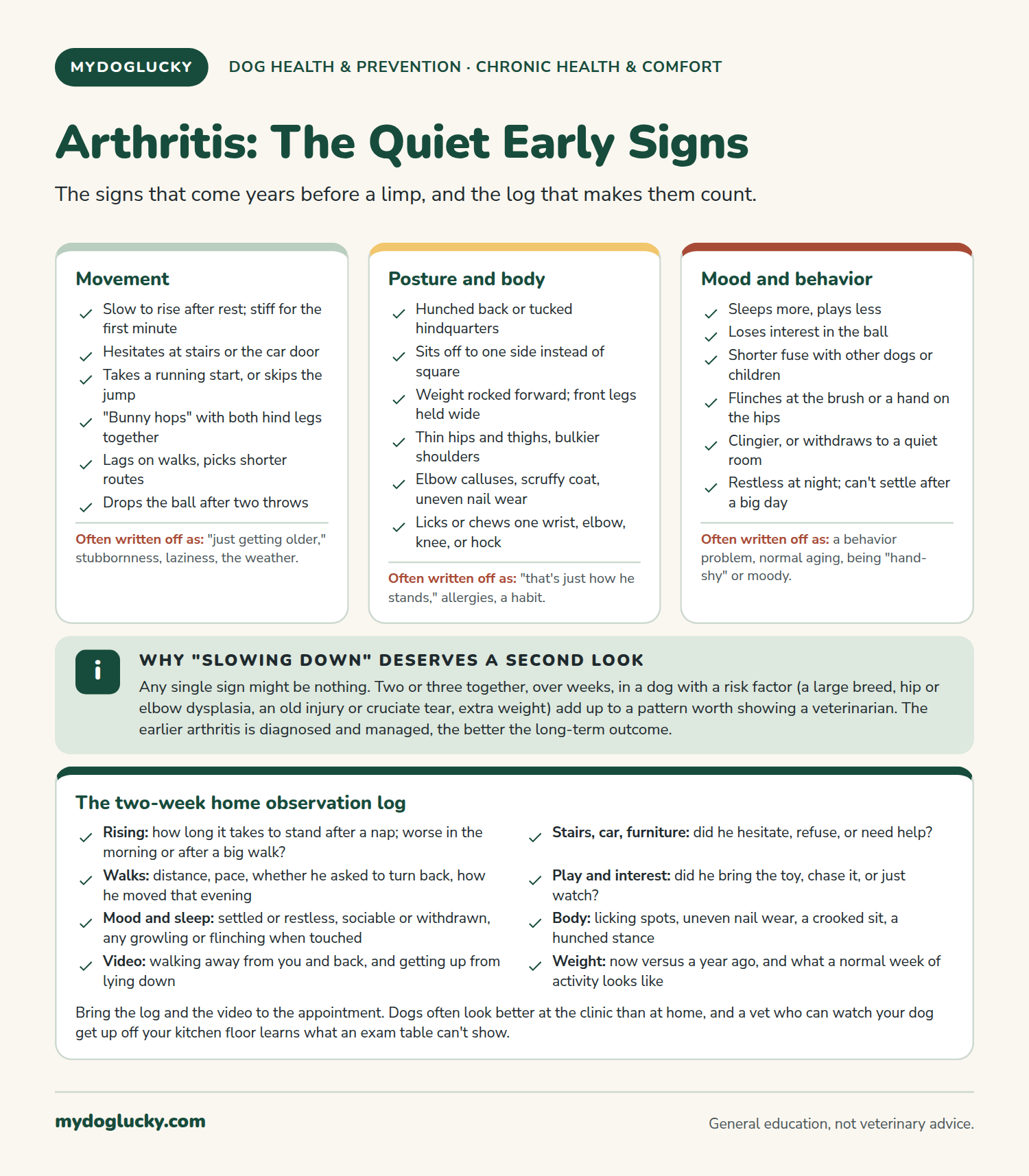
Movement Signs
The Merck professional text lists “slowness to rise, especially after extended rest” and “difficulty going up or down stairs” as classic early findings. Watch the first few steps after a nap: stiffness that works out after a minute of walking is typical of arthritis. Watch for hesitation at the car door, a pause at the bottom of the stairs, a new preference for a running start before a jump, or a jump that gets skipped altogether.
The ACVS describes “bunny hopping,” where both hind legs move together on stairs or at a run, as a sign worth noting. A dog who used to lead the walk and now lags, or who picks shorter routes on his own, is telling you something.
Behavior and Mood Signs
Pain shows up in temperament before it shows up in a limp. Sleeping more, playing less, losing interest in the ball, and a shorter fuse with other dogs or with children are all on VCA’s list, which includes “unexpected aggression” and “reluctance to be touched on some parts of the body.” Some dogs become clingier. Some withdraw to a quiet room. Licking or chewing one spot, often over a wrist, elbow, knee, or hock, can be a dog’s way of tending to a joint that aches. A dog who has always tolerated grooming and now flinches at the brush along his back or hips is worth a closer look.
Posture and Body Signs
Look at your dog standing still. A hunched back or tucked hindquarters, front legs held wider than usual, weight rocked forward off the hips, or a sit that is off to one side rather than square can all reflect a dog sparing a sore joint. VCA lists “hunching of the spine” and “shifting weight” among the signs. Over months, the muscle over the hips and thighs thins while the shoulders bulk up from carrying more of the load. Calluses on the elbows from lying down more, a coat that looks scruffier because grooming himself hurts, and toenails that wear unevenly because one paw isn’t pushing off properly round out the picture.
| What you might notice | The everyday version | What it’s often mistaken for |
|---|---|---|
| Slower to rise | Pushes up with front legs first; stiff for the first minute after sleep; stands in stages | “He’s just getting older” |
| Hesitating at stairs or the car | Pauses at the bottom, waits to be lifted, bunny-hops up, takes stairs one at a time | Stubbornness or a “phase” |
| Reduced play and shorter walks | Drops the ball after two throws; turns for home early; lags behind | Boredom, laziness, weather |
| Licking or chewing one area | A damp or discolored patch over a wrist, elbow, knee, or hock | Allergies or a habit |
| Irritability | Growls when bumped, avoids the other dog, snaps when picked up or brushed over the hips | A behavior problem |
| Sleeping more, restless at night | Naps longer; shifts position often; can’t settle after a big day | Normal aging |
| Posture changes | Hunched back, sits crooked, stands with weight forward, thin hindquarters | “That’s just how he stands” |
| Reluctance to be touched | Moves away from a hand on the hips; flinches during nail trims or brushing | Being “hand-shy” or moody |
Why “Slowing Down” Deserves a Second Look
Every one of the signs above has an innocent explanation, and that’s the problem. Any single one might be nothing. Two or three together, over weeks, in a dog with a risk factor from the section above, add up to a pattern worth showing a veterinarian. Cornell’s guidance is that the earlier arthritis is diagnosed and managed, “the better the long-term outcome.” Bringing a dog in while the signs are still subtle isn’t overreacting. It’s the version of this story with the most comfortable years in it.
A two-week home observation log
Before the appointment, jot a line or two each day. You’re not diagnosing. You’re building the picture your vet can’t see in a fifteen-minute visit.
- Rising: how long it takes to stand after a nap, and whether it’s worse in the morning or after a big walk.
- Stairs, car, furniture: did he hesitate, refuse, or need help?
- Walks: distance, pace, whether he asked to turn back, and how he moved that evening.
- Play and interest: did he bring the toy, chase it, or watch?
- Mood and sleep: settled or restless, sociable or withdrawn, any growling or flinching when touched.
- Body: any licking spots, uneven nail wear, a crooked sit, a hunched stance.
- A short video of your dog walking away from you and back, and getting up from lying down. Dogs often look better at the clinic than at home.
How a Veterinarian Diagnoses Arthritis in Dogs
A diagnosis of arthritis in dogs comes from a combination of your history, a hands-on orthopedic exam, and imaging, along with ruling out the conditions that can look like it. None of this can be done from a checklist at home, and it shouldn’t be. Some of the look-alikes are more urgent than arthritis, and a few of them get worse with the treatments that help arthritis.
Your History and Observations
The visit usually starts with questions: when the changes began, whether they’re worse after rest or after exercise, whether any joint was injured or diagnosed in the past, what your dog eats, how much he weighs now versus a year ago, and what activity looks like on a normal week. This is where the home log and the video earn their keep. A vet who can watch your dog get up off your kitchen floor learns something an exam table can’t show.
The Orthopedic Exam and Gait
Your veterinarian will watch your dog walk and trot, then work through each joint by hand, flexing and extending it, feeling for swelling, thickening, heat, a grinding sensation, and the point where your dog tenses or pulls away. The ACVS describes the typical findings as “pain on manipulation of the joints, grinding of the joint during range of motion,” along with muscle loss on the affected side. Some practices have access to force-plate or pressure-mat gait analysis, which measures how much weight each leg is bearing. That’s a research and specialty tool more than an everyday one, but it exists, and it removes a lot of guesswork.
X-Rays: What They Show and What They Don’t
Radiographs are the standard imaging step. They show the bony changes of arthritis: osteophytes around the joint margins, extra fluid in the joint, thickened bone beneath the cartilage, and sometimes a narrowed joint space. Sedation is often needed for good positioning, especially for hips. What X-rays don’t show is cartilage itself, and they don’t measure pain. A dog can have dramatic-looking films and be comfortable, or subtle films and be quite sore. The ACVS notes that arthroscopy, a camera inside the joint, is “the gold standard for cartilage evaluation,” and CT or MRI may be used for elbows, spines, or surgical planning. Most dogs never need those. Your vet will say if yours does.
Ruling Out the Look-Alikes
This is the part that makes a professional diagnosis matter. Stiffness, reluctance to move, and limping can also come from tick-borne infections such as Lyme disease, immune-mediated joint disease where the body attacks its own joints, bone tumors, disc disease in the spine, soft-tissue injuries, nerve or spinal cord disorders, and, in older dogs, a general illness that simply makes them feel unwell.
The Merck professional text notes that a joint-fluid sample can help sort inflammatory or infectious causes from ordinary arthritis. Bloodwork, a tick-disease screen, or a neurologic exam may be part of the workup depending on what your dog’s exam suggests. The goal isn’t to run every test. It’s to be confident that what’s being treated is what’s actually there.
Bloodwork Before Medication
If an anti-inflammatory is likely, expect a blood panel first. The FDA recommends checking liver and kidney function “before starting the medication and then repeating the blood tests on a regular basis.” That’s not a formality. It’s how a vet catches a dog who can’t safely take a common medication before the medication causes a problem.
Staging: Where Your Dog Is Right Now
Some veterinarians use a staging tool called COAST, the Canine OsteoArthritis Staging Tool, which grades a dog from stage 0 (normal, no risk factors) to stage 4 (severe disease). It combines your questionnaire answers, the exam, and imaging into one number that can be tracked over time. If your vet mentions a stage, ask what it means for your dog specifically, and ask what would move it in either direction. That question tends to open up the whole treatment conversation.
Treatment: A Multimodal Plan, Not a Single Pill
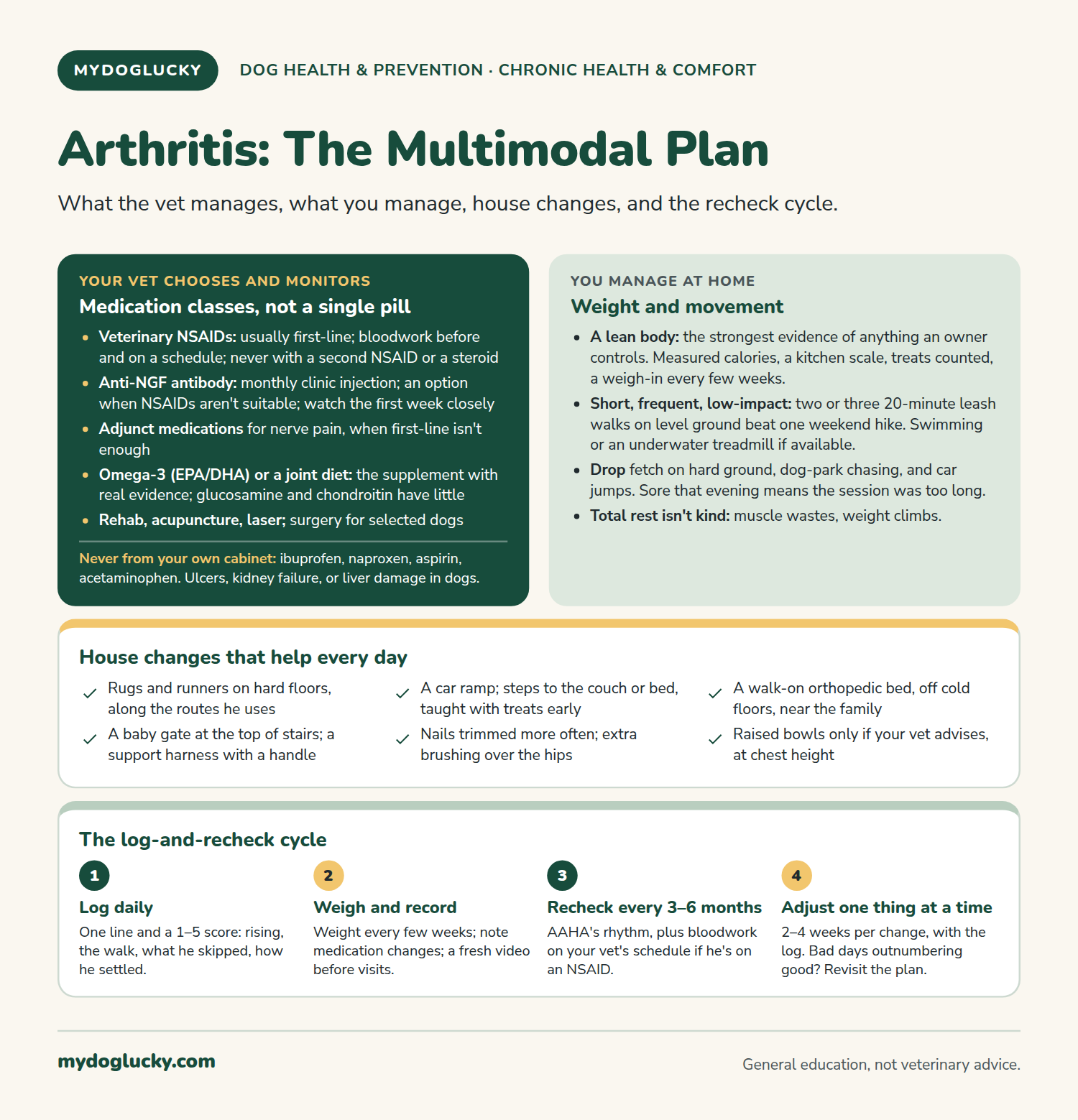
The 2022 AAHA Pain Management Guidelines organize chronic-pain treatment for dogs into tiers by strength of evidence. The first tier includes anti-inflammatory medication, anti-nerve-growth-factor antibody injections, omega-3 fatty acids, weight management, encouraging activity, and changing the home environment. Second-tier options include adjunct medications, therapeutic exercise and rehabilitation, and physical modalities such as laser, acupuncture, and pulsed electromagnetic field therapy. The point of the tiers isn’t to work through them in order. It’s to build a plan from several first-tier pieces at once and add the rest as needed.
Everything below is described by class. Product names, doses, and schedules belong to your veterinarian and your dog. Nothing here is a recommendation to start, stop, or change a medication on your own.
Weight Management: The Most Evidence-Supported Lever
If a dog is carrying extra weight, losing it is the treatment with the strongest evidence behind it, and it’s the one that costs the least. The Merck professional text refers to the “primacy of even very modest weight loss to improving function,” and the AAHA guidelines point to lifetime studies showing that lean dogs develop arthritis later and live longer. The ACVS calls weight control the “most critical aspect of OA management.”
The practical version is a body-condition score check with your vet, a measured daily calorie target, a kitchen scale or a marked cup rather than a scoop, treats counted inside the total, and a weigh-in every few weeks. A therapeutic weight-loss diet may help, because it lets a dog eat a satisfying volume of food on fewer calories. Progress is slow, and it’s normal to see little change in the first month. Loss of even five or six percent of body weight has been associated with visibly better movement in studies, which for a dog who should weigh 60 pounds is three or four pounds. That’s a reachable goal.
Veterinary NSAIDs, and Why the Human Medicine Cabinet Is Off Limits
Non-steroidal anti-inflammatory drugs made for dogs reduce both inflammation and pain, and VCA notes they are “generally the first treatment used.” Several are FDA-approved for canine osteoarthritis, including a newer class that works on a specific prostaglandin receptor rather than blocking the enzymes broadly. Most dogs tolerate them well, especially with bloodwork before and during treatment. The FDA cautions that “two different NSAIDs, or an NSAID and a steroid, should not be given at the same time,” which is one reason your vet needs to know about every supplement and medication your dog takes.
Human anti-inflammatories are a separate matter, and a serious one. Ibuprofen and naproxen are toxic to dogs at doses far below what a person would consider small, and VCA’s poison-control authors describe stomach ulcers, kidney failure, and worse. Acetaminophen is not a self-serve option either. VCA notes that a veterinarian may occasionally use low doses in a dog for specific reasons, but that dogs “are likely to develop liver damage at lower doses and red blood cell changes at higher doses” when it’s given carelessly, and it’s lethal for cats. VCA’s line is the right one to remember: “Never reach into your own medicine cabinet when your dog limps.”
Anti-Nerve-Growth-Factor Monoclonal Antibody Injections
This is the newest class, and the one owners ask about most. Nerve growth factor is a signaling protein that rises in damaged joints and amplifies pain. A monoclonal antibody that binds it, given as a monthly injection at the clinic, was FDA-approved for canine osteoarthritis pain in May 2023. Cornell reports that a single injection “leads to an improvement in comfort and mobility for at least eight weeks” in study dogs, and the AAHA guidelines describe “good pain relief” in trials. Because it isn’t processed by the liver or kidneys the way NSAIDs are, it’s often considered for dogs who can’t take anti-inflammatories.
It’s also newer, and newer means less is known. In 2024 the FDA sent a letter to veterinarians about adverse events reported after use, including “ataxia, seizures, paresis, and recumbency,” along with urinary signs and increased thirst, and it noted that most reported signs appeared within the first week. Reports are not proof of cause, and the drug has been given to a very large number of dogs. But it’s a fair reason to have a real risk-and-benefit conversation with your vet, to watch your dog closely after the first dose, and to report anything unusual rather than waiting for it to pass.
Adjunct Medications
When a first-line medication isn’t enough, or a dog can’t take one, veterinarians add other classes. The AAHA second tier includes gabapentin, a medication that quiets nerve-related pain, and amantadine, which works on the nervous system’s tendency to “wind up” and amplify chronic pain. Some dogs receive an injectable joint-support medication, a polysulfated glycosaminoglycan, in a short series.
Corticosteroids reduce inflammation strongly but, as Merck notes, are “usually given only for a short period” because of side effects, and they can’t be combined with NSAIDs. An older opioid-type medication once used widely for dog pain sits in the AAHA third tier now, because the evidence for it in dogs turned out to be weak. If your vet suggests something in this group, ask what it’s meant to add and how you’ll both know whether it’s working.
Omega-3 Fatty Acids and Therapeutic Joint Diets
Among supplements, omega-3 fatty acids from marine sources, specifically EPA and DHA, stand apart. The AAHA guidelines state that “measurable pain relief has been associated with the provision of diets enriched in omega-3 fatty acids,” and that omega-3 is the only nutraceutical with more than low-strength evidence in dogs. Tufts’ veterinary nutrition team notes that “EPA and DHA seem to be more effective than ALA,” the plant-based omega-3, at reducing joint inflammation. Some studies suggest omega-3-enriched diets let dogs get by on lower NSAID doses, though that’s a decision for your vet, not something to test at home.
Therapeutic joint diets bundle omega-3s, sometimes with glucosamine, chondroitin, and green-lipped mussel, into a complete food. They’re worth asking about, particularly if weight loss is also on the list. Fish oil as a supplement is another route. Either way, the amount matters, and so does quality. Ask your vet for a target, and ask which products they trust, because supplement manufacturing isn’t held to the same standards as medication.
Glucosamine, Chondroitin, and Other Supplements: Honest Limits
These are the most widely sold arthritis products in the pet aisle, and the evidence for them is thin. The Merck professional text cites a systematic review that “found no evidence of a beneficial effect” for glucosamine and chondroitin alone. The AAHA guidelines place non-omega-3 supplements in their lowest tier, stating there is “no evidence to support an analgesic effect.” Tufts adds a practical wrinkle: where studies did show some benefit, “the doses were considerably higher than what is found in veterinary or over-the-counter diets.”
None of that means a supplement will hurt your dog. It means the money may do more work elsewhere, that supplements should never replace a treatment with evidence, and that a supplement should be one of the things you tell your vet about. If you choose to use one, pick a product with independent quality testing, give it a fair trial of a couple of months alongside your home log, and be honest with yourself about whether anything changed.
Controlled, Low-Impact Exercise
Rest sounds kind. For arthritis, too much of it is the opposite. Muscles waste, joints stiffen, weight creeps up, and pain gets worse. The AAHA guidelines list “encouraging activity” among first-tier treatments, and Cornell recommends “low-impact activities, such as leash walks or swimming.” What changes is the shape of the exercise: shorter, more frequent, and steadier. Two or three twenty-minute leash walks on soft or level ground usually serve an arthritic dog better than one long hike on the weekend followed by two days of soreness.
Swimming and underwater treadmill work take weight off the joints while building muscle, which is why rehabilitation practices lean on them. Skip the things that involve sudden stops, twists, and leaps: fetch on hard ground, chasing at the dog park, jumping in and out of the car. If your dog is sore that evening or stiffer the next morning, the session was too much. Shorten it and try again. The dog who still insists on his walk is often right about wanting it and wrong about how far.
Rehabilitation and Physical Therapy
Veterinary rehabilitation is a specialty, with certified practitioners and board-certified sports-medicine veterinarians. A program might include range-of-motion exercises, targeted strengthening, balance work, underwater treadmill sessions, massage, and a home program you do between visits. The AAHA guidelines place therapeutic exercise and rehabilitation in their second tier, and a 2023 review of non-drug treatments noted a shortage of controlled trials comparing specific programs, while still recommending the multimodal approach. That’s an honest picture: rehab is widely used, generally considered helpful, and less studied than medication. If a rehab practice is within reach and budget, an initial consultation usually pays for itself in a home exercise plan you can keep doing.
Acupuncture, Laser, and Pulsed Electromagnetic Field Therapy
These sit in the AAHA second tier as physical modalities. Acupuncture and therapeutic laser (also called photobiomodulation) are offered in many general practices now. Pulsed electromagnetic field therapy, often delivered through a mat or a wearable loop, is newer. The 2023 review concluded that acupuncture and laser “may also play a role in reducing the clinical signs of OA, although further research is needed,” which is roughly where the evidence for all three stands.
They’re low-risk when done by trained hands. They’re not substitutes for weight control or pain medication. If one of them fits your budget and your dog seems more comfortable in the weeks you use it, that’s a reasonable thing to keep doing.
Injections Into the Joint and Regenerative Options
Some veterinarians offer injections directly into an arthritic joint: hyaluronic acid, a corticosteroid, platelet-rich plasma made from the dog’s own blood, or stem-cell preparations. The ACVS lists hyaluronic acid and platelet-rich plasma among its treatment options, while the AAHA guidelines place biologic injections in the third tier, meaning the evidence is still developing. These typically involve sedation, cost more, and are more often found at specialty or university hospitals. Ask what the practice has seen in dogs like yours, what the realistic goal is, and how long any benefit tends to last.
Surgery for Specific Cases
Surgery treats the cause of secondary arthritis or replaces a joint that’s beyond medical help. Repair of a torn cruciate ligament, correction of a slipping kneecap, or removal of a loose cartilage fragment in a young dog can slow the arthritis that would otherwise follow. For severe hip disease, total hip replacement or a procedure that removes the ball of the hip joint (femoral head ostectomy) can restore comfort in dogs who have run out of other options.
Elbow and knee replacements exist but are less common. Joint fusion is a last-resort option for some joints. The ACVS notes that “medical management will allow most dogs to live a long and active life, whereas surgical management could be curative” in the right case. A board-certified surgeon is the person to ask whether yours is one of them.
| Treatment class | What it does | What to ask your vet |
|---|---|---|
| Weight management | Reduces load on every joint and lowers inflammation from fat tissue; strongest evidence of anything an owner controls | “What’s his ideal weight, how many calories a day, and how often should we weigh him?” |
| Veterinary NSAID | Reduces inflammation and pain; usually first-line; needs baseline and periodic bloodwork | “What side effects should I watch for, and when do we recheck bloodwork?” |
| Anti-NGF antibody injection | Monthly clinic injection that blocks a pain-signaling protein; an option when NSAIDs aren’t suitable | “Is he a good candidate, what should I watch for in the first week, and how do we judge whether it’s working?” |
| Adjunct medications | Target nerve pain and chronic-pain amplification; added when first-line isn’t enough | “What is this meant to add, and what would tell us it isn’t helping?” |
| Omega-3 (EPA/DHA) or joint diet | Modest but real reduction in inflammation; the supplement with the best evidence | “How much EPA and DHA should he get, and from which source?” |
| Glucosamine, chondroitin, other supplements | Little evidence of pain relief; low risk; never a substitute for the above | “Is this worth the money for him, or should we spend it on rehab instead?” |
| Controlled low-impact exercise | Keeps muscle, range of motion, and weight in check; short and frequent beats long and rare | “How long and how often, and what activities should we drop?” |
| Rehabilitation / physical therapy | Strength, balance, underwater treadmill, and a home program; widely used, less studied | “Is there a certified rehab practitioner nearby, and can we get a home plan from one visit?” |
| Acupuncture, laser, PEMF | May reduce signs; low risk; evidence still developing | “What have you seen in dogs like mine, and how will we know if it’s helping?” |
| Joint injections / regenerative | Targeted relief in a specific joint; evidence developing; usually specialty-level | “What’s the realistic goal, how long does it last, and what does it cost?” |
| Surgery | Fixes the underlying problem or replaces a failed joint in selected dogs | “Would a board-certified surgeon consider him a candidate, and what’s the recovery really like?” |
Never give human pain relievers to your dog
Ibuprofen, naproxen, aspirin, and acetaminophen from your own cabinet can cause stomach ulcers, kidney failure, liver damage, or blood disorders in dogs, sometimes at a single dose. If your dog has already swallowed one, call your veterinarian or an animal poison control line now, before signs appear. If your dog is in pain and you have nothing prescribed, that’s a same-day call to your vet, not a reason to improvise.

Home Changes That Make Daily Life Easier
The AAHA guidelines list environmental modification as a first-tier treatment, right alongside medication. That’s not a courtesy mention. For a dog whose joints hurt, the house itself is either helping or hurting dozens of times a day, and most of the fixes are inexpensive.
Traction First
Hardwood, tile, and laminate floors are the biggest everyday hazard. A dog with sore hips who has to scramble for footing every time he stands is getting a small injury with each attempt, and many dogs start avoiding those rooms entirely. Runners and rubber-backed rugs along the routes he actually uses, from bed to door to water bowl, change more than almost anything else on this list. Yoga mats work in a pinch. Keep the fur between his paw pads trimmed so the pads themselves make contact. Some owners use grippy toe covers or paw wax; ask your vet or a rehab practitioner what they’ve seen work.
Ramps and Steps
A ramp into the car and pet steps up to the couch or bed remove the two jumps that hurt most. Ramps need a gentle slope and a non-slip surface, and a dog needs to be taught to use one calmly with treats before it’s needed, not on the day it’s needed. If your dog sleeps with you and the bed is high, a set of wide, shallow steps or a lower bed frame keeps that habit available. If you’ve decided the couch is off-limits now, a good bed on the floor beside it keeps him close without the jump.
Beds and Resting Spots
An orthopedic bed with a thick, supportive foam base makes it easier to get down and, more importantly, to get back up. Look for a bed your dog can walk onto rather than climb into, with a low or open front. Put beds where he already likes to be, in the living room and near the family, not only in a quiet corner. Cold, drafty floors stiffen sore joints, so a bed off the tile in winter matters. Warmth in general helps: Merck mentions warm compresses on affected joints, and a heated pad designed for pets, used under supervision and never hot, can ease a stiff morning.
Stairs, Car Access, and Handling
If stairs are unavoidable, a baby gate at the top prevents a tumble on a bad day, and a support harness with a handle over the back or hips lets you steady a large dog without hauling on his collar. For the car, a ramp or a lift, done the same way every time. Lifting a small dog is fine; lift with a hand under the chest and one under the hindquarters so the spine stays level, rather than scooping under the belly. Teach children in the house that a sore dog gets approached from the front and petted on the chest or shoulders, not the hips.
Nails, Coat, and Grooming
Long nails change how a paw lands and push the toes upward, which stresses joints all the way up the leg. Arthritic dogs often wear their nails less because they push off less, so trims are needed more often, not less. Keep sessions short and gentle, and let your groomer or vet know about the arthritis so they can position him comfortably. A dog who can’t twist to groom himself will need more brushing help, and mats over the hips are both uncomfortable and a sign he’s not reaching there anymore.
Raised Bowls: Only When Advised
Elevated food and water bowls are often suggested for dogs with neck, elbow, or shoulder arthritis, and VCA lists them among home modifications. They aren’t automatically right for every dog. In deep-chested breeds, some veterinarians prefer floor-level bowls because of concerns about bloat, and a dog with hip pain may be perfectly comfortable eating from the floor. Ask your vet before raising the bowls, and if you do, raise them only to about chest height.
Routine, and the Walk He Still Insists On
Arthritic dogs do best with predictable days: meals at the same times, medication at the same times, walks that happen even when they’re short, and rest built in after activity. A short walk every day beats a long one on Saturday. If your dog still stands at the door at walk time, that’s a good sign and worth honoring. Just decide the distance yourself, turn around before he’s tired rather than after, and let the sniffing count as the point of the outing.
Monitoring: Pain Scales, Home Logs, and Good Days vs. Bad Days
Arthritis is a lifetime disease, and the plan that works this spring may need adjusting by fall. The only way anyone knows is if someone is keeping track. That someone is you, and the tools are simpler than they sound.
Owner Questionnaires Your Vet May Use
Veterinarians have validated questionnaires, often called clinical metrology instruments, that turn an owner’s observations into a score that can be tracked over time. The 2022 AAHA guidelines and the Merck professional text both name several. The Canine Brief Pain Inventory, developed at the University of Pennsylvania, asks you to rate your dog’s pain severity on four items and how much pain interferes with six daily activities, each on a 0-to-10 scale, plus one overall quality-of-life question.
The Liverpool Osteoarthritis in Dogs questionnaire, or LOAD, is a short mobility questionnaire from the University of Liverpool that a 2013 validation study found “convenient to use, validated,” and correlated with objective force-plate measurements. The Helsinki Chronic Pain Index is a similar owner questionnaire developed in Finland.
If your vet hands you one of these, fill it out honestly and keep a copy. If they don’t, it’s fair to ask whether they use one. A score that drops from 5 to 2 after a treatment change is evidence. “He seems a bit better” is a feeling, and feelings are easy to argue with at the next appointment.
A Simple Home Log
Between questionnaires, a notes app or a calendar on the fridge does the job. Once a day, in a sentence: how he got up this morning, how the walk went, anything he skipped, how he settled tonight, and a number from 1 to 5 for the day overall. Add weight every couple of weeks and any medication changes on the day they happen. Over a month, patterns show up that no single day reveals, such as a slump three days after every long weekend or a steady improvement two weeks into a new medication. Bring the log to every visit.
Good Days, Bad Days, and Flare-Ups
Every arthritic dog has both. A bad day after a big outing, a cold snap, or a slip on the floor is expected. A flare-up is a run of bad days, often with a visible limp, that doesn’t settle with a day of rest. It helps to agree with your vet ahead of time on what you’ll do when one comes: how many days of rest, whether any prescribed medication has a flare-up instruction, and at what point you call. Having that plan written down turns a stressful evening into a checklist.
What to keep an eye on is the ratio. When bad days start outnumbering good ones, or the good days aren’t as good as they were, the plan needs revisiting. That’s not failure. That’s the disease doing what it does, and it’s exactly what the rechecks are for.
The Recheck Rhythm
The AAHA guidelines suggest regular re-evaluation, “every 3 to 6 months,” with extra visits if something changes. For a dog on an NSAID, bloodwork typically repeats on a schedule your vet sets. Weight checks can be as often as you can get to a scale. Ask at each visit whether anything in the plan should change, and bring the questionnaire, the log, and a fresh video. A quiet recheck where nothing changes is a good visit. It means the plan is working.
A flare-up plan to agree on with your vet in advance
- What a flare looks like for your dog specifically, in plain words you’ll recognize at 9 p.m.
- Rest rules: how many days of leash-only, short outings, and no stairs.
- Medication instructions: whether anything already prescribed has a flare-up plan, written down, with no guessing.
- The call threshold: how many days before you check in, and which signs mean call now regardless.
- Comfort measures: warmth, the good bed, rugs down, carrying the small dog down the steps.
When to Call the Vet: Manage, Call Today, or Go Now
Here is the same guidance from throughout the article, organized by what to do next.
Manage at home, within your existing plan
- A stiff morning that loosens with a few minutes of walking.
- A sore evening after a bigger-than-usual outing, resolving with a day of rest.
- Gradual changes you’re logging for the next scheduled recheck.
- Normal appetite, normal drinking, normal stool, and a dog who is still himself.
Keep the log going. If the bad days start to outnumber the good ones, move to the next tier.
Call your veterinarian today
- A limp or stiffness that has lasted more than a few days despite rest.
- A flare-up that isn’t settling the way it usually does.
- A new sign: licking a joint, refusing stairs he managed last week, snapping when touched.
- Weight creeping up, or appetite changing, in either direction.
- Your dog seems to be in pain and nothing is prescribed for it.
- You’ve noticed the subtle signs from this article in a dog who hasn’t been diagnosed.
Not an emergency, not something to sit on. Describe what you’re seeing and ask whether the plan should change.
Seek veterinary care now
- Sudden refusal to bear weight on a leg, or a limp that appeared in hours.
- Crying out in pain, or a hot, swollen joint with fever or lethargy.
- Unable to stand, dragging a paw, knuckling, or wobbling.
- Vomiting, diarrhea, black or bloody stool, refusing food, or yellow gums while on medication.
- Seizures, stumbling, or sudden weakness after a new medication or injection.
- Your dog swallowed a human pain reliever.
Call ahead if you can, then go.
Quality-of-Life Conversations, Handled Gently
For most dogs, arthritis is a condition to live with for years, and this section won’t apply for a long time. It’s here because, for some dogs, it eventually does, and because owners who’ve thought about it in a calm moment make better decisions than owners who are ambushed by it.
What Quality of Life Means Day to Day
Quality of life isn’t a single number. It’s whether your dog can do the things that make him himself: get up and move around without help, reach the yard in time, eat with interest, sleep comfortably, greet the people he loves, and have more good days than bad. Veterinarians sometimes use structured scales that walk through categories such as hurt, hunger, hydration, hygiene, happiness, mobility, and whether good days outnumber bad. Your vet can share one. Filling it out every month or so, and keeping the results, gives you a trend line rather than a feeling.
The Calendar Method
A simple habit many owners find steadying: mark each day on a calendar as good, mixed, or bad, using your own definition. Over a month or a season, you can see the balance shift, or see that it hasn’t. It takes the decision out of the worst single day and puts it into the pattern. It also gives you something concrete to bring to your vet when you ask the question you’re afraid to ask.
Palliative Care and Hospice
Before any final decision, there’s often a stretch of months where the goal changes from slowing the disease to keeping the dog comfortable. That can mean more pain medication, fewer restrictions, help getting outside, and letting go of goals like weight loss that no longer serve him. Some practices offer formal hospice or palliative care, sometimes at home. Asking about it isn’t giving up. It’s a different plan for a different stage.
When the Question Comes
“You’ll know when it’s time” is the phrase people offer, and it’s rarely enough on its own. Better guidance comes from your vet, from the scales and the calendar, and from asking yourself honestly whether your dog still has the things that make his days worth having.
If mobility is gone, if pain is no longer controlled even with everything available, if the bad days have become most days, that is the conversation to have. It is one of the hardest things a person does for a dog, and it’s an act of care. A vet who has walked this path with many families can help you see clearly, and you’re allowed to ask for that help more than once.
Caregiver Support
Caring for a dog with a chronic condition is work: lifting, cleaning, scheduling, paying, watching, worrying. It’s normal to feel tired, and it’s normal to feel guilty about feeling tired. Neither means you’re doing it wrong. Share the load where you can, whether that’s a family member handling the morning walk, a dog walker for midday, or a friend who will sit with him while you take a break. Grief that starts before a loss is real, and a good veterinary team, a support group, or a counselor who works with pet loss can all help.
Costs and Budgeting
Arthritis is a long-term expense, and it’s fair to plan for it the way you’d plan for any recurring bill. The ranges below are orientation only. They come from a veterinarian-authored consumer guide updated in 2024 and from general practice patterns; prices vary a great deal by region, by practice, and by dog size, which affects medication and diet cost. Ask for an estimate before every new step, and ask what the essentials are if money is tight.
- Diagnosis: an exam, sedated X-rays, and baseline bloodwork commonly run a few hundred dollars combined, more at a specialty hospital or with advanced imaging.
- Prescription pain medication: roughly $30 to $100 per month for many dogs on an oral NSAID, more for large dogs and for combination plans. The monthly antibody injection typically costs more than that per dose; ask your clinic.
- Monitoring bloodwork: roughly $200 to $400 a year for a dog on long-term medication.
- Therapeutic diet or omega-3 supplement: roughly $40 to $90 per month for a therapeutic food, with supplements often $15 to $50.
- Rehabilitation: roughly $200 to $400 per month during an active program, less once you’re maintaining with a home plan.
- Laser, acupuncture, or similar sessions: often $60 to $100 per session or month, depending on the practice.
- Home setup: rugs, a ramp, and an orthopedic bed can be assembled for well under $300 with some shopping around, or several hundred dollars for premium versions.
- Surgery: total hip replacement is often quoted from about $5,000 per hip and can run considerably higher once workup and recovery care are included; the less complex hip procedure and cruciate repairs sit below that, still in the thousands.
If those numbers are daunting, say so at the clinic. Weight loss is nearly free. Rugs are cheap. An oral NSAID with bloodwork is the most cost-effective medical step for many dogs. Pet insurance purchased before a diagnosis often covers arthritis care, while a policy bought afterward usually treats it as pre-existing. Some practices offer payment plans, and some veterinary schools run lower-cost clinics. There is almost always a version of the plan that fits the budget you have, and a vet would rather build that with you than see the dog go untreated.
Common Mistakes and Misunderstandings
Writing Off the Early Signs as Old Age
The most common mistake, and the most costly in comfortable years. Slowing down is often the disease, not the birthday. If you’ve read this far and recognized your dog in the signs section, that’s a call worth making this week.
Reaching for a Human Pain Reliever
Covered above, and worth repeating because it happens so often with good intentions: ibuprofen, naproxen, aspirin, and acetaminophen can seriously harm a dog. Call your vet instead.
Resting the Dog Completely
Total rest weakens the muscles that support the joint and lets weight climb. Short, steady, low-impact movement is treatment. The adjustment is in the shape of the exercise, not its existence.
Expecting a Supplement to Do the Job Alone
Glucosamine and chondroitin have little evidence behind them, and even omega-3s are a helper, not a foundation. A dog in pain needs pain control and weight management first. Supplements are a small addition on top.
Stopping Medication Because the Dog “Seems Fine Now”
He seems fine because the medication is working. Stopping without a plan usually brings the pain back within days. If you’d like to reduce medication, ask your vet how to try it safely, and keep the log going while you do.
Skipping the Bloodwork
The bloodwork before and during NSAID treatment is how side effects get caught before they become emergencies. It’s not optional, and it’s not upselling.
Letting the Weight Slide Because He’s Already Sore
It feels unkind to cut back a dog’s food when he’s uncomfortable, and treats are how many of us say sorry. Extra weight makes every step hurt more. A measured diet is a kindness that shows up in a few months as an easier walk.
Changing Several Things at Once
If you start a medication, a supplement, a new diet, and a rehab program in the same week and the dog improves, you don’t know which one helped. Where possible, add one thing at a time and give it two to four weeks with the log before adding the next. Your vet can help you sequence it.
Assuming the Clinic Sees What You See
Adrenaline and a slick floor make many dogs look better or worse at the clinic than at home. The video and the log fix that.
Frequently Asked Questions About Arthritis in Dogs
Can arthritis in dogs be cured?
No. Osteoarthritis is progressive and permanent, and Cornell states plainly there is “no cure.” What can be done is substantial: slow its progression, control the pain, keep muscle and mobility, and give a dog many comfortable years. Surgery can fix an underlying cause in some young dogs or replace a failed joint in some older ones, which the ACVS describes as potentially curative for that joint, but it doesn’t reverse arthritis already present elsewhere.
At what age do dogs get arthritis?
Any age. Radiographic arthritis was found in nearly 40 percent of dogs between eight months and four years old in a 2024 study, usually tied to a developmental joint problem. Signs are most often noticed in middle-aged and senior dogs, but the disease typically started years earlier. Large and giant breeds, dogs with hip or elbow dysplasia, and dogs with an old injury are the ones to watch from young adulthood on.
What are the first signs of arthritis in dogs?
Slowness getting up after rest, hesitation at stairs or the car, shorter play, a reluctance to jump, sleeping more, and irritability when touched are the most common early signs. An obvious limp usually comes later. The signs table above lists the everyday version of each one.
Is my dog in pain if he isn’t limping?
Possibly. Dogs adapt to chronic joint pain by shifting weight and changing habits, and many never limp visibly until the disease is advanced. Behavior changes, posture changes, and reduced activity are often the only signs. If you’re wondering, that’s a fair reason for a veterinary exam.
Can I give my dog ibuprofen, aspirin, or acetaminophen for arthritis?
No. Human anti-inflammatories can cause stomach ulcers and kidney failure in dogs at small doses, and acetaminophen can damage the liver and red blood cells. A veterinarian may occasionally prescribe a specific human medication in a specific dog, but that’s a decision made with an exam and a dose calculated for that dog. If your dog has already been given one, call your vet or a poison control line now.
How much exercise should a dog with arthritis get?
Regular, low-impact, and shorter than before. Several short leash walks a day on soft or level ground usually work better than one long outing. Swimming and underwater treadmill sessions are excellent if available. Skip fetch on hard ground, rough play, and jumping. If your dog is sore that evening or stiffer the next morning, the session was too long. Your vet or a rehab practitioner can set specific limits for your dog.
Do joint supplements actually work?
Omega-3 fatty acids (EPA and DHA) have the best evidence and can modestly reduce inflammation. Glucosamine and chondroitin have little evidence of pain relief in dogs, according to the AAHA guidelines and the Merck Veterinary Manual, and the amounts in many foods and treats are lower than those used in studies. Supplements are low risk but shouldn’t replace weight management or prescribed pain control.
Does cold or wet weather make arthritis worse?
Many owners report stiffer dogs on cold, damp days, and warmth does ease stiff joints, so it’s reasonable to expect some seasonal variation. Keep beds off cold floors, dry your dog after wet walks, consider a coat for a short-haired or thin dog in winter, and log the bad days so you and your vet can see whether the pattern is real for your dog.
Is the monthly arthritis injection safe?
It was FDA-approved for dogs in 2023, has been used in a very large number of dogs, and provides good pain relief in trials. In 2024 the FDA alerted veterinarians to reports of adverse events, mostly neurologic and urinary signs appearing within the first week. Reports don’t prove cause, but they’re a reason to discuss risks and benefits with your vet, watch closely after the first dose, and report anything unusual.
How do I know when it’s time to say goodbye to a dog with arthritis?
There’s rarely a single moment. Use a quality-of-life scale from your vet and the good-day/bad-day calendar, and look at whether your dog can still do the things that make him himself: move without help, eat with interest, rest comfortably, and enjoy his people. When pain is no longer controlled with everything available and bad days outnumber good, that’s the conversation to have. Your veterinarian can help you see it clearly, and asking for that help is part of caring well.
Where This Leaves You
Arthritis in dogs is a long story, and most of it can be a good one. If you’ve noticed the early signs, the next step is an appointment, with a two-week log and a short video in hand, so the diagnosis is real and the look-alikes are ruled out. If your dog is already diagnosed, the next step is a look at the plan: is the weight where it should be, is the movement short and steady, is the house set up for traction and easy rest, is there pain control your vet is monitoring, and is there a recheck on the calendar?
None of this has to happen all at once, and none of it needs to be perfect. Rugs this week. A weigh-in next week. A rehab consult when the budget allows. A dog with arthritis doesn’t need everything. He needs a plan that keeps changing as he does, and a person who is paying attention. That person is already reading this.
Sources
- Gruen ME, Lascelles BDX, Colleran E, et al. American Animal Hospital Association. 2022 AAHA Pain Management Guidelines for Dogs and Cats. J Am Anim Hosp Assoc 2022;58:55–76 (published February 24, 2022; PDF updated June 2022; accessed September 2026)
- Merck Veterinary Manual (pet-owner version). Harari J. Osteoarthritis (Degenerative Joint Disease) in Dogs (last updated November 2025; accessed September 2026)
- Merck Veterinary Manual (professional version). Epstein ME. Osteoarthritis in Dogs and Cats (reviewed October 2024; last updated August 2025; accessed September 2026)
- VCA Animal Hospitals. Weir M, Llera R, Downing R. Arthritis in Dogs (last updated March 31, 2026; accessed September 2026)
- Cornell University College of Veterinary Medicine, Riney Canine Health Center. Osteoarthritis (last updated December 9, 2025; accessed September 2026)
- Cornell University College of Veterinary Medicine, Riney Canine Health Center. Managing Osteoarthritis With Monoclonal Antibodies (last updated October 21, 2025; accessed September 2026)
- American Veterinary Medical Association, JAVMA News. Getting Ahead of Osteoarthritis in Pets (December 9, 2020)
- American Veterinary Medical Association, AVMA News. FDA: Adverse Events in Dogs Reported With Monoclonal Antibody Drug (January 7, 2025)
- American College of Veterinary Surgeons. Osteoarthritis in Dogs (modified October 7, 2024; accessed September 2026)
- AKC Canine Health Foundation. Relieving Pain, Restoring Joy: A New Approach to Canine Osteoarthritis (August 13, 2025)
- Tufts University Cummings School of Veterinary Medicine, Petfoodology. Linder DE. Can Joint Diets Help My Dog’s Pain? (December 5, 2017; accessed September 2026)
- U.S. Food and Drug Administration. Get the Facts About Pain Relievers for Pets (September 29, 2022)
- VCA Animal Hospitals. Schmid R, Brutlag A, Gollakner R. Ibuprofen Poisoning in Dogs (last updated August 14, 2026)
- VCA Animal Hospitals. Schmid R, Brutlag A, Downing R. Acetaminophen Toxicity in Dogs (last updated May 22, 2026)
- Enomoto M, de Castro N, Hash J, et al. Prevalence of radiographic appendicular osteoarthritis and associated clinical signs in young dogs. Scientific Reports (February 3, 2024)
- Anderson KL, O’Neill DG, Brodbelt DC, et al. Prevalence, duration and risk factors for appendicular osteoarthritis in a UK dog population under primary veterinary care. Scientific Reports (April 4, 2018)
- Pye C, Clark N, Bruniges N, Peffers M, Comerford E. Current evidence for non-pharmaceutical, non-surgical treatments of canine osteoarthritis. Journal of Small Animal Practice (online September 29, 2023)
- Walton MB, Cowderoy E, Lascelles D, Innes JF. Evaluation of Construct and Criterion Validity for the ‘Liverpool Osteoarthritis in Dogs’ (LOAD) Clinical Metrology Instrument and Comparison to Two Other Instruments. PLOS ONE (March 7, 2013)
- Olcoz M, Cabezas MÁ, della Rocca G, Gómez de Segura IA. Translation to Spanish and linguistic validation of the Canine Brief Pain Inventory. Frontiers in Veterinary Science (June 30, 2023; used for the CBPI’s structure)
- Great Pet Care. Wooten SJ, reviewed by Koehler R. Dog Arthritis Treatment Plan: Steps and What to Expect (updated March 6, 2024; used for cost ranges only)
This article is general education for U.S. dog owners. It is not individualized veterinary advice, a diagnosis, or a substitute for an in-person veterinary exam. Treatments are described by class only; your veterinarian chooses, doses, and monitors any medication for your dog, and you should never start, stop, combine, or change one on your own.
Never give a dog human pain relievers such as ibuprofen, naproxen, aspirin, or acetaminophen. If your dog suddenly won’t bear weight on a leg, cries out in pain, has a hot or swollen joint with fever, can’t stand, or shows vomiting, black or bloody stool, appetite loss, yellow gums, stumbling, or seizures while on medication, seek veterinary care right away rather than waiting.