A dog wellness exam is a scheduled veterinary visit for a dog who seems healthy. It has three jobs: check your dog from nose to tail for anything you can’t see at home, build a record of what “normal” looks like for this particular dog, and set up a prevention plan for the year ahead. Most adult dogs need one every year. Puppies and seniors need them more often.
That first sentence matters, because the most common reason people skip this visit is that the dog looks fine. Dogs are very good at looking fine. They hide discomfort, they compensate for a stiff joint, and they can carry a growing problem for months without changing how they greet you at the door. The wellness exam exists to catch what the dog isn’t telling you, while it’s still small.
This guide walks through the whole thing in the order you’ll experience it: why the visit matters even when nothing seems wrong, how often to go at each life stage, what to bring and how to prepare a nervous dog, what the vet checks and why, what they may recommend, how to talk about cost, what to ask, and what to do afterward. If you’ve never really understood what happens once the vet starts running their hands down your dog’s back, this is the explanation.
What’s in this guide
- What a dog wellness exam is, and why it matters when your dog seems fine
- How often your dog needs a wellness exam, by life stage
- How to prepare: records, samples, questions, and a calmer dog
- What happens at a dog wellness exam, step by step
- What your vet may recommend, by life stage
- How to talk about costs and priorities
- Bringing a fearful or reactive dog to the clinic
- Questions to ask and how to record the answers
- After the visit: follow-ups, records, and what to watch
- Where telehealth fits
- When a wellness visit turns into a sick visit
- Common mistakes and misunderstandings
- Frequently asked questions about dog wellness exams
- Sources
What a Dog Wellness Exam Is, and Why It Matters When Your Dog Seems Fine
Think of the wellness exam as the one appointment on the calendar that isn’t about a problem. A sick visit answers “what’s wrong?” A wellness visit answers “what’s normal for this dog, what’s changing, and what should we do before something goes wrong?” Those are different questions, and they lead to a different kind of conversation.
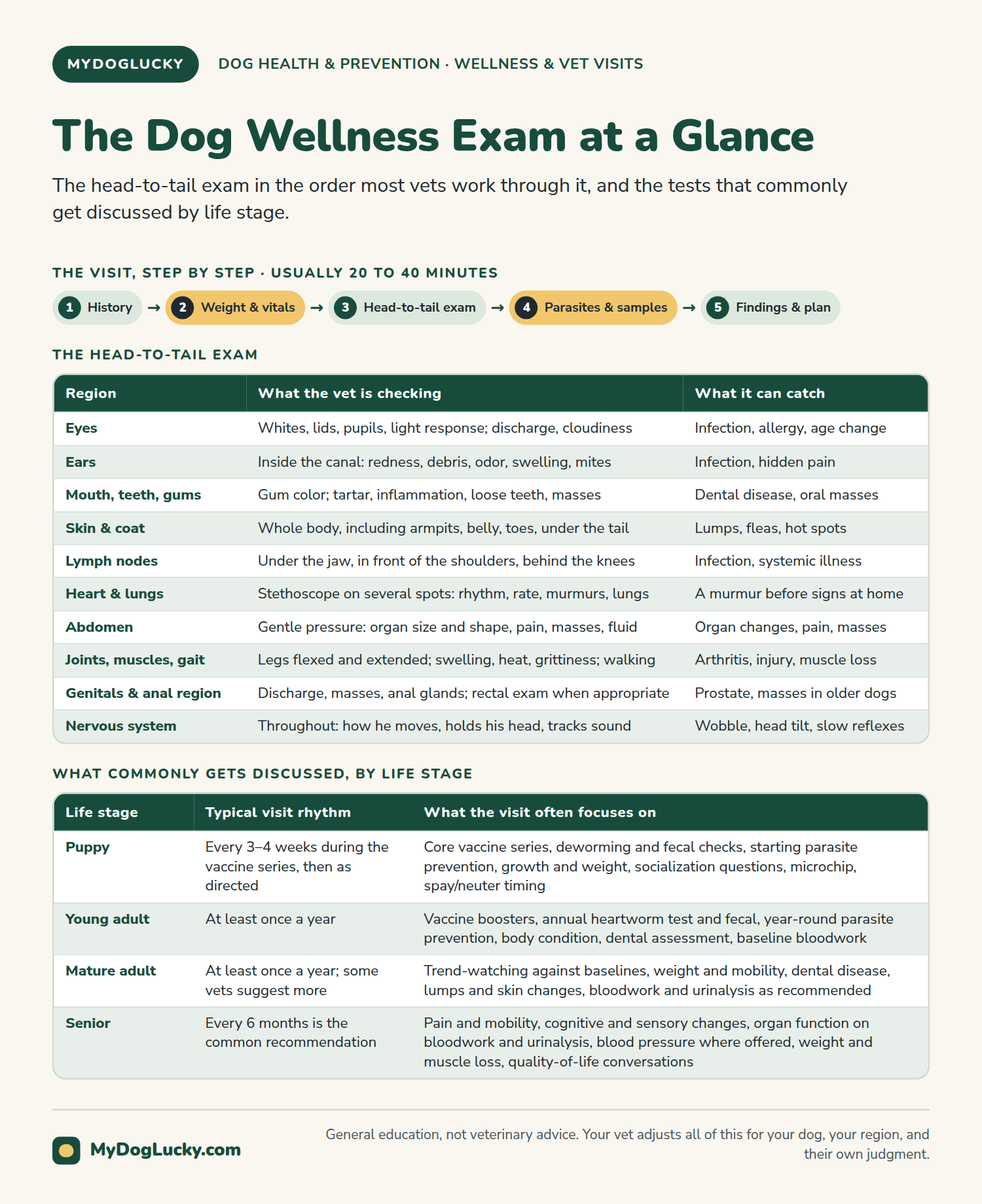
The visit has a fairly predictable shape. Your vet or a technician asks about your dog’s life since the last visit. Someone weighs your dog. The vet examines your dog head to tail, usually while talking through what they’re finding. Then you and the vet discuss vaccines, parasite prevention, any tests that make sense for your dog’s age and lifestyle, and anything you noticed and wanted to ask about. In most clinics, the whole thing takes 20 to 40 minutes.
Dogs Hide Illness, and That’s Not a Personality Flaw
The Cornell Riney Canine Health Center puts the case for annual check-ups plainly: dogs can’t tell us when something has changed, and they age much faster than we do. A year for a dog is a long stretch of physiology. A subtle heart murmur, early dental disease, a slowly growing lump under the fur, a kidney that’s quietly losing ground, a few extra pounds that crept on over the winter: none of those announce themselves at dinnertime.
Many owners also notice, in hindsight, that they had normalized a change. The dog “just slowed down.” The dog “always drank a lot.” The dog “has been a little grumpy about the stairs, but he’s eight.” Some of that is aging. Some of it isn’t, and the only way to tell the difference is an exam and, sometimes, a test.
Baselines Are the Quiet Payoff
Every dog wellness exam adds to a record. Weight, body condition, heart and lung sounds, the size of any lumps, dental grade, and bloodwork values all become reference points. A number that would look “normal” on its own can look meaningful next to last year’s number. A kidney value creeping up within the normal range, a slow decline in weight, a murmur that’s louder than it was: those are trends, and trends are what early detection actually looks like in practice.
This is also why it’s worth seeing the same practice when you can. A vet who has three years of your dog’s records can spot a drift that a stranger with one snapshot would reasonably miss.
Prevention Is Cheaper Than Treatment, in Money and in Worry
The joint AAHA and AVMA preventive healthcare guidelines, first published in 2011, were written partly because preventive care had been declining while preventable disease had not. The logic is simple. A yearly heartworm test costs less than treating heartworm disease. A dental assessment that catches early tartar leads to a cleaning, not extractions. A weight conversation at year three beats a joint-pain conversation at year nine.
None of this guarantees your dog never gets sick. What it does is stack the odds toward catching things early, when your options are wider and your bills are smaller.
How Often Your Dog Needs a Wellness Exam, by Life Stage
The honest short answer: a dog wellness exam at least once a year for a healthy adult, more often for puppies and seniors, and whatever your own vet recommends for a dog with a known condition. Here’s where those numbers come from, with the caveats attached.
The AAHA Life Stage Framework
The American Animal Hospital Association’s 2019 Canine Life Stage Guidelines describe four stages, and they’re defined by development rather than a fixed birthday:
- Puppy: from birth until the end of rapid growth, which lands somewhere around six to nine months depending on size.
- Young adult: from the end of rapid growth until physical and social maturity, often around three to four years.
- Mature adult: from maturity until roughly the last quarter of the dog’s expected lifespan.
- Senior: the last quarter of expected lifespan through the end of life.
That last definition is why a giant breed can be “senior” at six while a small dog might not reach that stage until ten or eleven. Expected lifespan varies by size, breed, and the individual dog, so your vet’s judgment matters more than a chart.
What the Guidelines and Reference Sources Actually Say About Frequency
The Merck Veterinary Manual’s pet-owner guidance on routine care, updated in July 2025, recommends a full checkup at least once a year for adult dogs, visits every three to four weeks for puppies until about four months of age, and twice-yearly visits or more for senior dogs, who are more prone to illness. The AAHA/AVMA preventive guidelines set the same floor of at least one exam per year for every dog, with more frequent visits for seniors and dogs with medical conditions.
The puppy cadence lines up with the vaccine series, which needs several doses spaced a few weeks apart. The senior cadence reflects a simple reality: six months in an older dog’s life is long enough for a new problem to appear and progress.
Treat all of these as minimums, not targets. A dog on long-term medication, a dog with a heart murmur being watched, or a dog whose weight keeps drifting may need rechecks in between. And when your vet suggests a different rhythm for your specific dog, their reasoning beats a general guideline.
| Life stage (AAHA framing) | Roughly when | Typical visit rhythm | What the visit often focuses on |
|---|---|---|---|
| Puppy | Birth to the end of rapid growth (about 6–9 months) | Every 3–4 weeks during the vaccine series, then as directed | Core vaccine series, deworming and fecal checks, starting parasite prevention, growth and weight, socialization and behavior questions, microchip, spay/neuter timing discussion |
| Young adult | End of growth to about 3–4 years | At least once a year | Vaccine boosters, annual heartworm test and fecal, year-round parasite prevention, body condition, dental assessment, baseline bloodwork, behavior and lifestyle review |
| Mature adult | Maturity until the last quarter of expected lifespan | At least once a year; some vets suggest more | Trend-watching against baselines, weight and mobility, dental disease, lumps and skin changes, bloodwork and urinalysis as recommended, early signs of age-related conditions |
| Senior | Last quarter of expected lifespan onward | Every 6 months is the common recommendation | Pain and mobility, cognitive and sensory changes, organ function on bloodwork and urinalysis, blood pressure where offered, weight and muscle loss, dental comfort, quality-of-life conversations |
How to Prepare for a Dog Wellness Exam: Records, Samples, Questions, and a Calmer Dog
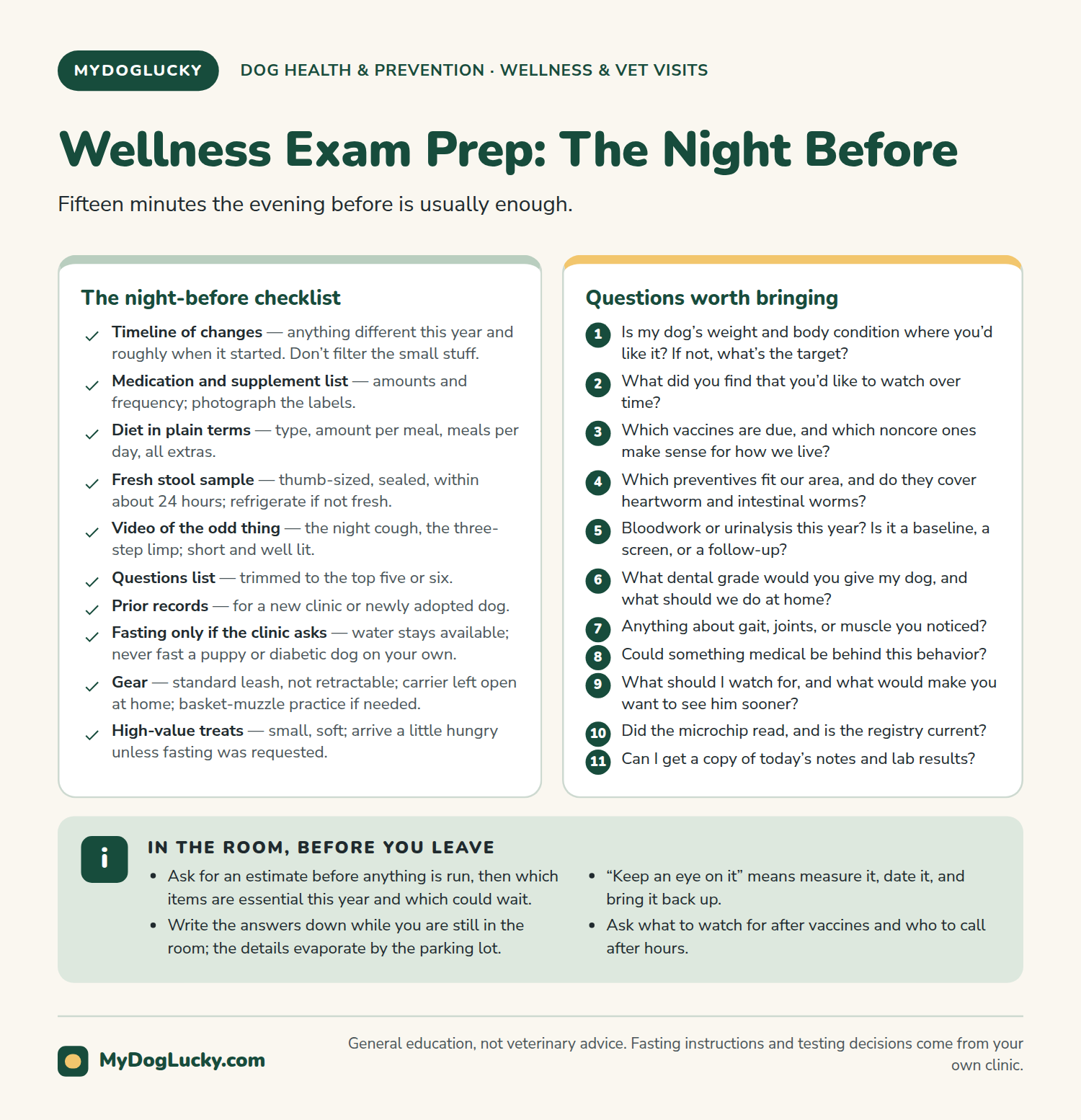
A little preparation changes the visit from “the vet asks, you try to remember” into “you arrive with the information, and the vet gets to use it.” Fifteen minutes the night before is usually enough. Here’s what’s worth doing, roughly in order of payoff.
Gather Records if You’re New to the Practice
If this is your first visit with a clinic, or your dog came from a shelter, breeder, or another family, bring whatever records exist: vaccine history, prior test results, surgery notes, microchip number, and the names of any medications the dog has taken. Most clinics can request records from a previous vet, but having them in hand avoids a delay and a repeated vaccine you didn’t need.
Write a Short Timeline of Anything That Changed
This is the single most useful thing you can bring. Think back over the past year and jot down anything different: appetite up or down, drinking more, new lumps, a limp that comes and goes, itching, ear odor, bad breath, accidents in the house, sleeping more, a new fear, stiffness after rest. Include roughly when each thing started. “He’s been drinking more since around March” gives your vet something to work with. “He seems fine, I guess” doesn’t.
Resist the urge to filter out the small stuff. You’re not the one deciding what matters clinically. That’s the vet’s job, and they can only do it with what you tell them.
List Every Medication and Supplement, With Doses
Prescription medications, preventives, over-the-counter products, joint supplements, probiotics, fish oil, calming chews, the thing your neighbor recommended. Write the product type, the amount, and how often. Better still, photograph the labels. Supplements can interact with medications and can affect bloodwork, and vets can’t account for what they don’t know about.
Describe the Diet in Plain Terms, Not Just a Name
Your vet will ask what your dog eats. A useful answer covers the type of food (dry, canned, fresh, raw, home-cooked, or a mix), the life-stage formula if there is one, how much per meal, how many meals, and what else goes in: treats, table scraps, dental chews, training rewards, the crusts from the kids’ sandwiches. If you’re measuring with a scoop, know how much that scoop actually holds. Honesty here is a kindness to your dog, not a confession.
Bring a Fresh Stool Sample
Most clinics want a fecal sample at least once a year to screen for intestinal parasites, and many will ask for one at every puppy visit. Collect a fresh sample the morning of the appointment, or the evening before if you refrigerate it, sealed in a bag or a clean container. A thumb-sized amount is plenty. Forgetting the sample is the most common reason for a follow-up drop-off, so put a reminder where you’ll see it.
Write Down Your Questions Before You Walk In
Exam rooms have a way of erasing whatever you meant to ask. Keep a running note on your phone in the weeks before the appointment, then trim it to the five or six things that matter most. The questions section below has a starting list.
Record a Short Video of the Odd Thing Your Dog Does
Intermittent signs are frustrating for everyone. The cough that only happens at night, the head tilt after eating, the way he holds the left hind leg up for three steps and then walks normally, the twitch during sleep that might be a dream or might not. A 20-second phone video of the actual event is worth more than any description.
And yes, there’s a reason this is standard advice. A remarkable number of dogs who limp, cough, and scratch all week become flawless, symptom-free specimens the moment they enter an exam room. Your video is the evidence.
Fast Only if the Clinic Asks You To
Some bloodwork is more accurate on a fasted dog, so some clinics ask you to withhold food for several hours beforehand. Others don’t need it for a routine panel. Don’t decide this yourself. Call and ask, and if nobody mentions fasting, feed normally. Water is always fine unless you’re told otherwise. Puppies, tiny dogs, and diabetic dogs in particular should never be fasted without explicit instructions.
Get the Gear Ready
A well-fitted collar or harness and a standard leash, not a retractable one, for the parking lot and lobby. A carrier for a small dog if that’s where he feels safest, left open at home for days beforehand so it’s furniture rather than a trap. If your dog has ever needed a muzzle at the clinic, or might, practicing with a basket muzzle at home ahead of time turns a stressful surprise into a familiar routine. There’s more on this in the section on fearful dogs.
Arrive With a Hungry Dog and Good Treats
Unless the clinic requested fasting for bloodwork, skip or lighten the meal before the visit so your dog is interested in food. Then bring something better than his everyday kibble. Small, soft, high-value treats let the veterinary team pair handling with something good, which is the core of a lower-stress visit. Fear Free’s owner-facing guidance and AAHA’s advice on preparing for a successful vet visit both lean on this: hunger plus great food plus patient handling changes how a dog feels about the room.
| Prep item | Why it helps | Practical note |
|---|---|---|
| Prior records | Avoids repeated vaccines and missing history | Needed mainly for a new clinic or a newly adopted dog |
| Timeline of changes | Turns vague impressions into usable clues | Include roughly when each change started; don’t filter “small” things |
| Medication and supplement list | Prevents interactions and explains test results | Photograph labels; include amounts and frequency |
| Diet description | Supports weight and nutrition conversations | Type, amount per meal, meals per day, all extras |
| Fresh stool sample | Allows same-day parasite screening | Thumb-sized, sealed, collected within about 24 hours; refrigerate if not fresh |
| Questions list | Makes sure your priorities get airtime | Trim to the top five or six; bring a pen or use your phone for answers |
| Video of intermittent signs | Shows what the dog won’t show in the room | Short, clear, well lit; note when it happens |
| Fasting | Some blood tests read more accurately fasted | Only if the clinic asks; water stays available; never fast a puppy or diabetic dog on your own |
| Leash, harness, carrier, muzzle comfort | Safety and a calmer dog | Standard leash, not retractable; carrier left open at home beforehand; practice with a basket muzzle if it may be needed |
| High-value treats | Lets the team pair handling with something good | Soft, small, better than everyday food; arrive a little hungry unless fasting was requested |
What Happens at a Dog Wellness Exam, Step by Step
Clinics vary in the order they do things, and some split tasks between a technician and the veterinarian. But the components are consistent enough that you can know what’s coming. Here’s the visit as most owners experience it.
Step 1: The History Conversation
Before anyone touches your dog, someone will ask about him. Expect questions about appetite, thirst, energy, bathroom habits, coughing or sneezing, itching, vomiting or diarrhea, behavior changes, travel, exposure to other dogs, current preventives, and what he eats. This is where your timeline and lists pay off.
The history is not small talk. For many conditions, what you’ve observed at home over months is more revealing than a ten-minute exam. Answer specifically, and if you’re not sure, say so. “I haven’t been tracking that” is a perfectly good answer, and it’s more useful than a guess.
Step 2: Weight, Vitals, and Body Condition
Your dog gets weighed, usually on a floor scale in the lobby or treatment area. The team records temperature, heart rate, and breathing rate. A dog’s normal rectal temperature runs a little higher than a person’s, generally in the range of about 101 to 102.5°F (38.3 to 39.2°C), though excitement and stress nudge it around.
The vet will also assign a body condition score, usually on a nine-point scale where four or five is ideal. This is a hands-on assessment: can the ribs be felt easily under a thin layer of fat, is there a waist when viewed from above, does the belly tuck up from the side. It matters because weight alone doesn’t tell you whether a dog is carrying fat or muscle, and because extra weight quietly shortens lives and worsens joint disease. If your dog’s score is above ideal, this is the moment to ask what a reasonable goal looks like and how to get there.
Step 3: The Head-to-Tail Physical Exam
This is the part that can look like the vet is simply petting your dog thoroughly. Each region has a purpose.
Eyes. The vet looks at the whites, the lids, the pupils, and how the eyes respond to light, and checks for discharge, redness, cloudiness, or the early haze that can come with age. They may pull the lower lid down to see the tissue color.
Ears. A look inside the canal, sometimes with a lighted scope, for redness, debris, odor, swelling, or signs of mites or infection. Floppy-eared dogs and swimmers get extra attention here.
Mouth, teeth, and gums. Gum color and moisture, which hint at circulation and hydration. Tartar, gum inflammation, broken or loose teeth, and bad breath, which often means dental disease rather than just “dog breath.” Any masses or ulcers under the tongue or along the gums.
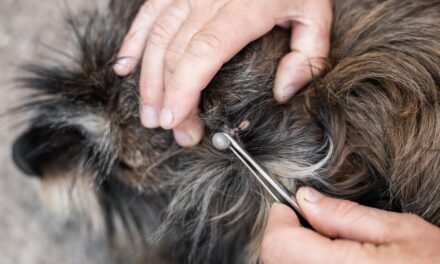
Skin and coat. The vet runs their hands over the whole body, parting the fur in places, and checks hidden zones: armpits, belly, between the toes, under the tail. They’re feeling for lumps, checking for fleas or flea dirt, looking at coat quality, and noting any hot spots, scabs, dandruff, hair loss, or thickened skin. Cornell’s checklist specifically calls out those hidden areas as places problems hide.
Lymph nodes. Gentle pressure under the jaw, in front of the shoulders, behind the knees, and in a few other spots. Enlarged nodes can point to infection, inflammation, or, less often, something more serious. Most of the time they’re normal, and your vet is confirming that.
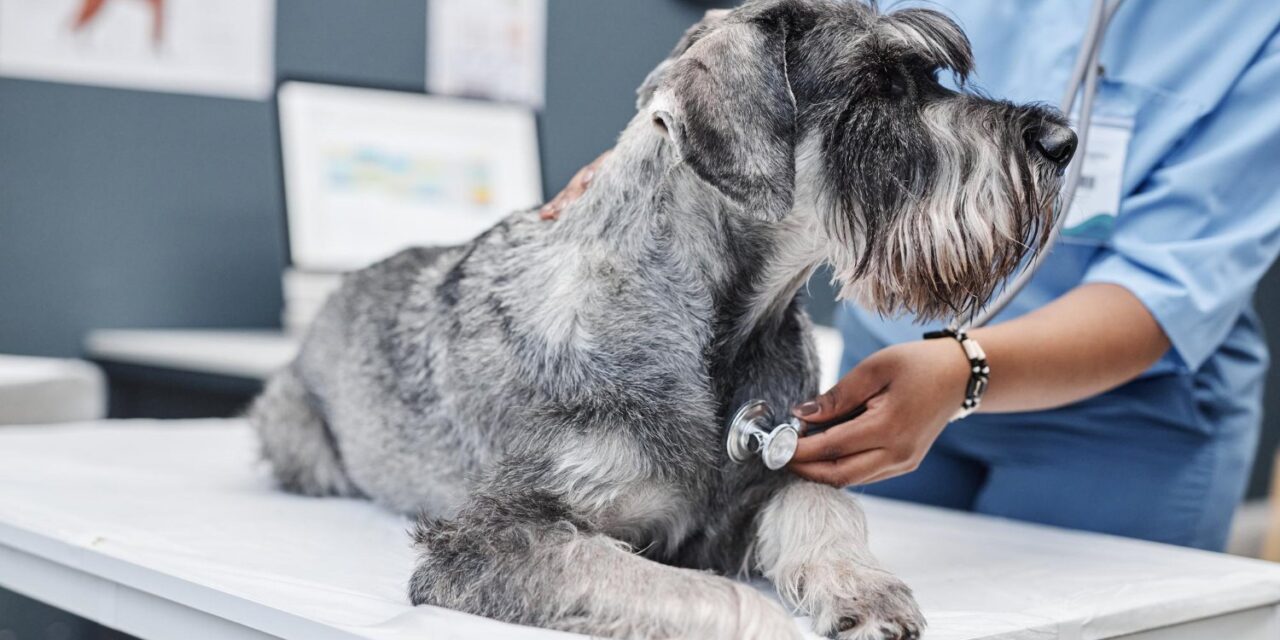
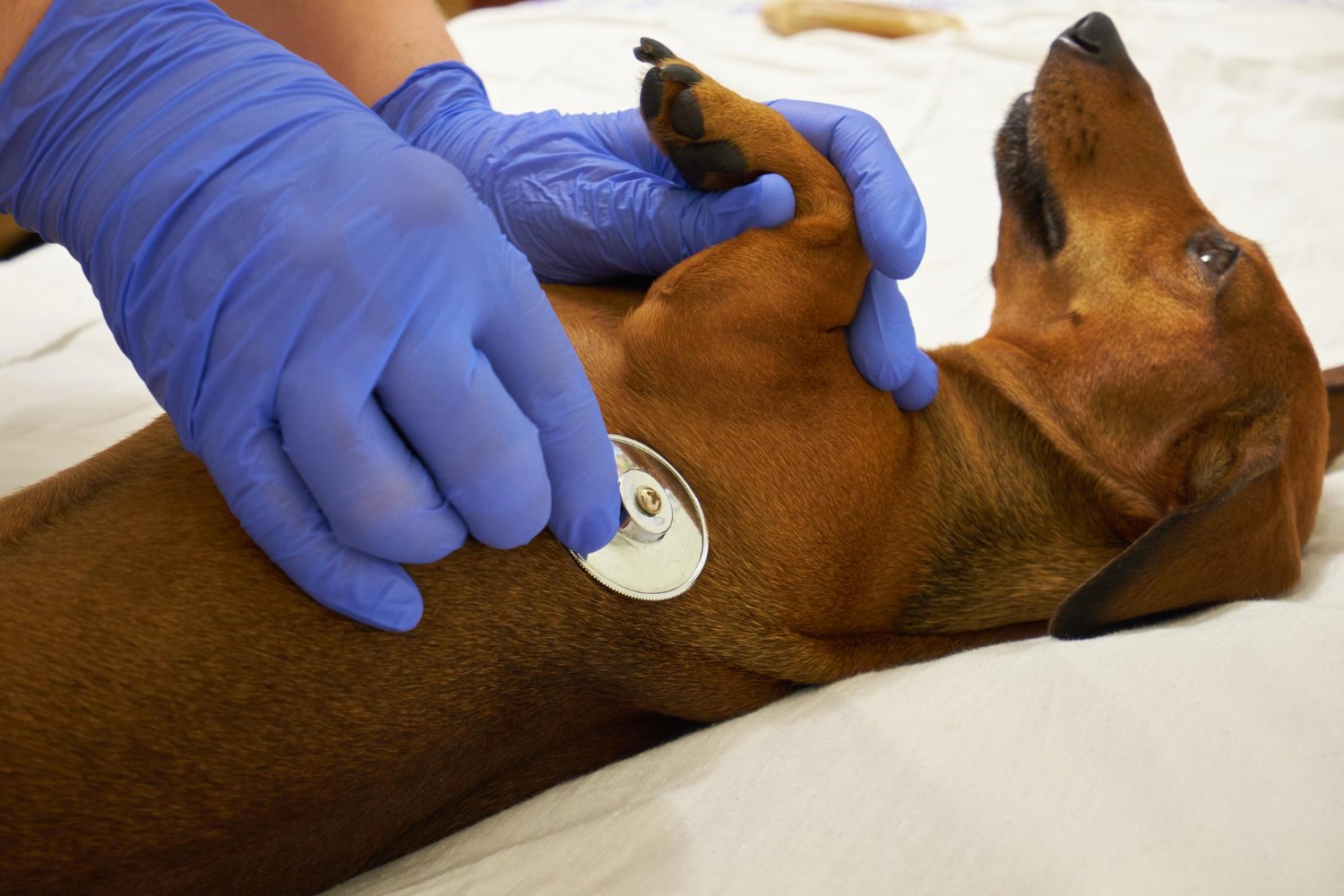
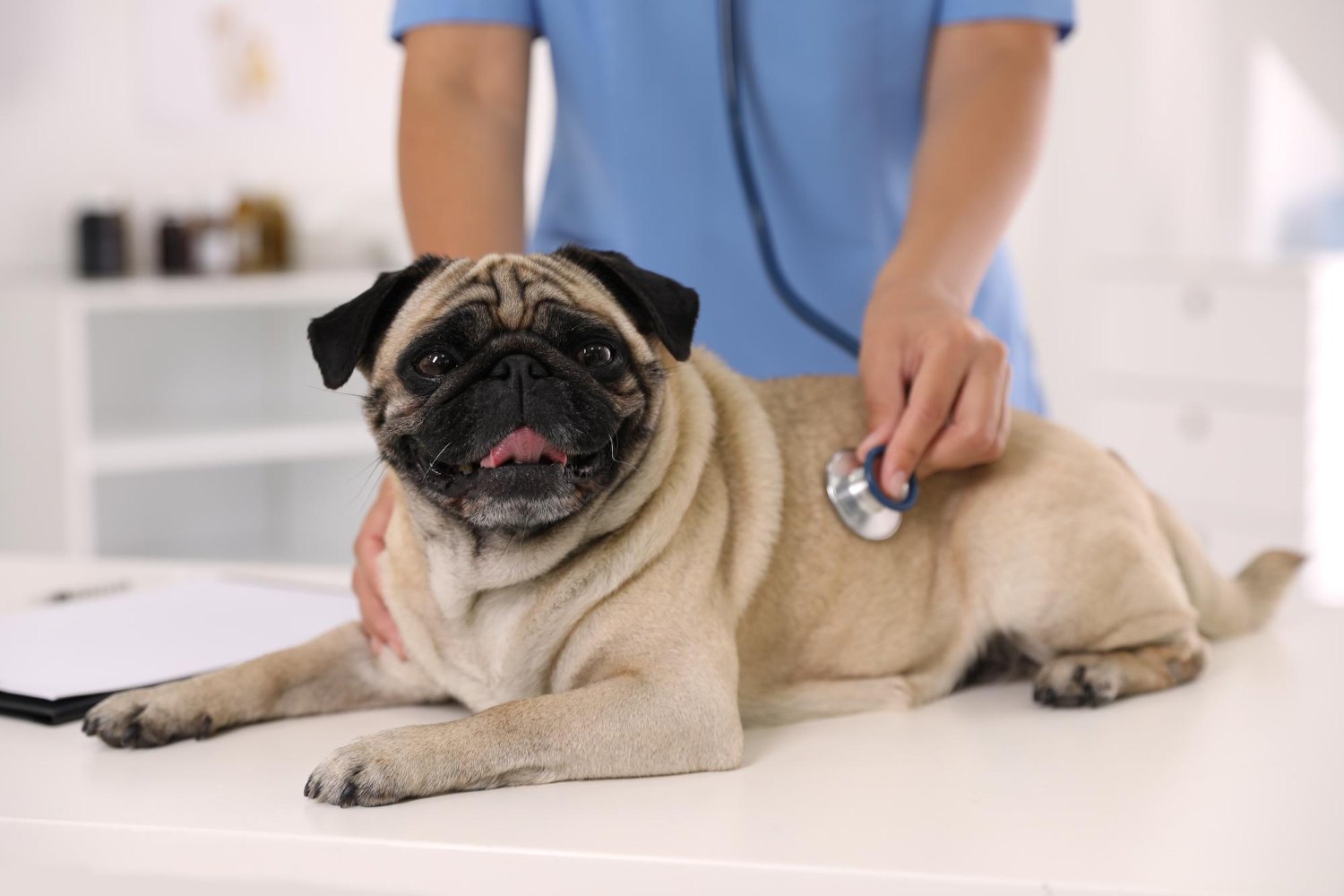
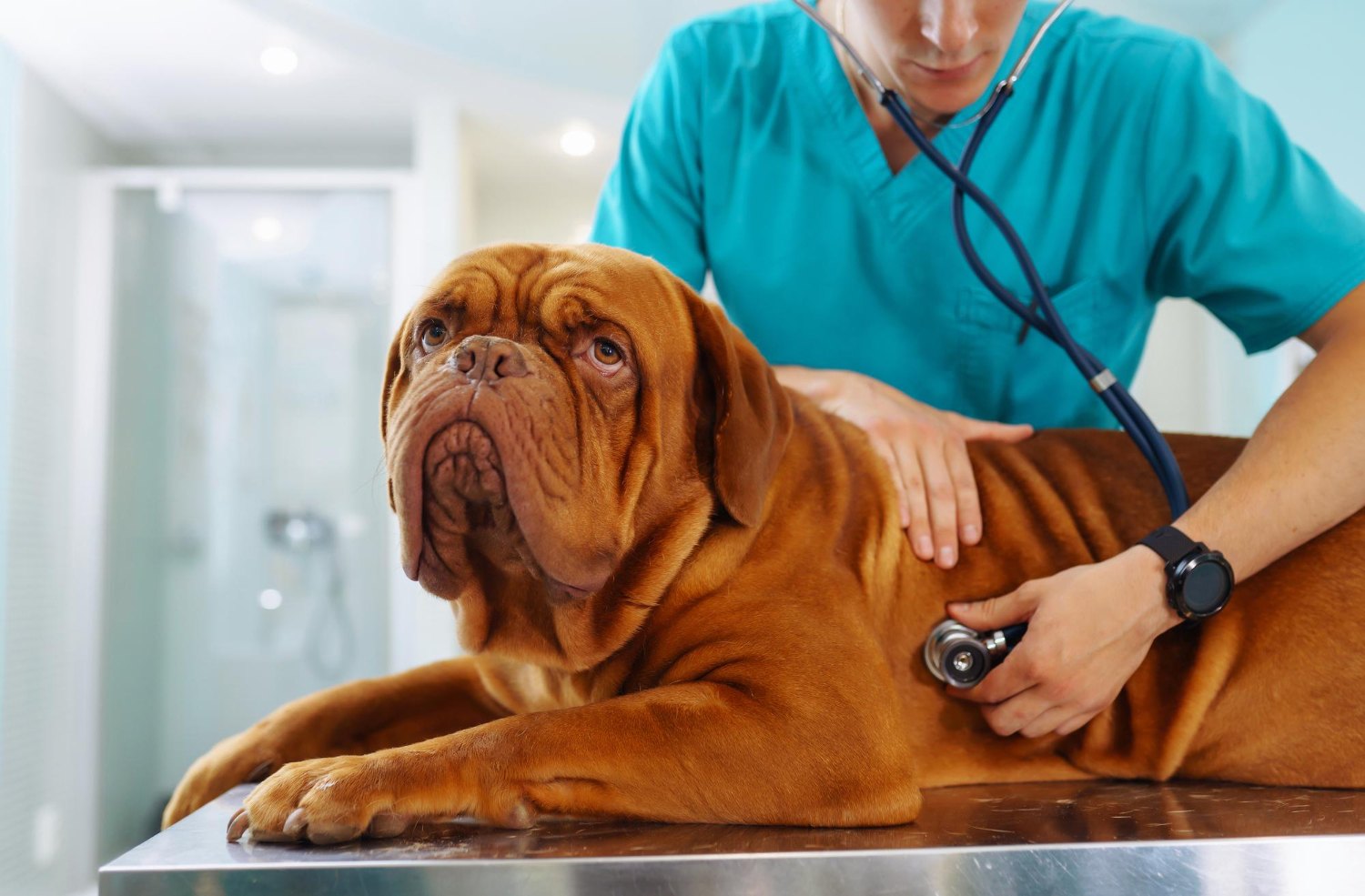
Heart and lungs. The stethoscope goes on several spots on the chest. The vet is listening for the rhythm, the rate, any murmur, and any abnormal lung sounds. A new murmur in an older dog is one of the classic findings a wellness exam catches before the dog shows any sign at home.
Abdomen. The vet presses gently through the belly to feel the size and shape of organs, check for pain, and detect masses or fluid. A dog who tenses is normal; a dog who flinches or cries at a specific spot is telling the vet something.
Joints, muscles, and gait. The vet flexes and extends the legs, feels for swelling, heat, or crepitus (that gritty feeling in a worn joint), and may watch your dog walk. Muscle loss along the spine or hind legs in an older dog is a useful clue about pain or disease. This is a good time to mention the stairs.
Genitals, anal region, and, when appropriate, a rectal exam. A quick check for discharge, masses, or anal gland issues. In older dogs, especially intact males, a rectal exam lets the vet feel the prostate and check for masses. It’s brief and, in Cornell’s framing, done “when appropriate” rather than every time.
Nervous system, informally. Throughout the exam, the vet is watching how your dog moves, holds his head, tracks sound, and responds to touch. A wobble, a head tilt, or a slow paw-placement reflex may prompt a closer look.
Step 4: Parasite Check and Sample Collection
The vet may check for fleas with a fine comb, look for ticks in the usual hiding places, and glance in the ears. If you brought a stool sample, it goes to the lab. If bloodwork or a heartworm test is on the plan, a technician draws a small blood sample, often from a front leg or the neck. If urine is needed, the clinic may collect it in the yard, catch a sample when your dog is walked, or, for a cleaner sample, draw it with a small needle through the belly wall, a quick procedure most dogs tolerate well.
Step 5: The Findings and Plan Conversation
The vet tells you what they found, what’s normal, what’s worth watching, and what they recommend. This is where vaccines, preventives, tests, dental care, diet, and any referrals get discussed. It’s also where your questions belong. If the vet is moving quickly, it’s fine to say, “Before we finish, I have four things on my list.” A good clinic wants you to ask.
What each part of the exam is really for
- Weight and body condition: obesity, muscle loss, unexplained loss or gain.
- Eyes and ears: infection, allergy, age-related change, pain you’d never see.
- Mouth: dental disease, oral masses, hydration and circulation clues.
- Skin, coat, and lymph nodes: lumps, parasites, allergy, systemic illness.
- Heart and lungs: murmurs, arrhythmias, airway and lung disease.
- Abdomen: organ size, pain, masses, fluid.
- Joints and gait: arthritis, injury, muscle loss, neurologic signs.
- Temperature and vitals: hidden fever or infection, cardiac and respiratory baselines.
None of this diagnoses anything by itself. It tells the vet where to look harder, which is the point.
What Your Vet May Recommend, by Life Stage
The exam is half the visit. The other half is the plan, and the plan is where the AAHA life-stage framing earns its keep. The recommendations below are typical for U.S. dogs; your vet will adjust them for your region, your dog’s lifestyle, and their own clinical judgment.
Vaccines: Core and Noncore
The 2022 AAHA Canine Vaccination Guidelines, updated in 2024, separate vaccines into two groups. Core vaccines are recommended for every dog regardless of lifestyle: distemper, adenovirus, parvovirus (with or without parainfluenza), rabies, and, as of the 2024 update, leptospirosis. Noncore vaccines are added based on individual risk and can be just as important for the dogs who need them: Lyme disease, Bordetella (kennel cough), canine influenza, and rattlesnake toxoid.
Puppies receive the core vaccines as a series of doses spaced a few weeks apart, then a booster during the first adult year. After that, the interval depends on the vaccine and the product, with some given yearly and others every three years. Rabies boosters also follow state and local law. If your dog’s history is unknown or overdue, the guidelines note that the benefits of vaccinating outweigh the risks in most cases, so don’t assume a gap means starting from zero or skipping it.
The useful question to ask is not “does my dog need all the shots?” It’s “given where we live, where he goes, and who he meets, which noncore vaccines make sense this year?” A dog who hikes in tick country, boards regularly, or visits daycare has a different answer than a dog who mostly walks the block.
Parasite Prevention: Heartworm, Fleas, Ticks, and Intestinal Worms
The Merck Veterinary Manual recommends heartworm preventive year-round, and the American Heartworm Society recommends annual heartworm testing for all dogs, even those on prevention, because a missed dose or a vomited pill can leave a window. Many heartworm preventives also cover some intestinal parasites, which is one reason your vet asks what you’re currently giving.
Flea and tick prevention comes in several classes: monthly oral chewables, topical spot-ons, and long-acting collars. Your vet will match the product to your dog’s age, weight, health, and exposure, and to the tick species in your area. This is a genuine “ask your vet” item rather than a “pick something off the shelf” item, because some products aren’t appropriate for every dog, and because the right choice depends on what’s actually biting dogs in your county.
Annual fecal testing, which Merck lists as routine, screens for the worms and protozoa that don’t show up on a preventive. Puppies typically get dewormed on a schedule during the vaccine series and rechecked.
Baseline Bloodwork and Urinalysis
For a young, healthy adult, a basic panel establishes a baseline. Cornell’s checklist describes the standard set: a chemistry profile to look at organ function, a complete blood count to evaluate blood cells, and a urinalysis. Heartworm and tick-borne disease screening are often run on the same blood draw.
Baseline testing is optional for many young dogs, and it’s fair to ask whether it’s recommended or simply offered. For mature adults and seniors, it moves toward strongly recommended, because this is where early kidney disease, liver changes, diabetes, thyroid disease, and anemia tend to show up before signs are obvious. Some clinics add blood pressure measurement for seniors.
Dental Assessment
Dental disease is among the most common conditions vets see in adult dogs, and it’s painful long before it’s visible. The vet grades tartar and gum inflammation, notes any broken or loose teeth, and may recommend a professional cleaning under anesthesia, which is the only way to clean below the gumline and take dental X-rays. Merck’s routine-care guidance emphasizes brushing with a dog-specific toothbrush and toothpaste at home, plus dental toys and, where appropriate, diets designed to reduce plaque. Ask your vet what dental grade your dog is, and what a realistic home routine looks like for your household.
Weight, Body Condition, and a Nutrition Conversation
Expect a direct conversation if your dog is over ideal, and expect it without judgment from a good clinic. Ask for a target weight, a daily calorie figure, and a plan for treats, since treats are where many diets quietly fail. If your dog is underweight or losing weight without trying, that’s a medical question, not a feeding one, and bloodwork usually follows.
Behavior Questions
A wellness exam should include behavior, because behavior is health. Expect questions about house-training, reactions to strangers and dogs, separation, noise fears, and anything new. Mention fears and reactivity early rather than at the door. Vets can rule out pain and medical contributors, and they can refer you to a certified trainer or a veterinary behaviorist when the problem is bigger than a tip.
Microchip Check
A quick pass with a scanner confirms the chip still reads and is where it should be. Ask the clinic to read back the chip number, then check that your registration has your current phone number. Many lost-dog stories end badly not because the chip failed but because the registry had a number from two moves ago.
Spay and Neuter Timing
For puppies and intact adults, expect a discussion about whether and when to spay or neuter. Merck describes traditional timing around six months for females and five to ten months for males, but current thinking allows for a wider range, especially for large and giant breeds, where timing may affect joint development. There’s no single right answer for every dog. Ask what your vet recommends for your dog’s breed and size and why.
What Changes as Your Dog Ages
For puppies, the plan is about building protection and habits: the vaccine series, deworming, prevention, socialization guidance, growth tracking. For young adults, it’s boosters, prevention, dental habits, and a baseline. For mature adults, the emphasis shifts toward trends and early detection, with bloodwork and urinalysis becoming routine. For seniors, the visit becomes a comfort and function check as much as a screening: pain, mobility, cognition, senses, appetite, and the quality of everyday life.
How to Talk About Costs and Priorities
Money is part of veterinary care, and pretending otherwise helps no one. A dog wellness exam can be a modest bill or a surprising one, depending on what gets added, and the difference is often a conversation you’re allowed to have.
Ask for an Estimate Before Anything Is Done
Most clinics will give you a written or verbal estimate when you ask. Phrase it plainly: “Before we run anything, can you tell me what today would cost with everything you’re recommending?” Then, “Which of these are essential this year, and which could wait?” Vets answer that question all day and don’t take offense at it.
Sort Recommendations Into Tiers
A useful way to think about it:
- Essential and time-sensitive: rabies vaccine due by law, a core vaccine that’s overdue, heartworm testing before restarting prevention, anything tied to a finding on the exam.
- Strongly recommended: baseline or annual bloodwork for a mature or senior dog, a dental cleaning for grade-two-or-higher disease, a fecal test.
- Reasonable to schedule later: optional bloodwork on a young, healthy dog, a noncore vaccine for a low-exposure lifestyle, elective procedures.
Your vet may sort things differently for your dog, and that’s the conversation to have. What you’re avoiding is the silent version, where you either pay for everything without understanding it or decline everything and lose the parts that matter.
Wellness Plans and Pet Insurance, in General Terms
Some practices offer wellness plans: a monthly fee that prepays for a defined set of routine services, such as exams, vaccines, and some testing. These aren’t insurance. They spread predictable costs and sometimes discount them, but they don’t cover illness or injury, and they’re usually tied to that practice. Read what’s included and what happens if you move.
Pet insurance is the reverse. Most policies cover accidents and illness, not routine care, though some offer a wellness add-on. The key detail is that conditions diagnosed before enrollment are usually excluded as pre-existing, which is why people who want insurance tend to enroll while the dog is young and healthy. Whether either option makes sense depends on your finances and your tolerance for surprise bills. Both are worth understanding before you’re standing at the front desk.
Low-Cost Options Exist
If a full wellness visit is out of reach this year, ask about low-cost vaccine clinics, shelter-affiliated clinics, veterinary school teaching hospitals, and payment plans. A partial visit is better than none, and most vets would rather see your dog for the essentials than not at all.
Bringing a Fearful or Reactive Dog to the Clinic
A dog who trembles in the lobby, freezes on the table, or growls at the technician isn’t being difficult. He’s scared, and fear makes exams harder, less accurate, and less safe for everyone. The good news is that this is a solvable problem in most cases, and the veterinary field has spent the last decade building tools for it. Fear Free certification and AAHA’s guidance on lower-stress visits both exist because of dogs like yours.
Practice the Pieces at Home
Break the visit into parts and rehearse them, weeks ahead when you can:
- The carrier or car. Short, pleasant car rides that end somewhere fun, not only at the vet. Leave the carrier open at home with treats appearing inside it.
- Handling. A few seconds of touching paws, lifting lips, looking in ears, and gentle pressure on the belly, each paired with a treat, then stopping before your dog gets worried.
- The scale. Some clinics let you stop by just to weigh your dog and leave. Ask.
- Muzzle comfort. If a muzzle might be needed, teach your dog to put his nose into a basket muzzle for treats, over many short sessions, long before it’s needed. A dog who’s comfortable in a muzzle gets a gentler exam than a dog who’s wrestled into one.
Ask the Clinic What They Can Do
Call ahead and say plainly that your dog is fearful or reactive. Ask about waiting in the car until the room is ready, a quieter time of day, entering through a side door, doing the exam on the floor instead of the table, using a non-slip mat, and letting your dog eat treats through the whole thing. Ask whether the practice uses lower-stress handling techniques or has Fear Free certified staff. A clinic that welcomes these questions is a clinic worth keeping.
Pre-Visit Medication, Only if Your Vet Prescribes It
For some dogs, practice and patience aren’t enough, and forcing the issue makes each visit worse than the last. In those cases, vets can prescribe a medication to be given at home before the appointment to lower anxiety enough for the exam to happen. This is a legitimate, humane tool. It’s also a prescription decision based on your dog’s health, so it comes from your vet, not from a friend’s leftover pills or an online supplement. If you think your dog needs it, say so when you call to book.
Take the Long View
“Happy visits,” where your dog stops by for treats and leaves without an exam, gradually change how the building feels. Two or three of those between real appointments can do more than any single trick on the day. And if your dog’s fear is severe, ask for a referral to a veterinary behaviorist. That’s a specialist path, not a last resort.
Questions to Ask and How to Record the Answers
The exam room moves fast, and the useful details tend to evaporate by the parking lot. Bring your list, ask for the top five, and write the answers down while you’re still in the room.
Questions worth asking at a dog wellness exam
- Is my dog’s weight and body condition where you’d like it? If not, what’s the target and how do we get there?
- What did you find on the exam that you’d like to watch over time?
- Which vaccines are due this year, and which noncore vaccines make sense for how we live?
- Which parasite preventives do you recommend for our area, and do they cover heartworm and intestinal worms too?
- Do you recommend bloodwork or a urinalysis this year? Is that a baseline, a screen, or a follow-up on something?
- What dental grade would you give my dog, and what should we do at home?
- Is there anything about his gait, joints, or muscle you noticed?
- Is this behavior [describe it] something medical could be contributing to?
- What should I watch for between now and the next visit, and what would make you want to see him sooner?
- What did the microchip scan show, and is the registry information current?
- Can I get a copy of today’s notes and any lab results?
How to Record the Answers
Keep one running document for your dog: a note on your phone, a shared note with your household, or a folder in a cloud drive. After each visit, add the date, the weight, any findings the vet said to watch, the vaccines given and when they’re next due, the preventives you’re using, any medication started, and the next appointment date. Ask the clinic to email or print the visit summary and lab results, and attach them to your record.
If someone else shares dog care with you, a partner, a roommate, a sitter, a grown kid, the shared note keeps everyone working from the same plan. It also means the person who takes the dog in next time isn’t reconstructing history from memory.
After the Visit: Follow-Ups, Records, and What to Watch
A dog wellness exam isn’t finished when you leave the building. A few loose ends are worth tying off in the first week.
Follow Up on Results
Lab results often come back a day or two later. If you haven’t heard, call. Ask for the actual values, not just “everything looks fine,” and ask which values, if any, the vet wants to recheck. Add the results to your record so next year’s numbers have something to sit next to.
Schedule What Was Recommended
If a dental cleaning, a recheck, or a referral came up, book it before it drifts. If cost is why you’re waiting, say so and ask when it’s reasonable to revisit.
Mild Post-Vaccine Effects Are Common; Some Reactions Are Not
Many dogs are a little tired or sore for a day after vaccines, and a small, firm bump at the injection site can linger for a week or two. That’s expected, and it’s worth knowing so you don’t worry. Facial swelling, hives, vomiting, difficulty breathing, or collapse in the hours after a vaccine is not expected, and it’s a reason to contact the clinic or an emergency service right away. Ask before you leave what to watch for and who to call after hours.
Watch the Things the Vet Said to Watch
Whatever landed in the “let’s keep an eye on it” category, a lump, a murmur, a slightly elevated value, put a reminder to check on it in a month. Measure lumps with a ruler and photograph them next to a coin for scale. Note thirst, appetite, and stool. Then bring that log to the next visit or, if something changes, call sooner.
Where Telehealth Fits
Veterinary telehealth grew fast after 2020, and it has a real place. It isn’t a substitute for a dog wellness exam, because nobody can feel a lymph node or hear a murmur through a screen. But it works well for follow-up conversations about lab results, behavior consults, questions about whether a sign warrants a visit, medication check-ins, and reviewing that video of the odd thing your dog does.
There’s a legal layer too. In most U.S. states, a veterinarian needs a valid veterinarian-client-patient relationship, usually established through an in-person exam, before diagnosing or prescribing for your dog. Rules vary by state and have been changing, so ask your own clinic what they can and can’t do remotely. The practical version: use telehealth to make the in-person visits more efficient, not to replace them.
When a Wellness Visit Turns Into a Sick Visit
Sometimes the exam finds something. A murmur, a lump the vet wants to sample, a mouth that’s worse than it looked, a value on the bloodwork that needs a closer look. When that happens, the visit’s purpose shifts, and so does the conversation. Ask three things: what the finding could mean in broad terms, what the next diagnostic step is and roughly what it costs, and how urgent it is. Some findings mean “let’s sample this today.” Others mean “recheck in three months.” You’re entitled to understand which.
It also works the other way. If your dog is actively unwell on the day of the appointment, vomiting, not eating, limping badly, breathing hard, tell the clinic when you arrive, or better, call ahead. The wellness template gets set aside, and the visit becomes a proper sick visit with the exam focused on the problem. Vaccines are often postponed for a dog who’s unwell, and that’s appropriate.
Don’t wait for the scheduled wellness visit if you see:
- Difficulty breathing, pale or blue gums, or collapse.
- Repeated vomiting or diarrhea, especially with blood or lethargy.
- A swollen, hard, or painful belly, or unproductive retching.
- Not eating for more than a day, or not drinking.
- Sudden weakness, inability to stand, seizures, or a head tilt with loss of balance.
- Straining to urinate with little or nothing produced.
- Known ingestion of a toxin, medication, or foreign object.
- A wound that won’t stop bleeding, or obvious severe pain.
Any of these is a call-now or go-now situation, not a “we have an appointment next month” situation.
Common Mistakes and Misunderstandings
Skipping the Visit Because the Dog Seems Fine
This is the big one, and it’s understandable. The dog is eating, playing, and greeting you at the door, and the visit costs money and an afternoon. But “seems fine” is exactly the state in which early disease lives. The visit’s value is highest when nothing seems wrong, because that’s when catching something early is still possible.
Forgetting the Stool Sample
A tiny thing that leads to a second trip or, more often, to a fecal test that never happens. Put the bag by the leash the night before.
Feeding Breakfast When the Clinic Asked for Fasting
A fed dog can throw off some blood values, which can mean a repeat draw. The reverse mistake, fasting a dog when nobody asked you to, especially a puppy or a small or diabetic dog, is worse. Ask, then do what the clinic says.
Not Mentioning the “Small” Changes
Owners often decide in advance which things are worth the vet’s time. The extra water bowl refill, the occasional cough, the way she hesitates at the car door now. Those are the details that turn a normal exam into an early diagnosis. Say all of it. Let the vet decide what’s small.
Not Asking About Weight
Many owners leave without a clear answer on whether their dog’s weight is fine, partly because it feels awkward. It isn’t. Extra weight is one of the most common and most fixable health problems in U.S. dogs, and the wellness visit is the natural place to get a number and a plan.
Treating “We’ll Keep an Eye on It” as “It’s Nothing”
Watching something means measuring it, dating it, and bringing it back up. It doesn’t mean forgetting about it until it’s bigger.
Declining Everything Because the Estimate Was High
When the total is more than you expected, the fix is a tiered conversation, not a blanket no. Ask what’s essential today, what’s strongly recommended, and what can wait, then decide with that information.
Assuming a Clean Exam Rules Everything Out
A normal exam is reassuring. It isn’t a guarantee. Some conditions only show on bloodwork or imaging, and some develop between visits. If something changes at home after a clean visit, the clean visit doesn’t cancel it out. Call.
Frequently Asked Questions About Dog Wellness Exams
What’s the difference between a dog wellness exam and a regular vet visit?
A wellness exam is a scheduled preventive visit for a dog who seems healthy. A “regular” or sick visit is prompted by a problem. The exam itself overlaps a lot, but the wellness visit is broader, covers prevention and baselines, and is the one you book on the calendar rather than in response to a symptom.
How long does a dog wellness exam take?
Usually 20 to 40 minutes, longer if bloodwork, several vaccines, or a lot of questions are on the list. First visits at a new practice and senior visits tend to run longer.
How often does a healthy adult dog need a wellness exam?
At least once a year, according to the Merck Veterinary Manual and the AAHA/AVMA preventive healthcare guidelines. Puppies need visits every three to four weeks during the vaccine series, and seniors are generally seen every six months. Your vet may recommend more frequent visits for a dog with a known condition.
Should my dog fast before a wellness exam?
Only if the clinic asks. Some blood tests read more accurately on a fasted dog, but many routine visits don’t require it. Never fast a puppy, a very small dog, or a diabetic dog without explicit instructions, and keep water available regardless.
What should I bring to a dog wellness exam?
Prior records if you’re new to the clinic, a short timeline of anything that’s changed, a list of medications and supplements with amounts, a plain description of the diet, a fresh stool sample, your questions, a video of any intermittent sign, a standard leash or a carrier, and good treats.
Is bloodwork necessary at every wellness exam?
Not always. For a young, healthy dog it’s often optional and serves as a baseline. For mature adults and seniors, most vets recommend it yearly or twice yearly because it catches organ changes before signs appear. Ask whether it’s recommended or offered, and why.
Which vaccines does my dog actually need?
Core vaccines under the 2022 AAHA guidelines, updated in 2024, are distemper, adenovirus, parvovirus, rabies, and leptospirosis, with parainfluenza commonly included. Noncore vaccines such as Lyme, Bordetella, and canine influenza depend on your dog’s lifestyle and location. Your vet decides the intervals by vaccine and by state law for rabies.
What if my dog is terrified of the vet?
Tell the clinic when you book. Practice car rides, handling, and, if needed, muzzle comfort at home. Arrive with a hungry dog and high-value treats. Ask about waiting in the car, a quiet room, and floor exams. If that isn’t enough, your vet can prescribe pre-visit medication, and a veterinary behaviorist can help with severe fear.
How much does a dog wellness exam cost?
It varies widely by region, clinic, and what’s added, from a modest exam fee alone to several hundred dollars with vaccines and bloodwork. Ask for an estimate before anything is done and which items are essential this year. Low-cost clinics and payment plans exist if the full visit is out of reach.
Can a telehealth appointment replace the annual wellness exam?
No. A vet can’t feel lumps, listen to the heart, or examine teeth remotely, and most states require an in-person relationship before a vet can diagnose or prescribe. Telehealth is useful for follow-ups, behavior questions, and deciding whether a sign needs a visit.
Where This Leaves You
The wellness exam is the least dramatic appointment in your dog’s life, and that’s the point. Nothing hurts, nothing’s wrong, and a person who knows what to look for spends half an hour making sure it stays that way. What you bring to it matters more than most owners realize: a timeline, a list, a sample, a video, a few questions, and a dog who’s hungry enough to think the exam room is a pretty good place.
If it’s been more than a year, book the visit this week. If you have a puppy, follow the series. If your dog is getting gray around the muzzle, ask your vet whether it’s time to move to every six months. And keep the record. Next year, that’s what turns “he seems fine” into “he’s actually fine, and here’s the proof.”
Sources
- American Animal Hospital Association. 2019 AAHA Canine Life Stage Guidelines (Creevy et al., 2019)
- American Animal Hospital Association. 2022 AAHA Canine Vaccination Guidelines (2022, updated 2024)
- American Animal Hospital Association and American Veterinary Medical Association. 2011 AAHA/AVMA Preventive Healthcare Guidelines (2011)
- American Animal Hospital Association. Preparing Your Pet for a Successful Veterinary Visit (accessed September 2026)
- Merck Veterinary Manual. Routine Health Care of Dogs (updated July 2025)
- Cornell University College of Veterinary Medicine, Riney Canine Health Center. Annual Check-Ups (Brian Collins, DVM; November 1, 2024)
- VCA Animal Hospitals. Wellness Examination in Dogs (accessed September 2026)
- VCA Animal Hospitals. Preventive Health Care Guidelines for Dogs (accessed September 2026)
- Fear Free Happy Homes. Video: How to Prepare Your Pet for a Veterinary Visit (accessed September 2026)
- American Heartworm Society. Heartworm Basics (accessed September 2026)
- American Veterinary Medical Association. Telehealth and Telemedicine in Veterinary Practice (accessed September 2026)
This article is general education for U.S. dog owners. It is not individualized veterinary advice, a diagnosis, or a substitute for an in-person veterinary exam. Vaccine schedules, parasite prevention, testing, fasting instructions, and any pre-visit medication are decisions for your own veterinarian, based on your dog’s health, age, lifestyle, and location. If your dog shows difficulty breathing, pale or blue gums, collapse, repeated vomiting or diarrhea, a swollen or painful abdomen, seizures, inability to urinate, or known toxin ingestion, seek veterinary care right away rather than waiting for a scheduled visit.